
Filter
1970
Text search:
epidemics
Featured
231
481
Language
Document type
906
386
304
127
125
57
29
16
7
5
2
1
1
1
Countries
141
67
62
55
44
40
40
38
36
35
35
33
31
30
24
23
23
22
21
21
21
19
18
16
14
14
14
14
14
13
12
12
11
10
10
10
9
9
9
9
8
8
7
7
6
6
6
6
6
5
5
5
4
4
4
4
4
4
3
3
3
3
3
3
3
3
3
3
3
3
3
3
3
2
2
2
2
2
2
2
2
2
2
2
2
1
1
1
1
1
1
1
1
1
1
1
1
1
1
1
1
1
1
Authors & Publishers
Publication Years
Category
642
166
155
129
64
25
21
Toolboxes
251
151
124
115
98
89
78
67
60
46
45
41
41
40
38
32
27
25
21
21
16
16
10
9
1
1
Epidemiol Infect. May 2007; 135(4): 610–621. . Please click on the website link and download the pdf-file. Open Access

EPI-WIN WHO Information Network for Epidemics
recommended
A key component of epidemic and pandemic preparedness is ensuring systems are in place for real-time information to flow from a trusted source to the people at risk.
In the absence of such information rumours can spread rapidly through social media, resulting in an INFODEMIC. EPI-WIN is the WHO Inf
...
Nature . 2025 Feb;638(8051):623-635.doi: 10.1038/s41586-024-08564-w. Epub 2025 Feb 19.
Infectious disease threats to individual and public health are numerous, varied and frequently unexpected. Artificial intelligence (AI) and related technologies, which are already supporting human decision making
...

Provisional recommendations May 2014
Philos Ethics Humanit Med. 2014 Oct 24;9(1):15. The current Ebola epidemic has presented challenges both medical and ethical. Although we have known epidemics of untreatable diseases in the past, this particular one may be unique in the intensity an
...

The Millennium Development Goals (MDGs) showed
that global commitment and collective action
could significantly reduce the disease burdens of
three deadly communicable diseases: HIV/AIDS,
tuberculosis (TB) and malaria. The MDGs helped
focus efforts on these three deadly diseases
and leveraged
...
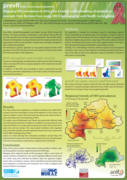
Since 2001, several Demographic and Health Surveys (DHS) include HIV
testing. For many countries, in particular in sub-Saharan Africa, DHS are
the only national source of data in general population. Several DHS collect
latitude and longitude of surveyed clusters but the sampling method is not
ap
...

Epidemic meningitis is a major public health challenge in the African 'meningitis belt', an area that extends from Senegal to Ethiopia with an estimated total population of 500 million. Since 2002, the World Health Organization (WHO), in collaboration with its collaborating centres for meningitis, h
...
HIV, viral hepatitis and sexually transmitted infections continue to pose a major public health burden in the WHO European Region, affecting millions of people and causing premature mortality. Despite some progress being made in achieving the targets outlined in the previous Action plan for the heal
...


The COVID-19 pandemic has exposed the inadequacy of investments in public health, the persistence of profound economic and social inequalities and the fragility of many key global systems and approaches.

These guidelines update earlier WHO recommendations to maximize the HIV prevention impact of safe VMMC services and aim to guide the transition to the sustained provision of interventions with a focus on the health and well-being of both adolescent boys and men.

Introduction The novel Coronavirus (nCoV) epidemic in 2019 -2020 has recently emerged. The route of transmission is not totally known, although it is known that it can spread from person to person, and local health care systems may be ill-equipped to handle a large-scale outbreak. Furthermore, misco
...
Epidemics and pandemics are some of the biggest threats to a safe and healthy world. But with effective preparedness and response measures, we can reduce their impacts and even stop them in their tracks.
Through the Programmatic Partnership with
...
Cholera epidemics continue to be a major public health problem in many countries around the
world. When epidemics strike, they can spread rapidly. The disease can also evolve quickly;
patients wit
...
Countries experiencing concentrated epidemics of HIV need the size of key populations (KPs) to guide the national response on HIV and AIDS. Conducting a robust method to estimate the size of KPs is quite challenging as most of them are hidden and do
...

Infectious disease outbreaks and epidemics are increasing in frequency, scale and impact. Health care facilities can amplify the transmission of emerging infectious diseases or multidrug-resistant organisms (MDRO) within their settings and communiti
...
