
Filter
2106
Text search:
public
health
logistics
Featured
236
755
Language
Document type
1168
318
256
142
125
38
33
20
3
1
1
1
Countries
97
86
80
79
72
65
62
58
57
45
43
41
41
39
37
36
36
32
29
27
27
27
26
24
24
22
19
17
17
16
16
15
14
13
13
12
12
11
11
10
10
10
9
9
8
8
7
7
7
7
6
6
6
6
5
5
5
4
4
4
4
4
4
4
3
3
3
3
3
3
2
2
2
2
2
2
2
2
2
2
2
2
2
2
2
2
1
1
1
1
1
1
1
1
1
1
1
1
1
1
1
1
1
1
1
1
1
1
1
1
1
1
1
1
1
1
1
Authors & Publishers
Publication Years
Category
1021
221
107
101
85
42
26
Toolboxes
223
134
97
89
81
64
60
58
46
45
43
33
32
30
29
28
22
20
19
16
15
13
10
9
5
3
1




Evidence for improving community health supply chains from Ethiopia, Malawi and Rwanda. Journal of Global Health vol. 4 No.2 (2014)
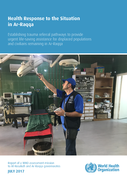
Establishing trauma referral pathways to provide urgent life-saving assistance for displaced populations and civilians remaining in Ar-Raqqa.
In July 2017, a WHO team comprising an external trauma care specialist and two WHO staff members visited the governorates of Ar-Raqqa and neighbouring Al-Ha
...



n 2015, Member States of the United Nations adopted the 2030 Agenda for Sustainable Development and its accompanying Sustainable Development Goals (SDGs), with the third goal of the agenda focusing on health – good
...
The substantial burden of death and disability that results from interpersonal violence, road traffic injuries, unintentional injuries, occupational health risks, air pollution, climate change, and inadequate water and sanitation falls disproportion
...
The aim of this publication is to provide practical guidance for public information officers on the preparation for and response to a nuclear or radiological emergency, and to fulfil in part functions assigned to the IAEA in th
...
Third edition.
The main changes within the third edition of the JEE tool include the split of the technical area National legislation, policy, and financing into two technical areas (Legal instruments and Financing); the drop of the technical area previously titled Reporting and the move of indicat
...
WHO-SEARO in partnership with WHOCC AIIMS, UNICEF, UNFPA and USAID has prepared a training package for building capacity of healthcare teams in health facilities for continous quality improvement of maternal and newborn healthcare. The focus is on t
...
Four simple steps to practice quality improvement at health facility level

The Health Sector Policy gives general orientations for the sector which are further developed in the various sub-sector policies guiding key health programs and departments. All
...

The overall goal of the Kenya Health Sector Referral Strategy is to improve client access to referral. The objectives of the strategy are to realise improved capacity of health providers to identify
...

A two-week mission was conducted by WASH and quality UHC technical experts from WHO headquarters and supported by the WHO Ethiopia Country Office (WASH and health systems teams) in July 2016, to understand how change in WASH services and quality imp
...
