
Filter
2221
Text search:
equitable
access
to
quality
health
services
Featured
183
623
Language
2186
59
55
35
33
20
18
4
4
3
3
3
3
2
2
2
2
2
2
2
2
1
1
1
1
1
1
1
1
1
1
1
1
1
1
1
1
1
1
1
1
1
1
Document type
1110
467
236
194
120
34
33
14
5
3
1
1
Countries
172
96
58
58
57
55
54
44
44
43
43
42
38
38
37
36
36
36
31
26
23
21
20
18
18
16
13
13
13
12
12
11
11
10
10
10
9
8
8
7
7
6
6
6
6
6
5
5
5
5
5
5
5
4
4
4
4
3
3
3
3
3
3
3
3
3
3
3
3
2
2
2
2
2
2
2
2
2
2
2
2
1
1
1
1
1
1
1
1
1
1
1
1
1
1
1
1
1
1
1
1
1
1
Authors & Publishers
331
92
81
68
56
56
45
35
30
19
19
18
17
15
13
13
12
12
12
11
11
11
10
10
10
10
9
9
8
8
8
8
8
8
8
8
7
7
7
7
7
7
7
7
7
7
7
6
6
6
6
6
6
6
6
6
6
5
5
5
5
5
5
5
5
5
5
5
5
5
5
5
4
4
4
4
4
4
4
4
4
4
4
4
4
4
4
4
4
4
4
4
3
3
3
3
3
3
3
3
3
3
3
3
3
3
3
3
3
3
3
3
3
3
3
3
3
3
3
3
3
3
3
3
3
3
3
3
3
3
3
3
3
3
3
3
3
3
3
3
2
2
2
2
2
2
2
2
2
2
2
2
2
2
2
2
2
2
2
2
2
2
2
2
2
2
2
2
2
2
2
2
2
2
2
2
2
2
2
2
2
2
2
2
2
2
2
2
2
2
2
2
2
2
2
2
2
2
2
2
2
2
2
2
2
2
2
2
2
2
2
2
2
2
2
2
2
2
2
2
2
2
2
2
2
2
2
2
2
2
2
2
2
2
2
2
2
2
2
2
2
2
2
2
2
2
2
2
2
2
2
2
2
2
2
2
2
2
2
2
1
1
1
1
1
1
1
1
1
1
1
1
1
1
1
1
1
1
1
1
1
1
1
1
1
1
1
1
1
1
1
1
1
1
1
1
1
1
1
1
1
1
1
1
1
1
1
1
1
1
1
1
1
1
1
1
1
1
1
1
1
1
1
1
1
1
1
1
1
1
1
1
1
1
1
1
1
1
1
1
1
1
1
1
1
1
1
1
1
1
1
1
1
1
1
1
1
1
1
1
1
1
1
1
1
1
1
1
1
1
1
1
1
1
1
1
1
1
1
1
1
1
1
1
1
1
1
1
1
1
1
1
1
1
1
1
1
1
1
1
1
1
1
1
1
1
1
1
1
1
1
1
1
1
1
1
1
1
1
1
1
1
1
1
1
1
1
1
1
1
1
1
1
1
1
1
1
1
1
1
1
1
1
1
1
1
1
1
1
1
1
1
1
1
1
1
1
1
1
1
1
1
1
1
1
1
1
1
1
1
1
1
1
1
1
1
1
1
1
1
1
1
1
1
1
1
1
1
1
1
1
1
1
1
1
1
1
1
1
1
1
1
1
1
1
1
1
1
1
1
1
1
1
1
1
1
1
1
1
1
1
1
1
1
1
1
1
1
1
1
1
1
1
1
1
1
1
1
1
1
1
1
1
1
1
1
1
1
1
1
1
1
1
1
1
1
1
1
1
1
1
1
1
1
1
1
1
1
1
1
1
1
1
1
1
1
1
1
1
1
1
1
1
1
1
1
1
1
1
1
1
1
1
1
1
1
1
1
1
1
1
1
1
1
1
1
1
1
1
1
1
1
1
1
1
1
1
1
1
1
1
1
1
1
1
1
1
1
1
1
1
1
1
1
1
1
1
1
1
1
1
1
1
1
1
1
1
1
1
1
1
1
1
1
1
1
1
1
1
1
1
1
1
1
1
1
1
1
1
1
1
1
1
1
1
1
1
1
1
1
1
1
1
1
1
1
1
1
1
1
1
1
1
1
1
1
1
1
1
1
1
1
1
1
1
1
1
1
1
1
1
1
1
1
1
1
1
1
1
1
1
1
1
1
1
1
1
1
1
1
1
1
1
1
1
1
1
1
1
1
1
1
1
1
1
1
1
1
1
1
1
1
1
1
1
1
1
1
1
1
1
1
1
1
1
1
1
1
1
1
1
1
1
1
1
1
1
1
1
1
1
1
1
1
1
1
1
1
1
1
1
1
1
1
1
1
1
1
1
1
1
1
1
1
1
1
1
1
1
1
1
1
1
1
1
1
1
1
1
1
1
1
1
1
1
1
1
1
1
1
1
1
1
1
1
1
1
1
1
1
1
1
1
1
1
1
1
1
1
1
1
1
1
1
1
1
1
1
1
1
1
1
1
1
1
1
1
1
1
1
1
1
1
1
1
1
1
1
1
1
1
1
1
1
1
1
1
1
1
1
1
1
1
1
1
1
1
1
1
1
1
1
1
1
1
1
1
1
1
1
1
1
1
1
1
1
1
1
1
1
1
1
1
1
1
1
1
1
1
1
1
1
1
1
1
1
1
1
1
1
1
1
1
1
1
1
1
1
1
1
1
1
1
1
1
1
1
1
1
1
1
1
1
1
1
1
1
1
1
1
1
1
1
1
1
1
1
1
1
1
1
1
1
1
1
1
1
1
1
1
1
1
1
1
1
1
1
1
1
1
1
1
1
1
1
1
1
1
1
1
1
1
1
1
1
1
1
1
1
1
1
1
1
1
1
1
1
1
1
1
1
1
1
1
1
1
1
1
1
1
1
1
1
1
1
1
1
1
1
1
1
1
1
1
1
1
1
1
1
1
1
1
1
1
1
1
1
1
1
1
1
1
1
1
1
1
1
1
1
1
1
1
1
1
1
1
1
1
1
1
1
1
1
1
1
1
1
1
1
1
1
1
1
1
1
1
1
1
1
1
1
1
1
1
1
1
1
1
1
1
1
1
1
1
1
1
1
1
1
1
1
1
1
1
1
1
1
1
1
1
1
1
1
1
1
1
1
1
1
1
1
1
1
1
1
1
1
1
1
1
1
1
1
1
1
1
1
1
1
1
1
1
1
1
1
1
1
1
1
1
1
1
1
1
1
1
1
1
1
1
1
1
1
1
1
1
1
1
1
1
1
1
1
1
1
1
1
1
1
1
1
1
1
1
1
1
1
1
1
1
1
1
1
1
1
1
1
1
1
1
1
1
1
1
1
1
1
1
1
1
1
1
1
1
1
1
1
1
1
1
1
1
1
1
1
1
1
1
1
1
1
1
1
1
1
1
1
1
1
1
1
1
1
1
1
1
1
1
1
1
1
1
1
1
1
1
1
1
1
1
1
1
1
1
1
1
1
1
1
1
1
1
1
1
1
1
1
1
1
1
1
1
1
1
1
1
1
1
1
1
1
1
1
1
1
1
1
1
1
1
1
1
1
1
1
1
1
1
1
1
1
1
1
1
1
1
1
1
1
1
1
1
1
1
1
1
1
1
1
1
1
1
1
1
1
1
1
1
1
1
1
1
1
1
1
1
1
1
1
1
1
1
1
1
1
1
1
1
1
1
1
1
1
1
1
1
1
1
1
1
1
1
1
1
1
1
1
1
1
1
1
1
1
1
1
1
1
1
1
1
1
1
1
1
1
1
1
1
1
1
1
1
1
1
1
1
1
1
1
1
1
1
1
1
1
1
1
1
1
1
1
1
1
1
1
1
1
1
1
1
1
1
1
1
1
1
1
1
1
1
1
1
1
1
1
1
1
1
1
1
1
1
1
1
1
1
1
1
1
1
1
1
1
1
1
1
1
1
1
1
1
1
1
1
1
1
1
1
1
1
1
1
1
1
1
1
1
1
1
1
1
1
1
1
1
1
1
1
1
1
1
1
1
1
1
1
1
1
1
1
1
1
1
1
1
1
1
1
1
1
1
1
1
1
1
1
1
1
1
1
1
1
1
1
1
1
1
1
1
1
1
1
1
1
1
1
1
1
1
1
1
1
1
1
1
1
1
1
1
1
1
1
1
1
1
1
1
1
1
1
1
1
1
1
1
1
1
1
1
1
1
1
1
1
1
1
1
1
1
1
1
1
1
1
1
1
1
1
1
1
1
1
1
1
1
1
1
1
1
1
1
1
1
1
1
1
1
1
1
1
1
1
1
1
1
1
1
1
1
1
1
1
Publication Years
836
1213
162
8
1
1
Category
957
180
162
119
116
32
16
1
Toolboxes
167
155
122
102
95
74
70
69
65
65
46
45
40
33
29
28
28
26
25
21
10
7
7
4
1
1
1
Managing possible serious bacterial infection in young infants when referral is not feasible
recommended
It provides guidance on care for use in resource-limited settings or in settings where families with sick young infants do not accept or cannot access referral care, but can be managed in outpatient settings by an appropriately trained
...
health worker. The guideline seeks to provide programmatic guidance on the role of CHWs and home visits in identifying signs of serious infections in neonates and young infants.
more

Available in Chinese, English, French, Russian and Spanish; WHO and UNICEF policy brief, 19 April 2021
Persons with disabilities are disproportionately impacted by COVID-19, both directly because of infection, and indirectly because of restrictions to
...
reduce the spread of the virus. Persons with disabilities are a diverse group, and the risks, barriers and impacts faced by them will vary in different contexts according to, among other factors, their age, gender identity, type of disability, ethnicity, sexual orientation, and migration status.
This document presents considerations and actions for the following stakeholders to ensure equity in access to vaccination against COVID‑19 for persons with disabilities
more

The "Regional Action Plan 2017–2030: Towards a Malaria-Free South-East Asia Region" by the World Health Organization (WHO) outlines a strategic framework to eliminate malaria in the 11 countries o
...
f the WHO South-East Asia Region by 2030. It focuses on reducing transmission, particularly of Plasmodium falciparum and P. vivax, addressing multidrug resistance, improving surveillance, and ensuring universal access to diagnosis, treatment, and prevention. The plan sets clear objectives and milestones and emphasizes strong governance, cross-border collaboration, community involvement, and sustainable financing to achieve and maintain a malaria-free status across the region.
more
The document “Mpox Continental Response Plan 2.0” outlines the strategy developed by the Africa Centres for Disease Control and Prevention (Africa CDC) in collaboration with the World Health Organization (WHO)
...
to respond to the ongoing mpox outbreak across Africa. The plan describes coordinated actions to strengthen surveillance, laboratory capacity, case detection and contact tracing in affected countries. It also focuses on improving access to vaccines, diagnostics and treatment, supporting healthcare systems, and enhancing risk communication and community engagement. In addition, the document highlights the importance of regional and international cooperation, resource mobilization and technical support to help African countries control the outbreak and prevent further spread. Overall, the plan serves as a continental framework to guide a coordinated public health response to mpox in Africa.
more
The document “Hospital Preparedness for Epidemics” published by the World Health Organization (WHO) provides guidance on how hospitals and healthcare facilities can prepare for and respond effectively
...
to infectious disease outbreaks. It outlines key components of epidemic preparedness, including planning and management structures, infection prevention and control, communication systems, human resource management, logistics, laboratory capacity, and the continuity of essential health services. The guide emphasizes the importance of coordination within hospitals and with public health authorities, as well as training staff and ensuring adequate supplies and infrastructure. Overall, the document serves as a practical framework to help hospitals strengthen their readiness, maintain critical healthcare services, and respond efficiently during epidemics or other health emergencies.
more

Addressing comorbidities and risk factors for TB is a crucial component of Pillar one of the End TB Strategy, which focuses on integrated patient-centred care and prevention, including action on TB and comorbidities. The Framework for collaborative action on TB and comorbidities aims
...
to support countries in the evidence-informed introduction and scale-up of holistic people-centred services for TB, comorbidities and health-related risk factors, with the goal of comprehensively addressing TB and other co-existing health conditions. It should be used in conjunction with relevant WHO guidelines. The Framework is intended for use by people working in ministries of health, other relevant line-ministries, policymakers, international technical and funding organizations, researchers, nongovernmental and civil society organizations, as well as primary care workers, specialist health practitioners, and community health workers who support the response to TB and comorbidities in both the public and private sectors.
more

While there has been real progress in addressing the burden of disease in the WHO African region, the COVID-19 pandemic has highlighted the link between health, economics and security, as the region saw decades of progress threatened, including posi
...
tive trends in decreasing inequality. In the African Region the momentum towards achieving the 2030 SDG disease burden reduction targets (SDG targets 3.3, 3.4 and 3B) has stalled.
The COVID-19 pandemic was also a major threat to gains made, such as the eradication of polio in the region, declared in 2020; reduced numbers of new HIV infections in 2021 compared to 2010; and passing the 2020 milestone of the End TB Strategy, with a 22% reduction in new cases compared with 2015. However, the pandemic also disrupted essential health services in 92% of countries globally, 22.7 million children missed basic immunization, there was an increase in malaria and TB, and global deaths from TB rose for the first time since 2015.
more

National Strategic Plan: Malaria Elimination 2023-27
National Centre for Vector Borne Disease Control (NCVBDC)
Ministry of Health and Family Welfare (MoHFW) - India
(2023)
C2
The National Strategic Plan for Malaria Elimination in India (2023-2027) focuses on achieving malaria elimination by 2030, in alignment with the Global Technical Strategy. The document outlines the strategies, targets, and goals for malaria elimination, aiming for zero indigenous malaria cases by 20
...
27. It emphasizes district-based planning, robust surveillance systems, and enhancing case management and vector control. The plan stresses the importance of universal access to treatment, prevention, and data-driven decision-making. Furthermore, it encourages innovation and research in malaria elimination efforts, fostering multisectoral coordination and community engagement.
more

Download (7.4 MB)
Overview
Epilepsy is one of the most common neurological disorders globally. The WHO epilepsy technical brief aims to strengthen action for epilepsy and complements the Intersectoral global action plan on epilepsy and other neuro
...
logical disorders 2022–2031.
The technical brief presents the key information on epilepsy and recommends actions to policy makers and other stakeholders. Using the concept of levers for change introduced by the Operational Framework for Primary Health Care, it identifies actions on the policy and operational levels that stakeholders should take to strengthen services for people with epilepsy using a person-centered approach based on human rights and universal health coverage.
more

The 2021 COVID-19 Strategic Preparedness and Response Plan (SPRP) for AFR serves as a regional guide for a holistic public health response to COVID‑19 at regional, national and sub-national levels
...
. The 2021
SPRP:
1. Builds upon the lessons learnt from the implementation of the 2020 SPRP and outlines a regional preparedness, response and recovery strategy for COVID‑19.
2. Has been adapted to reflect the Regional context including COVID-19 vaccination. It also considers epidemiological changes and recommen-dations emerging from the evaluation report of the 2020 SPRP4.
3. Highlights to Member States strategic preparedness and response actions to be sustained at national and sub-national levels, as well as the critical inter-agency and partner support required.
4. provides the indicative resource requirements to reinforce WHO planned interventions in the African Region to enhance countries’ capacities to suppress transmission, save lives and mitigate the impact of the pandemic on people and health systems.
5. Provides a road map for mitigating potential resurgence in the Region as economies reopen and ensure country level continuity of other essential health services.
more

Addressing comorbidities and risk factors for tuberculosis (TB) is a crucial component of the World Health Organization (WHO)’s End TB Strategy. This WHO operational handbook on tuberculosis. Module 6: tuberculosis and comorbidities aims
...
to support countries in scaling up people-centred care, based on the latest WHO recommendations on TB and key comorbidities, and drawing upon additional evidence, best practices and inputs from various experts and stakeholders obtained during WHO processes. It is intended for use by people working in ministries of health, particularly TB programmes and the relevant departments or programmes responsible for comorbidities and health-related risk factors for TB such as HIV, diabetes, undernutrition, substance use, and tobacco use, as well as programmes addressing mental health and lung health. This operational handbook is a living document and will include a separate section for each of the key TB comorbidities or health-related risk factors. The third edition includes guidance for HIV-associated TB, mental health conditions and diabetes, which are three conditions strongly associated with TB and which result in higher mortality, poorer TB treatment outcomes and negatively impact health-related quality of life. The operational handbook aims to facilitate early detection, proper assessment and adequate management of people affected by TB and comorbidities. Full implementation of this guidance is expected to have a significant impact on TB treatment outcomes and health-related quality of life for people affected by TB.
more

The sixteenth meeting of the Strategic and Technical Advisory Group for Neglected Tropical Diseases (STAG-NTD) was held as a hybrid meeting, 27–28 September 2022.
Dr Ren Minghui, Assistant Director-General, Universal Health Coverage/Communicabl
...
e and Noncommunicable Diseases, welcomed participants to the meeting. He said the World Health Organization’s Department of Control of Neglected Tropical Diseases (WHO/NTD) was in a state of transition. Following the death of the late esteemed Director Dr Mwelecele Ntuli Malecela earlier in the year, Dr Gautam Biswas had taken over as Acting Director but would soon retire; the appointment of a new Director was under way. Owing to rotation of STAG-NTD members, this would be the last meeting for some and the first meeting for several new participants. The work however would continue with the same commitment. Discussions over the next two days would focus on critical issues regarding recovery of NTD services following the disruptions caused by coronavirus disease (COVID-19), which had impacted many health services worldwide. He looked forward to receiving the advice and guidance of STAG-N
more

Through the “Fiji National HIV Surge Strategic Plan 2024-2027,” the ministry will address areas for
Prevention, Diagnostics, Treatment and Care, the Continuum of Care and an intense Monitoring,
Evaluation, Accountability and Learning Framework for the government. This strategic plan aims
...
to decentralise services and bring services closer to individuals in a non-stigmatising and
discriminatory manner nationwide.
more
This report is part of the gender and noncommunicable diseases (NCDs) initiative launched by the WHO Regional Office for Europe, which aims to strengthen the response to NCDs through a gender approa
...
ch. It is part of a series of country profiles and a synthesis report. The country profile of Ukraine presents a gender analysis of the WHO STEPwise survey (STEPS) data to support international commitments to reducing the burden of NCDs with evidence and knowledge exchange. A gender analysis of STEPS NCD risk-factor survey data describes how risk factors for chronic diseases differ between and among men and women by exploring and tracking the direction and magnitude of trends in risk factors and accessing services by sociodemographic variables. Important differences hide even in sex-disaggregated data that need to be unpacked through sociodemographic characteristics, because men and women are not homogenous groups. The report also recognizes gaps in evidence and calls for further analysis of the impact of gender-based inequalities.
more

Tuberculosis (TB) is, and should be, a curable disease; however, each year significant numbers of patients acquire or develop drug-resistant TB, which has a much lower cure rate. Patients with drug-resistant TB have a high prevalence of symptoms; hence, staff caring for these patients should h
...
ave some familiarity with palliative care, so that general palliative care principles are available to all patients. The timely identification, and addressing, of adverse events occurring during the treatment course is considered as general palliative care for those receiving curative treatment. This publication summarizes the general palliative care approach, which is recommended for use in settings and services that occasionally treat palliative care patients, but do not provide palliative care as the main focus of their work. The review focuses on 18 high TB priority countries of the WHO European Region.
more
Cervical cancer, along with maternal deaths, has been identified as a national priority in
South Africa as well as other Sub-Saharan African countries. Cervical cancer is the
second most common cancer among women in South Africa, after breast cancer. Due
...
to limited access to prevention, early diagnosis and treatment, cervical cancer is often
fatal.
more
This publication is based on the list of clinical interventions selected from clinical guidelines on prevention, screening, diagnosis, treatment, palliative care, monitoring and end of life care. This publication addresses medical devices for six types of cancer: breast, cervical, colorectal, leukem
...
ia, lung and prostate. The first section defines the global increase in cancer cases, the global goals to manage NCDs and the WHO activities related to these goals. The second section presents the methodology used for the selection of medical devices that support clinical interventions required to screen, diagnose, treat and monitor cancer stages, as well as the provision of palliative care, based on evidence-based information. The third section lists the priority medical devices required to manage cancer in seven different units of health care services: 1. Vaccination, clinical assessment and endoscopy, 2. Medical imaging and nuclear medicine, 3. Surgery, 4. Laboratory and pathology, 5. Radiotherapy, 6. Systemic therapy and 7. Palliative and end of life care
more

The burden of diabetes is enormous, positioning it as one of the main challenges facing public health today. Currently, it is estimated that 62 million people are living with diabetes in the Region of the Americas and projections show its prevalence
...
will continue rising over the following years. The Region shows the highest number of years of healthy life lost (through either disability or premature death) due to diabetes worldwide. The high costs associated with its treatment produce a heavy economic burden. Its complications can seriously affect the quality of life of people living with diabetes, their families, and society and overload health systems. This report shows the latest internationally comparable data on diabetes and its main risk factors by year, country, and sex.
more
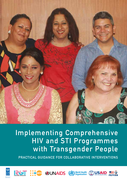
This publication offers practical advice on implementing HIV and STI programmes for transgender people, with a focus on transgender women, aligned with the 2011 Recommendations and the 2014 Key Populations Consolidated Guidelines. It contains examples of good practice from around the world that may
...
support efforts in planning programmes and services, and describes issues that should be considered and how to overcome challenges.
This tool describes how services can be designed and implemented to be acceptable and accessible to transgender women. To accomplish this, respectful and ongoing engagement with them is essential.
This tool gives particular attention to programmes run by transgender people themselves, in contexts where this is possible. more
This tool describes how services can be designed and implemented to be acceptable and accessible to transgender women. To accomplish this, respectful and ongoing engagement with them is essential.
This tool gives particular attention to programmes run by transgender people themselves, in contexts where this is possible. more
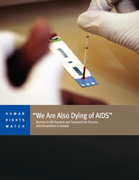
Barriers to HIV Services and Treatment for Persons with Disabilities in Zambia
The 80-page report documents the obstacles faced by people with disabilities in both the community and healthcare sett
...
ings. These include pervasive stigma and discrimination, lack of access to inclusive HIV prevention education, obstacles to accessing voluntary testing and HIV treatment, and lack of appropriate support for adherence to antiretroviral treatment. The report also describes the sexual and intimate partner violence women and girls with disabilities face, and the need for the government and international donors to do more to ensure inclusive and accessible HIV services.
more
