
Filter
3172
Text search:
operation
Featured
270
965
Language
3026
92
71
55
54
44
29
15
14
12
10
9
8
7
6
5
5
5
4
4
4
4
4
4
4
4
3
3
3
3
3
3
3
3
3
3
3
2
2
2
2
2
2
2
2
1
1
1
1
1
1
1
1
1
1
1
1
1
1
Document type
1749
556
380
202
150
41
37
36
8
7
5
Countries
168
150
96
92
82
78
76
73
71
71
70
64
63
60
46
43
41
39
37
37
36
35
31
31
29
28
27
27
22
21
21
19
19
19
16
15
15
15
14
13
13
13
12
12
12
11
11
11
10
9
9
9
8
8
8
8
7
7
7
6
6
6
6
6
6
6
6
5
5
5
5
5
4
4
4
4
4
4
4
3
3
3
3
3
3
3
3
3
3
3
2
2
2
2
2
2
2
2
2
2
2
2
2
1
1
1
1
1
1
1
1
1
1
1
1
1
1
1
1
1
1
1
1
1
1
1
1
1
1
1
1
1
Authors & Publishers
323
107
73
72
63
60
50
45
40
28
24
24
22
20
19
18
18
17
16
16
15
15
14
13
13
13
13
13
12
12
12
11
11
11
11
10
10
10
10
10
10
10
10
10
9
9
9
9
9
9
8
8
8
8
8
8
8
8
8
8
7
7
7
7
7
7
7
7
7
7
6
6
6
6
6
6
6
6
6
6
6
6
6
5
5
5
5
5
5
5
5
5
5
5
5
5
5
5
5
5
5
5
5
5
5
5
5
5
5
4
4
4
4
4
4
4
4
4
4
4
4
4
4
4
4
4
4
4
4
4
4
4
4
4
4
4
3
3
3
3
3
3
3
3
3
3
3
3
3
3
3
3
3
3
3
3
3
3
3
3
3
3
3
3
3
3
3
3
3
3
3
3
3
3
3
3
3
3
3
3
3
3
3
3
3
3
3
3
3
3
3
3
3
3
3
3
3
3
3
3
3
3
3
3
3
3
3
3
3
3
3
3
3
2
2
2
2
2
2
2
2
2
2
2
2
2
2
2
2
2
2
2
2
2
2
2
2
2
2
2
2
2
2
2
2
2
2
2
2
2
2
2
2
2
2
2
2
2
2
2
2
2
2
2
2
2
2
2
2
2
2
2
2
2
2
2
2
2
2
2
2
2
2
2
2
2
2
2
2
2
2
2
2
2
2
2
2
2
2
2
2
2
2
2
2
2
2
2
2
2
2
2
2
2
2
2
2
2
2
2
2
2
2
2
2
2
2
2
2
2
2
2
2
2
2
2
2
2
2
2
2
2
2
2
2
2
2
2
2
2
2
2
2
2
2
2
2
2
2
2
2
2
2
2
2
2
2
2
2
2
2
2
2
2
2
2
2
2
2
2
2
2
2
2
2
2
2
2
2
2
2
2
2
2
1
1
1
1
1
1
1
1
1
1
1
1
1
1
1
1
1
1
1
1
1
1
1
1
1
1
1
1
1
1
1
1
1
1
1
1
1
1
1
1
1
1
1
1
1
1
1
1
1
1
1
1
1
1
1
1
1
1
1
1
1
1
1
1
1
1
1
1
1
1
1
1
1
1
1
1
1
1
1
1
1
1
1
1
1
1
1
1
1
1
1
1
1
1
1
1
1
1
1
1
1
1
1
1
1
1
1
1
1
1
1
1
1
1
1
1
1
1
1
1
1
1
1
1
1
1
1
1
1
1
1
1
1
1
1
1
1
1
1
1
1
1
1
1
1
1
1
1
1
1
1
1
1
1
1
1
1
1
1
1
1
1
1
1
1
1
1
1
1
1
1
1
1
1
1
1
1
1
1
1
1
1
1
1
1
1
1
1
1
1
1
1
1
1
1
1
1
1
1
1
1
1
1
1
1
1
1
1
1
1
1
1
1
1
1
1
1
1
1
1
1
1
1
1
1
1
1
1
1
1
1
1
1
1
1
1
1
1
1
1
1
1
1
1
1
1
1
1
1
1
1
1
1
1
1
1
1
1
1
1
1
1
1
1
1
1
1
1
1
1
1
1
1
1
1
1
1
1
1
1
1
1
1
1
1
1
1
1
1
1
1
1
1
1
1
1
1
1
1
1
1
1
1
1
1
1
1
1
1
1
1
1
1
1
1
1
1
1
1
1
1
1
1
1
1
1
1
1
1
1
1
1
1
1
1
1
1
1
1
1
1
1
1
1
1
1
1
1
1
1
1
1
1
1
1
1
1
1
1
1
1
1
1
1
1
1
1
1
1
1
1
1
1
1
1
1
1
1
1
1
1
1
1
1
1
1
1
1
1
1
1
1
1
1
1
1
1
1
1
1
1
1
1
1
1
1
1
1
1
1
1
1
1
1
1
1
1
1
1
1
1
1
1
1
1
1
1
1
1
1
1
1
1
1
1
1
1
1
1
1
1
1
1
1
1
1
1
1
1
1
1
1
1
1
1
1
1
1
1
1
1
1
1
1
1
1
1
1
1
1
1
1
1
1
1
1
1
1
1
1
1
1
1
1
1
1
1
1
1
1
1
1
1
1
1
1
1
1
1
1
1
1
1
1
1
1
1
1
1
1
1
1
1
1
1
1
1
1
1
1
1
1
1
1
1
1
1
1
1
1
1
1
1
1
1
1
1
1
1
1
1
1
1
1
1
1
1
1
1
1
1
1
1
1
1
1
1
1
1
1
1
1
1
1
1
1
1
1
1
1
1
1
1
1
1
1
1
1
1
1
1
1
1
1
1
1
1
1
1
1
1
1
1
1
1
1
1
1
1
1
1
1
1
1
1
1
1
1
1
1
1
1
1
1
1
1
1
1
1
1
1
1
1
1
1
1
1
1
1
1
1
1
1
1
1
1
1
1
1
1
1
1
1
1
1
1
1
1
1
1
1
1
1
1
1
1
1
1
1
1
1
1
1
1
1
1
1
1
1
1
1
1
1
1
1
1
1
1
1
1
1
1
1
1
1
1
1
1
1
1
1
1
1
1
1
1
1
1
1
1
1
1
1
1
1
1
1
1
1
1
1
1
1
1
1
1
1
1
1
1
1
1
1
1
1
1
1
1
1
1
1
1
1
1
1
1
1
1
1
1
1
1
1
1
1
1
1
1
1
1
1
1
1
1
1
1
1
1
1
1
1
1
1
1
1
1
1
1
1
1
1
1
1
1
1
1
1
1
1
1
1
1
1
1
1
1
1
1
1
1
1
1
1
1
1
1
1
1
1
1
1
1
1
1
1
1
1
1
1
1
1
1
1
1
1
1
1
1
1
1
1
1
1
1
1
1
1
1
1
1
1
1
1
1
1
1
1
1
1
1
1
1
1
1
1
1
1
1
1
1
1
1
1
1
1
1
1
1
1
1
1
1
1
1
1
1
1
1
1
1
1
1
1
1
1
1
1
1
1
1
1
1
1
1
1
1
1
1
1
1
1
1
1
1
1
1
1
1
1
1
1
1
1
1
1
1
1
1
1
1
1
1
1
1
1
1
1
1
1
1
1
1
1
1
1
1
1
1
1
1
1
1
1
1
1
1
1
1
1
1
1
1
1
1
1
1
1
1
1
1
1
1
1
1
1
1
1
1
1
1
1
1
1
1
1
1
1
1
1
1
1
1
1
1
1
1
1
1
1
1
1
1
1
1
1
1
1
1
1
1
1
1
1
1
1
1
1
1
1
1
1
1
1
1
1
1
1
1
1
1
1
1
1
1
1
1
1
1
1
1
1
1
1
1
1
1
1
1
1
1
1
1
1
1
1
1
1
1
1
1
1
1
1
1
1
1
1
1
1
1
1
1
1
1
1
1
1
1
1
1
1
1
1
1
1
1
1
1
1
1
1
1
1
1
1
1
1
1
1
1
1
1
1
1
1
1
1
1
1
1
1
1
1
1
1
1
1
1
1
1
1
1
1
1
1
1
1
1
1
1
1
1
1
1
1
1
1
1
1
1
1
1
1
1
1
1
1
1
1
1
1
1
1
1
1
1
1
1
1
1
1
1
1
1
1
1
1
1
1
1
1
1
1
1
1
1
1
1
1
1
1
1
1
1
1
1
1
1
1
1
1
1
1
1
1
1
1
1
1
1
1
1
1
1
1
1
1
1
1
1
1
1
1
1
1
1
1
1
1
1
1
1
1
1
1
1
1
1
1
1
1
1
1
1
1
1
1
1
1
1
1
1
1
1
1
1
1
1
1
1
1
1
1
1
1
1
1
1
1
1
1
1
1
1
1
1
1
1
1
1
1
1
1
1
1
1
1
1
1
1
1
1
1
1
1
1
1
1
1
1
1
1
1
1
1
1
1
1
1
1
1
1
1
1
1
1
1
1
1
1
1
1
1
1
1
1
1
1
1
1
1
1
1
1
1
1
1
1
1
1
1
1
1
1
1
1
1
1
1
1
1
1
1
1
1
1
1
1
1
1
1
1
1
1
1
1
1
1
1
1
1
1
1
1
1
1
1
1
1
1
1
1
1
1
1
1
1
1
1
1
1
1
1
1
1
1
1
1
1
1
1
1
1
1
1
1
1
1
1
1
1
1
1
1
1
1
1
1
1
1
1
1
1
1
1
1
1
1
1
1
1
1
1
1
1
1
1
1
1
1
1
1
1
1
1
1
1
1
1
1
1
1
1
1
1
1
1
1
1
1
1
1
1
1
1
1
1
1
1
1
1
1
1
1
1
1
1
1
1
1
1
1
1
1
1
1
1
1
1
1
1
1
1
1
1
1
1
1
1
1
1
1
1
1
1
1
1
1
1
1
1
1
1
1
1
1
1
1
1
1
1
1
1
1
1
1
1
1
1
1
1
1
1
1
1
1
1
1
1
1
1
1
1
1
1
1
1
1
1
1
1
1
1
1
1
1
1
1
1
1
1
1
1
1
1
1
1
1
1
1
1
1
1
1
1
1
1
1
1
1
1
1
1
1
1
1
1
1
1
1
1
1
1
1
1
1
1
1
1
1
1
1
1
1
1
1
1
1
1
1
1
1
1
1
1
1
1
1
1
1
1
1
1
1
1
1
1
1
1
1
1
1
1
1
1
1
1
1
1
1
1
1
1
1
1
1
1
1
1
1
1
1
1
1
1
1
1
1
1
1
1
1
1
1
1
1
1
1
1
1
1
1
1
1
1
1
1
1
1
1
1
1
1
1
1
1
1
1
1
1
1
1
1
1
1
1
1
1
1
1
1
1
1
1
1
1
1
1
1
1
1
1
1
1
1
1
1
1
1
1
1
1
1
1
1
1
1
1
1
1
1
1
1
1
1
1
1
1
1
1
1
1
1
1
1
1
1
1
1
1
1
1
1
1
1
1
1
1
1
1
1
1
1
1
1
1
1
1
1
1
1
1
1
1
1
1
1
1
1
1
1
1
1
1
1
1
1
1
1
1
1
1
1
1
1
1
1
1
1
1
1
1
1
1
1
1
1
1
1
1
1
1
1
1
1
1
1
1
1
1
1
1
1
1
1
1
1
1
1
1
1
1
1
1
1
1
1
1
1
1
1
1
1
1
1
1
1
1
1
1
1
1
1
1
1
1
1
1
1
1
1
1
1
1
1
1
1
1
1
1
1
1
1
1
1
1
1
1
1
1
1
1
1
1
1
1
1
1
1
1
1
1
1
1
1
1
1
1
1
1
1
1
1
1
1
1
1
1
1
1
1
1
1
1
1
1
1
1
1
1
1
1
1
1
1
1
1
1
1
1
1
1
1
1
1
1
1
1
1
1
1
1
1
1
1
1
1
1
1
1
1
1
1
1
1
1
1
1
1
1
1
1
1
1
1
1
1
1
1
1
1
1
1
1
1
1
1
1
1
1
1
1
1
1
1
1
1
1
1
1
1
1
1
1
1
1
1
1
1
1
1
1
1
1
1
1
1
1
1
1
1
1
1
1
1
1
1
1
1
1
1
1
1
1
1
1
1
1
1
1
1
1
1
1
1
1
1
1
1
1
1
1
1
1
1
1
1
1
1
1
1
1
1
1
1
1
1
1
1
1
1
1
1
1
1
1
1
1
1
1
1
1
1
1
1
1
1
1
1
1
1
1
1
1
1
1
1
1
1
1
1
1
1
1
1
1
1
1
1
1
1
1
1
1
1
1
1
1
1
1
1
1
1
1
1
1
1
1
1
1
1
1
1
1
1
1
1
1
1
1
1
1
1
1
1
1
1
1
1
1
1
1
1
1
1
1
1
1
1
1
1
1
1
1
1
1
1
1
1
1
1
1
1
1
1
1
1
1
1
1
1
1
1
1
1
1
1
1
1
1
1
1
1
1
1
1
1
1
1
1
1
1
1
1
1
1
1
1
1
1
1
1
1
1
1
1
1
1
1
1
1
1
1
1
1
1
1
1
1
1
1
1
1
1
1
1
1
1
1
1
1
1
1
1
1
1
1
1
1
1
1
1
1
1
1
1
1
1
1
1
1
1
1
1
1
1
1
1
Publication Years
878
1900
362
27
3
1
1
Category
1303
344
152
143
97
47
44
Toolboxes
217
160
158
140
123
121
116
105
94
93
88
86
70
69
62
60
51
50
37
26
25
22
16
11
10
9
1
The key tools and governance approaches for
international cooperation for sustainable development
(hereafter, international cooperation) were set up in a
markedly different time and age. International
cooperation – with official development assistance
(ODA) as the dominant means of implementa
...
tion –
remains key, despite being generally considered as no
longer adequate for addressing today’s common and
collective challenges.
more
Development Finance at a Turning Point: Effects and Policy Recommendations
Berensmann K., Laudage Teles S., Sommer C., et al.
German Institute of Development and Sustainability (IDOS)
(2023)
CC
Development finance is at a turning point, as the macroeconomic environment has changed profoundly and the financing gap for low- and middle-income countries has widened. The events that led to this new situation are the multiple crises that the global economy is facing, such as the climate crisis,
...
the COVID-19 crisis and the war in Ukraine. As a
result, interest rates have risen sharply over the past year and are not expected to decline anytime soon. High interest rates further restrict low- and middle-income countries’ access to international financial markets by making borrowing more expensive. At the same time, debt
levels in several countries are rising to levels that are almost impossible to repay. Poorer countries find themselves in a trap where financing the Sustainable Development Goals (SDGs) becomes a distant goal for them.
more

Africa’s health sector is facing an unprecedented financing crisis, driven by a sharp decline of 70% in Official Development Assistance (ODA) from 2021 to 2025 and deep-rooted structural vulnerabilities. This collapse is placing immense pressure on Africa’s already fragile health systems as ODA
...
is seen as the backbone of critical health programs: pandemic preparedness, maternal and child health services, disease control programs are all at
risk, threatening Sustainable Development Goal 3 and Universal Health Coverage. Compounding this is Africa’s spiraling debt, with countries expected to service USD 81 billion by 2025—surpassing anticipated external financing inflows—further eroding fiscal space for health investments. Level of domestic resources is low. TThe Abuja Declaration of 2001, a pivotal commitment made by African Union (AU) member states, aimed to reverse this trend by pledging to allocate at least 15% of national budgets to the health sector. However, more than two decades later, only three countries—Rwanda, Botswana, and Cabo Verde—have
consistently met or exceeded this target (WHO, 2023). In contrast, over 30 AU member states remain well below the 10% benchmark, with some allocating as little as 5–7% of their national budgets to health.
In addition, only 16 (29%) of African countries currently have updated versions of National Health Development Plan (NHDP) supported by a National Health Financing Plan (NHFP). These two documents play a critical role in driving internal resource mobilisation. At the same time, public health emergencies are surging, rising 41%—from 152 in 2022 to
213 in 2024—exposing severe under-resourcing of health infrastructure and workforce. Recurring outbreaks (Mpox, Ebola, cholera, measles, Marburg…) alongside effects of climate change and humanitarian crises in Eastern DRC, the Sahel, and Sudan, are overwhelming systems stretched by chronic underfunding. The situation is worsened by Africa’s heavy dependency with over 90% of vaccines, medicines, and diagnostics being externally sourced—leaving countries vulnerable to global supply chain shocks. Health worker shortages persist, with only 2.3 professionals
per 1,000 people (below the WHO’s recommended 4.45), and fewer than 30% of systems are digitized, undermining disease surveillance and early warning. Without decisive action, Africa CDC projects the continent could reverse two decades of health progress, face 2 to 4 million additional preventable deaths annually, and a heightened risk of a pandemic emerging from within. Furthermore, 39 million more
Africans could be pushed into poverty by 2030 due to intertwined health and economic shocks. This is not just a sectoral crisis—it is an existential threat to Africa’s political, social, and economic resilience, and global stability. In response, African leaders, under Africa CDC’s stewardship, are advancing a comprehensive three-pillar strategy centered on domestic resource mobilization, innovative financing, and blended finance.
more
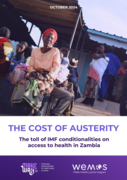
Zambia is facing a severe economic crisis marked by high inflation, increasing poverty and a heavy debt burden that is straining both its fiscal stability and progress in health outcomes. By 2020, the country's external debt reached United States dollars (USD) 12.7 billion, representing 108% of the
...
country's gross domestic product (GDP). In 2020, Zambia sought assistance through the G20 Common Framework and the International Monetary Fund (IMF) Extended Credit Facility (ECF), securing a USD 1.7 billion loan over 5 years. IMF loans, however, come with austerity measures that prioritise fiscal discipline but could potentially exacerbate social inequalities. These measures, which include increasing consumer taxes on goods and services (value added taxes - VATs), electricity tariffs and fuel prices, disproportionately impact vulnerable populations, raising concerns about their long-term effects on essential services, especially accessible and good quality healthcare services.
more

The COVID-19 pandemic exposed critical gaps in the global response to health crises, particularly in the financing of pandemic prevention, preparedness, response, recovery, and reconstruction. This chapter presents a comprehensive framework for pandemic financing that spans the entire pandemic cycle
...
, emphasizing the need for timely, adequate, and effective financial resources. The framework is designed to support
policymakers in both low- and middle-income countries (LMICs) and high-income nations, providing a guide to appropriate financing tools for each stage of a pandemic, from prevention and preparedness to response and recovery. Key economic concepts such as global public goods, time preference, and incentives are explored to underscore the complexities of pandemic financing.
more

There has never been a more critical moment to invest in WHO, and strengthen the unique role it plays in global health. Now is the time to sustainably finance WHO and invest in a healthy return for all.
Questions concerning the relevance and reform of official development assistance (ODA), and how ODA and broader development finance could—or should—change to better reflect shifting demands are not new, with academics and policymakers suggesting a range of options for reform. In this background
...
note, we briefly review the major reform proposals from 2009 onwards, highlighting the key issues underlying approaches to ODA reforms, and the main “types” of proposals typically put forward.
more

The world is facing a sustainable development crisis. The 2024 Financing for Sustainable Development Report: Financing for Development at a Crossroads finds that financing challenges are at the heart of the crisis and imperil the SDGs and climate action. The window to rescue the SDGs and prevent a c
...
limate catastrophe is still open but closing rapidly. Financing gaps for sustainable development are large and growing – the estimates by international organizations and others are coalescing around $4 trillion additional investment needed annually for developing countries. This represents a more than 50% increase over the pre-pandemic estimates. Meanwhile, the finance divide has not been bridged, with developing countries paying around twice as much on average in interest on their total sovereign debt stock as developed countries. Many countries lack access to affordable finance or are in debt distress. Weak enabling environments are preventing progress. Average global growth has declined, while policy and regulatory frameworks still do not set appropriate incentives. Public budgets and spending is not fully aligned with SDGs. Private investors are not incentivised to invest enough in SDGs and climate action. The world is at a crossroads. This is the last chance to correct course if we want to achieve the SDGs by the 2030 deadline. Only an urgent, large-scale and sustainable investment push can help us achieve our global goals. Next year’s Fourth International Conference on Financing for Development in 2025 will be a once in 80-year opportunity to support coherent transformation of financing.
more

All malaria-endemic countries in the Region of the Americas have taken on the challenge to eliminate the disease and to put in place measures to orient their health programs and strategies in that direction. This manual explains how to implement measures to achieve malaria elimination and prevent it
...
s reestablishment by increasing the intensity and quality of interventions, reorienting initiatives, reducing delays that favor transmission, and ensuring adequate monitoring to adjust interventions.
more

The Plan subscribes to the goals and pillars of the WHO Global Technical Strategy against Malaria 2016-2030 (GTS), while presenting key elements to address the specific challenges of the Region.
This technical note provides guidance on actions to accelerate P. falciparum elimination in areas close to achieving this goal without compromising unified malaria elimination efforts (P. vivax - P. falciparum), while contributing to the country's ultimate goal of eliminating malaria overall.

This second edition of the Basic Malaria Microscopy package is a stand-alone product,
providing all that is needed to conduct a complete training course

Pillar 3 of the Global technical strategy for malaria 2016–2030 calls for the transformation of malaria surveillance into a core intervention in all malaria-endemic countries, as well as in countries which have eliminated malaria but remain susceptible to re-establishment of transmission. This ref
...
erence manual covers subjects that are relevant to both settings.
The target readership of this manual includes staff working in ministries of health, national malaria programmes and health information systems; partners involved in malaria surveillance; and WHO technical officers who advise countries on malaria surveillance.
more


The framework recommends expanded coverage of malaria diagnostic and treatment services, intensified vector control to drive down transmission, strengthened malaria surveillance, and increased transborder collaboration, especially in terms of efforts to control the sale and use of artemisinin monoth
...
erapies. Since it is unlikely that national malaria control programs will be able to implement all the activities described in this framework simultaneously, a list of suggested priority activities has been included in the Annex.
more
The Manual for Indoor Residual Spraying in Urban Areas for Aedes aegypti Control is intended not only for operational personnel and middle and senior management of programs responsible for the prevention and control of Aedes-borne diseases, but also for the academic community involved in Aedes resea
...
rch, private pest control personnel, and the general public.
more

The Ghana National Malaria Strategic Plan 2021–2025 aims to reduce malaria mortality by 90% and malaria cases by 50% (using 2019 as baseline) and to achieve pre-elimination in at least six districts by 2025. The plan focuses on scaling up prevention measures like distributing insecticide-treated n
...
ets, indoor residual spraying, seasonal chemoprevention, and prevention in pregnancy. It also emphasizes universal access to prompt diagnosis and effective treatment, strengthening health system governance, improving supply chains, mobilizing resources, and enhancing surveillance. Special attention is given to vulnerable groups and high-burden areas to ensure equity and sustainability in the fight against malaria.
more

The National Strategic Plan on Malaria Prevention and Elimination Period 2021 – 2025 seeks to build on the previous national successes of the National Institute of Malariology, Parasitology, and Entomology (NIMPE) while addressing current challenges to reduce the overall burden of malaria in the S
...
outhern and Central provinces and to initiate elimination activities in remaining focal areas of transmission throughout the country. The overall targets proposed to be reached by 2025 are:
Reduce malaria morbidity rate to below 0.015/1,000 population
Reduce malaria mortality rate to below 0.002/100,000 population
Eliminate malaria in 55 provinces
Ensure no malaria outbreaks
To address the urgent threat of drug resistance, Viet Nam has committed to accelerate efforts to eliminate locally-acquired P. falciparum by 2023.
more

Rwanda Malaria Strategic Plan 2020–2024
Ministry of Health, Rwanda; Rwanda Biomedical Centre (RBC)
Ministry of Health, Republic of Rwanda
(2020)
C2
The Rwanda Malaria Strategic Plan 2020–2024 outlines Rwanda’s national strategy to reduce malaria morbidity and mortality by at least 50% compared to 2019 levels. The vision is a malaria-free Rwanda contributing to socioeconomic development.
The plan includes strengthening prevention through lo
...
ng-lasting insecticide-treated nets, indoor residual spraying, and larval source management; ensuring universal access to testing and treatment; improving surveillance and data use; and enhancing program management, coordination, and financing. It also emphasizes community engagement and behavior change to ensure at least 85% of the at-risk population adopts protective practices.
The strategy builds on past lessons, involves multi-sectoral collaboration, and aligns with global malaria goals. It highlights equity, quality services, and evidence-based interventions as guiding principles, aiming to mobilize national and international resources for sustained impact.
more

Integrated Outbreak Analytics (IOA) applies a multidisciplinary approach to understanding outbreak dynamics and to inform outbreak response. It aims to drive comprehensive, accountable, and effective public health and clinical strategies by enabling communities, and national and subnational health a
...
uthorities to use data for operational decision-making. IOA embraces a holistic perspective of outbreak dynamics throughout: from the trigger questions to the data that are collected or accessed, to the interpretation of results and the recommendations that follow. In addition, IOA promotes co-development and monitoring of evidence informed actions.
The IOA toolkit aims to provide a clear understanding of IOA and highlight the importance of using an integrated, holistic approach to manage outbreak responses. It provides step-by-step guidance for setting up IOA and putting IOA principles into action. Finally, this toolkit provides guidance on applying IOA in humanitarian and emergency contexts, offering a practical and adaptable approach to informing public health emergency responses.
Developed based on the model from the Democratic Republic of the Congo (DRC), its creation involved extensive consultation with experts experienced in IOA applications. The toolkit was piloted in Tanganyika Province, DRC, as well as Somalia and Sudan, demonstrating its adaptability to diverse emergency scenarios. It builds upon an existing array of tools, templates, reports, case studies, animations, and publications used by stakeholders in diverse contexts.
more
