
Filter
2130
Text search:
nutritional
status
Featured
196
755
Language
2078
26
25
20
10
9
4
3
3
2
2
2
2
2
2
2
1
1
1
1
1
1
1
1
1
1
1
1
1
1
1
1
Document type
1341
315
224
90
73
49
18
11
5
3
Countries
154
88
77
76
73
57
51
51
50
45
45
44
43
42
41
37
34
23
23
22
22
21
21
20
20
19
19
18
17
17
17
16
14
12
11
10
10
9
9
8
8
8
7
6
6
6
6
6
5
5
5
5
4
4
4
4
3
3
3
3
2
2
2
2
2
2
2
2
2
2
2
2
2
2
2
1
1
1
1
1
1
1
1
1
1
1
1
1
1
1
1
1
1
1
1
1
1
1
1
1
1
1
1
1
1
Authors & Publishers
201
97
75
75
60
46
45
40
24
20
17
15
14
13
13
12
12
12
11
11
10
10
10
9
9
9
9
9
9
9
8
8
8
8
8
8
8
7
7
7
7
7
7
7
7
6
6
6
6
6
6
6
6
5
5
5
5
5
5
5
5
5
5
5
5
5
5
5
4
4
4
4
4
4
4
4
4
4
4
4
4
4
4
4
4
4
4
4
4
4
4
4
4
4
4
4
4
4
4
4
4
4
4
4
3
3
3
3
3
3
3
3
3
3
3
3
3
3
3
3
3
3
3
3
3
3
3
3
3
3
3
3
3
3
3
3
3
3
3
3
3
3
3
3
3
3
3
3
3
3
3
3
3
3
3
3
3
3
3
2
2
2
2
2
2
2
2
2
2
2
2
2
2
2
2
2
2
2
2
2
2
2
2
2
2
2
2
2
2
2
2
2
2
2
2
2
2
2
2
2
2
2
2
2
2
2
2
2
2
2
2
2
2
2
2
2
2
2
2
2
2
2
2
2
2
2
2
2
2
2
2
2
2
2
2
2
2
2
2
2
2
2
2
2
2
2
2
2
2
2
2
2
2
2
2
2
2
2
2
2
2
2
2
2
2
2
2
2
2
2
2
2
2
2
2
2
2
2
2
1
1
1
1
1
1
1
1
1
1
1
1
1
1
1
1
1
1
1
1
1
1
1
1
1
1
1
1
1
1
1
1
1
1
1
1
1
1
1
1
1
1
1
1
1
1
1
1
1
1
1
1
1
1
1
1
1
1
1
1
1
1
1
1
1
1
1
1
1
1
1
1
1
1
1
1
1
1
1
1
1
1
1
1
1
1
1
1
1
1
1
1
1
1
1
1
1
1
1
1
1
1
1
1
1
1
1
1
1
1
1
1
1
1
1
1
1
1
1
1
1
1
1
1
1
1
1
1
1
1
1
1
1
1
1
1
1
1
1
1
1
1
1
1
1
1
1
1
1
1
1
1
1
1
1
1
1
1
1
1
1
1
1
1
1
1
1
1
1
1
1
1
1
1
1
1
1
1
1
1
1
1
1
1
1
1
1
1
1
1
1
1
1
1
1
1
1
1
1
1
1
1
1
1
1
1
1
1
1
1
1
1
1
1
1
1
1
1
1
1
1
1
1
1
1
1
1
1
1
1
1
1
1
1
1
1
1
1
1
1
1
1
1
1
1
1
1
1
1
1
1
1
1
1
1
1
1
1
1
1
1
1
1
1
1
1
1
1
1
1
1
1
1
1
1
1
1
1
1
1
1
1
1
1
1
1
1
1
1
1
1
1
1
1
1
1
1
1
1
1
1
1
1
1
1
1
1
1
1
1
1
1
1
1
1
1
1
1
1
1
1
1
1
1
1
1
1
1
1
1
1
1
1
1
1
1
1
1
1
1
1
1
1
1
1
1
1
1
1
1
1
1
1
1
1
1
1
1
1
1
1
1
1
1
1
1
1
1
1
1
1
1
1
1
1
1
1
1
1
1
1
1
1
1
1
1
1
1
1
1
1
1
1
1
1
1
1
1
1
1
1
1
1
1
1
1
1
1
1
1
1
1
1
1
1
1
1
1
1
1
1
1
1
1
1
1
1
1
1
1
1
1
1
1
1
1
1
1
1
1
1
1
1
1
1
1
1
1
1
1
1
1
1
1
1
1
1
1
1
1
1
1
1
1
1
1
1
1
1
1
1
1
1
1
1
1
1
1
1
1
1
1
1
1
1
1
1
1
1
1
1
1
1
1
1
1
1
1
1
1
1
1
1
1
1
1
1
1
1
1
1
1
1
1
1
1
1
1
1
1
1
1
1
1
1
1
1
1
1
1
1
1
1
1
1
1
1
1
1
1
1
1
1
1
1
1
1
1
1
1
1
1
1
1
1
1
1
1
1
1
1
1
1
1
1
1
1
1
1
1
1
1
1
1
1
1
1
1
1
1
1
1
1
1
1
1
1
1
1
1
1
1
1
1
1
1
1
1
1
1
1
1
1
1
1
1
1
1
1
1
1
1
1
1
1
1
1
1
1
1
1
1
1
1
1
1
1
1
1
1
1
1
1
1
1
1
1
1
1
1
1
1
1
1
1
1
1
1
1
1
1
1
1
1
1
1
1
1
1
1
1
1
1
1
1
1
1
1
1
1
1
1
1
1
1
1
1
1
1
1
1
1
1
1
1
1
1
1
1
1
1
1
1
1
1
1
1
1
1
1
1
1
1
1
1
1
1
1
1
1
1
1
1
1
1
1
1
1
1
1
1
1
1
1
1
1
1
1
1
1
1
1
1
1
1
1
1
1
1
1
1
1
1
1
1
1
1
1
1
1
1
1
1
1
1
1
1
1
1
1
1
1
1
1
1
1
1
1
1
1
1
1
1
1
1
1
1
1
1
1
1
1
1
1
1
1
1
1
1
1
1
1
1
1
1
1
1
1
1
1
1
1
1
1
1
1
1
1
1
1
1
1
1
1
1
1
1
1
1
1
1
1
1
1
1
1
1
1
1
1
1
1
1
1
1
1
1
1
1
1
1
1
1
1
1
1
1
1
1
1
1
1
1
1
1
1
1
1
1
1
1
1
1
1
1
1
1
1
1
1
1
1
1
1
1
1
1
1
1
1
1
1
1
1
1
1
1
1
1
1
1
1
1
1
1
1
1
1
1
1
1
1
1
1
1
1
1
1
1
1
1
1
1
1
1
1
1
1
1
1
1
1
1
1
1
1
1
1
1
1
1
1
1
1
1
1
1
1
1
1
1
1
1
1
1
1
1
1
1
1
1
1
1
1
1
1
1
1
1
1
1
1
1
1
1
1
1
1
1
1
1
1
1
1
1
1
1
1
1
1
1
1
1
1
1
1
1
1
1
1
1
1
1
1
1
1
1
1
1
1
1
1
1
1
1
1
1
1
1
1
1
1
1
1
1
1
1
1
1
1
1
1
1
1
1
1
1
1
1
1
1
1
1
1
1
1
1
1
1
1
1
1
1
1
1
1
1
1
1
1
1
1
1
1
1
1
1
1
1
1
1
1
1
1
1
1
1
1
1
1
1
1
1
1
1
1
1
1
1
1
1
1
1
1
1
1
1
1
1
1
1
1
1
1
1
1
1
1
1
1
1
1
1
1
1
1
1
1
1
1
1
1
1
1
1
1
1
1
1
1
1
1
1
1
1
1
1
1
1
1
1
1
1
1
1
1
1
1
1
1
1
1
1
1
1
1
1
1
1
1
1
1
1
1
1
1
1
1
1
1
1
1
1
1
1
1
1
1
1
1
1
1
1
1
1
1
1
1
1
1
1
1
1
1
1
1
1
1
1
1
1
1
1
1
1
1
1
1
1
1
1
1
1
1
1
1
1
1
1
1
1
1
1
1
1
1
1
1
1
1
1
1
1
1
1
1
1
1
1
1
1
1
1
1
1
1
1
1
1
1
1
1
1
1
1
1
1
1
1
1
1
1
1
1
1
1
1
1
1
1
1
1
1
1
1
1
1
1
1
1
1
1
1
1
1
1
1
1
1
1
1
1
1
1
1
1
1
1
1
1
1
1
1
1
1
1
1
1
1
1
1
1
1
1
1
1
1
1
1
1
1
1
1
1
1
1
1
1
1
1
1
1
1
1
1
1
1
1
1
1
1
1
1
1
1
1
1
1
1
1
1
1
1
1
1
1
1
1
1
1
1
1
1
1
1
1
1
1
1
1
1
1
1
1
1
1
1
1
1
1
1
1
1
1
1
1
1
1
1
1
1
1
1
1
1
1
1
1
1
1
1
1
1
1
1
1
1
1
1
1
1
1
1
1
Publication Years
471
1396
251
11
1
Category
1103
205
172
136
126
56
5
Toolboxes
118
92
70
68
66
63
54
47
45
36
34
33
32
27
23
16
16
15
14
12
8
7
7
4
1
1

Rwanda’s fourth health sector strategic plan (HSSP4) is meant to provide the health sector with a Strategic Plan that will highlight its commitments and priorities for the coming 6 years. It will be fully integrated in the overall economic development plan of the Government. HSSP4 will fulfill the
...
country’s commitment expressed in the national constitution, National Strategy for Transformation (NST) and the aspirations of the Health Sector Policy 2015. The strategies herein adhere to the Universal Health Coverage (UHC) principles towards realisation of the Sustainable Development Goals (SDGs). HSSP4 therefore lays a foundation for Vision 2050 (“The Rwanda We Want”), which will transform Rwanda into a high-income country by 2050. HSSP4 anticipates the epidemiological transition of the country, the increase in population and life expectancy and the expected increase of the health needs of the elderly, notably in Non Communicable Diseases (NCDs). HSSP4 also anticipates a decrease in external financial inflows, hence it is imperative to build secure / resilient health systems.
more
A treatment literacy guide for pregnant women and mothers living with HIV
Positive Health, Dignity and Prevention for Women and their Babies is intended for use by networks of women living with HIV, women’s groups, peer educators and others wishing to help guide women living with HIV t ... hrough the decisions they will need to take before, during and after their pregnancy. It is not intended as a substitute for going to a health facility and seeking information from a healthcare worker.
The facilitator’s manual and flipchart are intended to be used by leaders of support groups, peer educators or lay counsellors to facilitate small groups or community sessions with women living with HIV. Together, they provide accurate and comprehensive information to enable pregnant women and mothers living with HIV to know their rights and make informed decisions about their health, and the health of their baby. more
Positive Health, Dignity and Prevention for Women and their Babies is intended for use by networks of women living with HIV, women’s groups, peer educators and others wishing to help guide women living with HIV t ... hrough the decisions they will need to take before, during and after their pregnancy. It is not intended as a substitute for going to a health facility and seeking information from a healthcare worker.
The facilitator’s manual and flipchart are intended to be used by leaders of support groups, peer educators or lay counsellors to facilitate small groups or community sessions with women living with HIV. Together, they provide accurate and comprehensive information to enable pregnant women and mothers living with HIV to know their rights and make informed decisions about their health, and the health of their baby. more

Reporting period: January 2014 – December 2014
The human immunodeficiency virus (HIV) epidemic in Myanmar is concentrated among men who have sex with men (MSM), people who inject drugs (PWID) and female sex workers (FSW). HIV prevalence in the adult population aged 15 years and older was esti ... mated at 0.54% in 2014. But data from HIV Sentinel Sero-Surveillance (HSS) indicates higher prevalence in 2014 among key populations: FSW 6.3%, MSM 6.6% and PWID 23.1%. Compared to 2012 data, the prevalence has declined from 7.1% in FSW and 8.9% in MSM, but has increased from 18% in PWID.
Epidemiological modelling suggests that in 2014 there were around 212,000 people living with HIV (PLHIV) in Myanmar, 34% of whom were females. Nearly 11,000 people died of HIV-related illnesses, compared to approximately 15,000 in 2011. An estimated 9,000 new infections occurred in 2014. more
The human immunodeficiency virus (HIV) epidemic in Myanmar is concentrated among men who have sex with men (MSM), people who inject drugs (PWID) and female sex workers (FSW). HIV prevalence in the adult population aged 15 years and older was esti ... mated at 0.54% in 2014. But data from HIV Sentinel Sero-Surveillance (HSS) indicates higher prevalence in 2014 among key populations: FSW 6.3%, MSM 6.6% and PWID 23.1%. Compared to 2012 data, the prevalence has declined from 7.1% in FSW and 8.9% in MSM, but has increased from 18% in PWID.
Epidemiological modelling suggests that in 2014 there were around 212,000 people living with HIV (PLHIV) in Myanmar, 34% of whom were females. Nearly 11,000 people died of HIV-related illnesses, compared to approximately 15,000 in 2011. An estimated 9,000 new infections occurred in 2014. more
This report aims to improve the assessment of mental health needs in the Americas by providing an updated and nuanced picture of: (a) the disability resulting from mental, substance use, and specific neurological disorders, plus self-harm, alone and in combination with premature mortality; (b) the i
...
mbalance between mental health spending and its related disease burden; and (c) the inadequate allocation of the meager mental health spending by countries of the Region
more

Zambia has about 1.2 physicians, nurses, and midwives per 1000 population while the minimum acceptable density threshold is 2.3 per 1000 population. The estimated shortage of doctors, nurses and midwives in Zambia is about 14,960. However, with the projected population growth the deficit more than d
...
oubles disproportionately to, 25,849 in 2020, and 46,549 in 2035, at the current rate of HRH production. Worryingly, the human resources for health crisis has persisted for over 20 years. The efforts before and leading up to the development and implementation of the 2013 – 2016 National Training Operational Plan (NTOP) and the National Human Resources for Health Strategic Plan (2011 – 2016) yielded certain achievements, however, the HRH numbers and skill-mix gap remained disturbingly enormous.
more
The product of all this work is the Standard Treatment Guideline and Essential Medicines List of Common Medical Conditions in the Kingdom of Swaziland. These systematically developed statements are designed to assist practitioners in making decisions about appropriate treatment for specific clinical
...
conditions. They are meant to reflect expert consensus based on a review of current and published scientific evidence of acceptable approaches to diagnosis, man-agement, or prevention of specific conditions.It is enlightening to note that section A of the document contains the STG, and effort has been made to have the conditions commonly encountered in Swaziland classified according to systems. Written in simple, clear language, each section consists of a short definition followed by common symptoms and signs of the disease or condition and then management (pharmacological and nonpharmacological)
more
It is intended for use among clinicians taking care of moderate to severe COVID-19 cases.
The COVID-19 outbreak has brought with it the need for improved critical care for patients who develop severe disease. The majority of COVID-19 patients present with mild to moderate illness, 15% develop sever
...
e illness and about 5% develop critical conditions needing intensive care unit (ICU) care, requiring noninvasive or invasive ventilation
more

Interim Guidance October 2022. This addendum addresses some of the methodological aspects of VE evaluations that have been learned during the past year, as well as those that have become relevant in the current epidemiological setting of the COVID-19 pandemic. For some of the COVID-19 vaccine method
...
ology issues there are still insufficient data to make a recommendation, in which case different options for approaching VE evaluations are presented.
more
The report presents the latest data on more than 50 health-related Sustainable Development Goal and "triple billion" target indicators. The 2021 edition includes preliminary estimates for global excess deaths attributable to COVID-19 for 2020 and the state of global and regional health trends from 2
...
000-2019. It also focuses on persistent health inequalities and data gaps that have been accentuated by the pandemic, with a call to urgently invest in health information systems to ensure the world is better prepared with better data.
more
Food environments are usually defined as the settings with all the different types of
food made available and accessible to people as they go about their daily lives.
That is, the range of food in supermarkets, small retail outlets, wet markets, street
food stalls, coffee shops, tea houses, s
...
chool canteens, restaurants, and all the other
venues where people buy and eat food. These environments differ enormously depending on the context. They can be extensive and diverse, with a seemingly endless array of options and price ranges, or they can be sparse, with very few options on offer. Because they determine what food consumers can access at a given moment in time, at what price, and with what degree of convenience, food environments both constrain and prompt the consumer’s choice.Food environments are influenced by the food systems which supply them, and vice versa. Food systems encompass the entire range of activities, people and institutions involved in the production, processing,
marketing, consumption and disposal of food (FAO, 2013). They include but are not limited to food supply chains. Making food systems nutrition-sensitive can contribute to addressing all forms of malnutrition, as food systems determine whether the food needed for good nutrition are available, affordable, acceptable and of adequate
quantity and quality. How closely food systems and food environments are interrelated and interdependent, and the degree to which external factors affect nutrition outcomes, varies from setting to setting.Many of today’s food systems
and food environments are challenged in supporting consumer choices that are
consistent with healthy diets and good nutrition. Consumers are not making choices based on nutrition and health, and poor diet is now the number one risk factor for death and disability worldwide (GBD, 2015). Food systems that do not enable healthy diets are increasingly recognized as an underlying cause of malnutrition (GLOPAN, 2016), and malnutrition, irrespective of form, has a huge cost. Economic costs associated with undernutrition are estimated at $1-2 trillion per year, about 2-3% of global GDP (FAO, 2013); the global economic cost of obesity and associated diet-related non-communicable diseases is estimated at $2 trillion per year, about 2.8% of global GDP (McKinsey, 2014). Influencing food environments for promoting healthy diets is an emerging strategy to address today’s nutrition challenges.
more

The main message emerging from this new comprehensive global assessment is that premature death and disease can be prevented through healthier environments – and to a significant degree. Analysing the latest data on the environment-disease nexus and the devastating impact of environmental hazards
...
and risks on global health, backed up by expert opinion, this report covers more than 100 diseases and injuries.
more

Care for persons with noncommunicable diseases (NCDs), such as cardiovascular disease, diabetes, cancer, and chronic obstructive pulmonary disease, is a major health priority for most countries worldwide, particularly for low-middle income countries where the problem seems to be worsening. Globally,
...
research demonstrates that the vast majority of people with NCDs receive suboptimal care. Many people living with chronic conditions remain undiagnosed and unaware of their condition, while many others remain untreated or with inadequate control. Meanwhile the premature mortality caused by NCDs remains high in many countries. In response to the global epidemic of NCDs, the World Health Organization (WHO) launched the Global Strategy for the Prevention and Control of Noncommunicable Diseases in 2012, which establishes 9 voluntary global targets and indicators to be considered by Member States when formu- lating national plans to combat NCDs.
more

Health Statistics in the Western Pacific Region 2023: Monitoring health for the SDGs is the third biennial report providing an overview of the progress of the World Health Organization (WHO) Western Pacific Region towards the health-related Sustainable Development Goal (SDG) targets. Thi
...
s edition also serves as a baseline assessment for the implementation of the global WHO Fourteenth General Programme of Work 2025–2028 (GPW14) within the Western Pacific Region and the for the Regional Vision “Weaving Health for Families, Communities, and Societies of the Western Pacific Region: Working Together to Improve Health, Well-Being and Save Lives”.
more
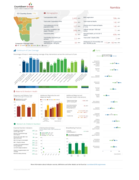
The Countdown country profiles present in one place the latest evidence to assess country progress in improving women’s, children’s and adolescents’ health. The profiles, including an interactive version of them and all associated data, can be found by viewing the latest country profile data.

Integrated Outbreak Analytics (IOA) applies a multidisciplinary approach to understanding outbreak dynamics and to inform outbreak response. It aims to drive comprehensive, accountable, and effective public health and clinical strategies by enabling communities, and national and subnational health a
...
uthorities to use data for operational decision-making. IOA embraces a holistic perspective of outbreak dynamics throughout: from the trigger questions to the data that are collected or accessed, to the interpretation of results and the recommendations that follow. In addition, IOA promotes co-development and monitoring of evidence informed actions.
The IOA toolkit aims to provide a clear understanding of IOA and highlight the importance of using an integrated, holistic approach to manage outbreak responses. It provides step-by-step guidance for setting up IOA and putting IOA principles into action. Finally, this toolkit provides guidance on applying IOA in humanitarian and emergency contexts, offering a practical and adaptable approach to informing public health emergency responses.
Developed based on the model from the Democratic Republic of the Congo (DRC), its creation involved extensive consultation with experts experienced in IOA applications. The toolkit was piloted in Tanganyika Province, DRC, as well as Somalia and Sudan, demonstrating its adaptability to diverse emergency scenarios. It builds upon an existing array of tools, templates, reports, case studies, animations, and publications used by stakeholders in diverse contexts.
more

This manual was developed based on the recommendations of a global technical consultation on child health in humanitarian emergencies co-organized by WHO and UNICEF at the end of 2003. WHO in collaboration with the Centre for Refugee and Disaster Response, Bloomberg School of Public Health, Johns Ho
...
pkins University undertook a systematic review in 2004. It demonstrated that existing guidelines, including The Integrated Management of Childhood Illness (IMCI), do not cover all priority conditions in emergencies. The objective of this manual is to provide comprehensive guidance on child care in emergencies.
more

Communicable Diseases Control in Emergencies
recommended
A field manual

Nutrition Surveys
Part 1 Definitions
