
Filter
1284
Text search:
Pan
American
Health
Organization
Featured
141
228
Language
Document type
396
275
263
106
58
52
30
29
19
19
12
10
6
5
Countries
195
89
56
26
25
24
21
21
16
15
15
10
9
8
8
7
7
7
7
6
6
6
5
5
5
5
5
5
5
4
4
4
4
4
4
4
4
4
3
3
3
3
3
3
2
2
2
2
2
2
2
2
2
2
2
2
2
2
2
2
1
1
1
1
1
1
1
1
1
1
1
1
1
1
1
1
1
1
1
1
1
1
1
1
1
1
1
1
1
1
1
1
1
1
Authors & Publishers
Publication Years
Category
316
146
114
110
92
26
20
Toolboxes
216
112
111
72
65
57
55
37
35
35
32
32
26
22
21
18
16
15
14
13
12
11
7
5
3
2

The ethical governance of research assumes the existence of a national entity (or subnational if applicable, according to the constitution of a country) in charge of supervising the research ethics committees (RECs) that review and monitor research with human beings. This supervision includes the ac
...

La segunda década de la vida es un periodo de rápido desarrollo y cambio biológico, cognitivo, emocional y social. Durante la adolescencia, los individuos adquieren muchos de los recursos para mantener su salud y bienestar a lo largo de su vida. Invertir en la salud y el bienestar de los y las ad
...
The purpose of this course is to contribute to the reduction of morbidity and mortality in children and adolescents with cancer by strengthening the capacities of healthcare professionals on the early diagnosis of cancer with concepts and learning instruments that allow them to recognize the signs a
...

As the Americas undergo profound demographic change and there are more persons aged 65 years or older than children younger than 5 years, it is crucial to recognize that national immunization programs must be redesigned to ensure comprehensive protection for individuals across the lifespan. By adopt
...

A medida que las Américas experimentan un profundo cambio demográfico y hay más personas de 65 años que menores de 5 años, es crucial reconocer que los programas nacionales de inmunización deben rediseñarse para garantizar una protección integral a las personas a lo largo de toda su vida. Al
...
PAHO has developed a series of country profiles on diabetes that illustrate the growing burden of diabetes and diabetic kidney disease in countries in the Region of the Americas. The country profiles reveal that over the past 20 years, diabetes disability (excluding diabetic kidney disease) increase
...
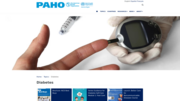
Diabetes is a chronic, metabolic disease characterized by elevated levels of blood glucose (or blood sugar), which leads over time to serious damage to the heart, blood vessels, eyes, kidneys and nerves. The most common is type 2 diabetes, usually in adults, which occurs when the body becomes resist
...

The Resolution Population and Individual Approaches to the Prevention and Management of Diabetes and Obesity was approved by the 48th Directing Council of the Pan American
...
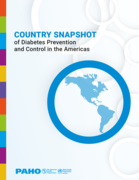
Diabetes is a major public health problem in the Americas and worldwide, demanding special attention and integrated response. It is estimated that more than 62 million adults are living with diabetes in the Americas. The projections show that diabet
...
The World Health Organization (WHO) Global Diabetes Compact (GDC) was created as a global initiative to improve diabetes prevention and care, and to contribute to the global targets to reduce premat
...
Every November 14, World Diabetes Day is commemorated. This is an opportunity to raise awareness about the impact of diabetes on the health of people and to highlight the opportunities to strengthen the prevention, diagnosis, and treatment of diabet
...
At the global, national, and regional levels, there are several guidelines and guides regarding the preparedness, prevention, surveillance, and control of diseases caused by respiratory viruses; most initiatives focus on specific virus events or cases. During the coronavirus disease 2019 (COVID-19)
...
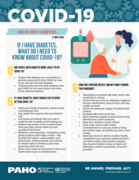
ARE PEOPLE WITH DIABETES MORE LIKELY TO GET COVID-19? People with diabetes are more likely to become seriously ill from COVID-19, than those who do not have diabetes. Unfortunately, persons with diabetes who get COVID-19 are more likely to die than those without diabetes.
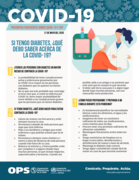
ARE PEOPLE WITH DIABETES MORE LIKELY TO GET COVID-19?
• People with diabetes are more likely to become seriously ill from COVID-19, than those who do not have diabetes.
• Unfortunately, persons with diabetes who get COVID-19 are more likely to die than those without diabetes.
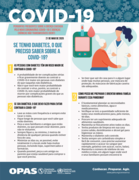
ARE PEOPLE WITH DIABETES MORE LIKELY TO GET COVID-19?
• People with diabetes are more likely to become seriously ill from COVID-19, than those who do not have diabetes.
• Unfortunately, persons with diabetes who get COVID-19 are more likely to die than those without diabetes.

En los últimos decenios, el estado general de salud de las personas ha mejorado considerablemente, lo que ha llevado a un aumento de la esperanza de vida al nacer en la mayor parte de los países de la Región de las Américas. Este progreso ha sido el resultado tanto de los avances en las tecnolog
...

Obesity and diabetes are affecting the peoples of the Americas at high and increasing rates. National surveys demonstrate that obesity is increasing in prevalence among all age groups; 7% to 12% of children under 5 years old and
one-fi fth of adolescents are obese, while rates of overweight and obe
...
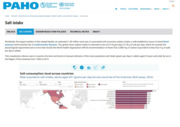
The article on the PAHO website discusses the health risks of excessive salt consumption, which contributes to numerous deaths worldwide. It highlights that average salt intake significantly exceeds WHO recommendations, particularly in the Americas,
...

Thumbnail
View/Open
Español; 60 páginas (1.990Mb)
facebook sharing buttontwitter sharing buttonlinkedin sharing buttonwhatsapp sharing buttonemail sharing buttonsharethis sharing button
Date
2024
ISBN
978-92-75-32867-5
DOI
https://doi.org/10.37774/9789275328675
Author
Organización Pan
...

Thumbnail
View/Open
Español; 70 páginas (1.945Mb)
facebook sharing buttontwitter sharing buttonlinkedin sharing buttonwhatsapp sharing buttonemail sharing buttonsharethis sharing button
Date
2024
ISBN
978-92-75-32841-5 (PDF)
978-92-75-32842-2 (versión impresa)
DOI
https://doi.org
...
