
Filter
373
Text search:
mine
action
Featured
25
99
Language
Document type
221
70
23
20
17
7
6
5
2
1
1
Countries
18
14
13
11
10
9
8
8
8
7
7
7
6
6
5
5
5
5
4
4
4
4
4
4
3
3
3
3
3
3
2
2
2
2
2
2
2
2
2
1
1
1
1
1
1
1
1
1
1
1
1
1
1
1
1
1
1
1
1
1
1
1
1
1
1
Authors & Publishers
Publication Years
Category
145
35
21
10
9
6
Toolboxes
45
36
24
20
18
17
14
12
10
9
8
7
7
7
7
7
6
5
3
3
3
2
Mainstreaming Persons with Disabilities into Society
Technical Brief

Guidance on TB and TB/HIV prevention, diagnosis, treatment and care in the workplace
This publication explores how housing, land and property rights issues have been addressed in peace agreements concluded over the past three decades. It provides practical guidance for peace negotiators on all sides in Myanmar and outlines how addressing these rights in the peace process will build
...
How-to Guide Series

Reflections from disability research using the ICF in Afghanistan and Cambodia | Working Paper Series: No. 11

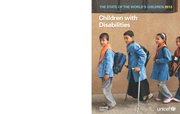
The State of the World’s Children 2013: Children with Disabilities examines the barriers – from inaccessible buildings to dismissive attitudes, from invisibility in official statistics to vicious discrimination – that deprive children with disabilities of their rights and keep them from partic
...

…voices of persons with disabilities - Part 1
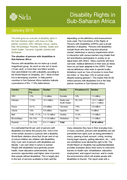
This brief gives an overview of disability rights in the Sub-Saharan region, with focus on Sida partner countries; DRC, Ethiopia, Kenya, Liberia, Mali, Mozambique, Rwanda, Somalia, Sudan and South Sudan, Tanzania, Uganda, Zambia and Zimbabwe
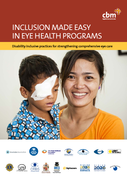
Disability inclusive practices for strengthening comprehensive eye care
Disability-inclusive development policy and practice is constantly changing and evolving. It is a foundational part of our work in CBM, underpinning all that we do. It requires us to be constantly reflecting, learning and improving our practice. In particular looking to the deeper questions: of the
...
The Barefoot Guide 5: Mission Inclusion - Stories and practices of building a world where all belong
From 2011 until 2016, a multi-actor programme was run in five countries to improve the life chances and living conditions of people experiencing exclusion and marginalisation of various kinds. This programme worked with local leaders, organisations and movements as well as various institutions and a
...
Effective risk communication requires the alignment of complex factors including trust between the communicator and the audience(s), audience involvement, and emotional responses to risk. Risk communication is especially challenging now as new media changes the landscape for both
communicators and
...
Key Features:
• Module Users: Disaster Management Trainers
• Training Targets: State Government and District
officials / Disaster Management Authorities / Disaster
Management Planners and Responders
• Training Duration: 5 working days (one week)
• Trainers Input: Multi-disciplinary
â€
...
