
Filter
5301
Text search:
service
availability
Featured
492
1548
Language
5188
108
81
55
46
28
24
8
6
5
4
3
3
3
3
3
3
2
2
2
2
2
2
2
2
2
2
1
1
1
1
1
1
1
1
1
1
1
1
1
1
1
1
1
1
1
1
1
1
1
1
1
1
Document type
2883
929
688
310
279
76
70
42
9
7
3
2
Countries
244
231
194
152
132
131
122
119
118
107
107
97
89
88
86
86
77
71
69
68
65
63
57
53
48
41
38
37
37
37
35
35
34
33
32
31
31
30
23
23
21
19
19
17
16
16
16
15
14
14
14
13
12
10
10
10
9
9
9
9
8
8
8
7
7
7
7
7
7
6
6
6
6
5
5
5
5
4
4
4
4
4
4
4
4
3
3
3
3
3
3
3
3
3
3
2
2
2
2
2
2
2
2
2
2
2
2
2
2
2
2
2
2
2
2
1
1
1
1
1
1
1
1
1
1
1
1
1
1
1
1
1
1
1
1
1
1
1
1
1
1
1
1
1
Authors & Publishers
750
220
158
133
132
106
102
89
60
52
38
34
30
28
25
25
25
24
24
22
22
21
20
20
20
19
19
19
19
18
18
18
18
18
17
16
16
16
16
16
15
15
15
15
14
14
14
14
14
13
13
13
13
13
12
12
12
12
12
12
11
11
11
11
11
11
11
11
11
10
10
10
10
10
9
9
9
9
9
9
9
9
9
9
9
8
8
8
8
8
8
8
8
8
8
8
8
7
7
7
7
7
7
7
7
7
7
7
7
7
7
7
7
7
7
7
6
6
6
6
6
6
6
6
6
6
6
6
6
6
6
6
6
6
6
6
6
6
6
6
6
6
6
6
5
5
5
5
5
5
5
5
5
5
5
5
5
5
5
5
5
5
5
5
5
5
5
5
5
5
5
5
5
5
5
5
5
4
4
4
4
4
4
4
4
4
4
4
4
4
4
4
4
4
4
4
4
4
4
4
4
4
4
4
4
4
4
4
4
4
4
4
4
4
4
4
4
4
4
4
4
4
4
4
4
4
4
4
4
4
3
3
3
3
3
3
3
3
3
3
3
3
3
3
3
3
3
3
3
3
3
3
3
3
3
3
3
3
3
3
3
3
3
3
3
3
3
3
3
3
3
3
3
3
3
3
3
3
3
3
3
3
3
3
3
3
3
3
3
3
3
3
3
3
3
3
3
3
3
3
3
3
3
3
3
3
3
3
3
3
3
3
3
3
3
3
3
3
3
3
3
3
3
2
2
2
2
2
2
2
2
2
2
2
2
2
2
2
2
2
2
2
2
2
2
2
2
2
2
2
2
2
2
2
2
2
2
2
2
2
2
2
2
2
2
2
2
2
2
2
2
2
2
2
2
2
2
2
2
2
2
2
2
2
2
2
2
2
2
2
2
2
2
2
2
2
2
2
2
2
2
2
2
2
2
2
2
2
2
2
2
2
2
2
2
2
2
2
2
2
2
2
2
2
2
2
2
2
2
2
2
2
2
2
2
2
2
2
2
2
2
2
2
2
2
2
2
2
2
2
2
2
2
2
2
2
2
2
2
2
2
2
2
2
2
2
2
2
2
2
2
2
2
2
2
2
2
2
2
2
2
2
2
2
2
2
2
2
2
2
2
2
2
2
2
2
2
2
2
2
2
2
2
2
2
2
2
2
2
2
2
2
2
2
2
2
2
2
2
2
2
2
2
2
2
2
2
2
2
2
2
2
2
2
2
2
2
2
2
2
2
2
2
2
2
2
2
2
2
2
2
2
2
2
2
2
2
2
2
2
2
2
2
2
2
2
2
2
2
2
2
2
2
2
2
2
2
2
2
2
2
2
2
2
2
2
2
2
2
2
2
1
1
1
1
1
1
1
1
1
1
1
1
1
1
1
1
1
1
1
1
1
1
1
1
1
1
1
1
1
1
1
1
1
1
1
1
1
1
1
1
1
1
1
1
1
1
1
1
1
1
1
1
1
1
1
1
1
1
1
1
1
1
1
1
1
1
1
1
1
1
1
1
1
1
1
1
1
1
1
1
1
1
1
1
1
1
1
1
1
1
1
1
1
1
1
1
1
1
1
1
1
1
1
1
1
1
1
1
1
1
1
1
1
1
1
1
1
1
1
1
1
1
1
1
1
1
1
1
1
1
1
1
1
1
1
1
1
1
1
1
1
1
1
1
1
1
1
1
1
1
1
1
1
1
1
1
1
1
1
1
1
1
1
1
1
1
1
1
1
1
1
1
1
1
1
1
1
1
1
1
1
1
1
1
1
1
1
1
1
1
1
1
1
1
1
1
1
1
1
1
1
1
1
1
1
1
1
1
1
1
1
1
1
1
1
1
1
1
1
1
1
1
1
1
1
1
1
1
1
1
1
1
1
1
1
1
1
1
1
1
1
1
1
1
1
1
1
1
1
1
1
1
1
1
1
1
1
1
1
1
1
1
1
1
1
1
1
1
1
1
1
1
1
1
1
1
1
1
1
1
1
1
1
1
1
1
1
1
1
1
1
1
1
1
1
1
1
1
1
1
1
1
1
1
1
1
1
1
1
1
1
1
1
1
1
1
1
1
1
1
1
1
1
1
1
1
1
1
1
1
1
1
1
1
1
1
1
1
1
1
1
1
1
1
1
1
1
1
1
1
1
1
1
1
1
1
1
1
1
1
1
1
1
1
1
1
1
1
1
1
1
1
1
1
1
1
1
1
1
1
1
1
1
1
1
1
1
1
1
1
1
1
1
1
1
1
1
1
1
1
1
1
1
1
1
1
1
1
1
1
1
1
1
1
1
1
1
1
1
1
1
1
1
1
1
1
1
1
1
1
1
1
1
1
1
1
1
1
1
1
1
1
1
1
1
1
1
1
1
1
1
1
1
1
1
1
1
1
1
1
1
1
1
1
1
1
1
1
1
1
1
1
1
1
1
1
1
1
1
1
1
1
1
1
1
1
1
1
1
1
1
1
1
1
1
1
1
1
1
1
1
1
1
1
1
1
1
1
1
1
1
1
1
1
1
1
1
1
1
1
1
1
1
1
1
1
1
1
1
1
1
1
1
1
1
1
1
1
1
1
1
1
1
1
1
1
1
1
1
1
1
1
1
1
1
1
1
1
1
1
1
1
1
1
1
1
1
1
1
1
1
1
1
1
1
1
1
1
1
1
1
1
1
1
1
1
1
1
1
1
1
1
1
1
1
1
1
1
1
1
1
1
1
1
1
1
1
1
1
1
1
1
1
1
1
1
1
1
1
1
1
1
1
1
1
1
1
1
1
1
1
1
1
1
1
1
1
1
1
1
1
1
1
1
1
1
1
1
1
1
1
1
1
1
1
1
1
1
1
1
1
1
1
1
1
1
1
1
1
1
1
1
1
1
1
1
1
1
1
1
1
1
1
1
1
1
1
1
1
1
1
1
1
1
1
1
1
1
1
1
1
1
1
1
1
1
1
1
1
1
1
1
1
1
1
1
1
1
1
1
1
1
1
1
1
1
1
1
1
1
1
1
1
1
1
1
1
1
1
1
1
1
1
1
1
1
1
1
1
1
1
1
1
1
1
1
1
1
1
1
1
1
1
1
1
1
1
1
1
1
1
1
1
1
1
1
1
1
1
1
1
1
1
1
1
1
1
1
1
1
1
1
1
1
1
1
1
1
1
1
1
1
1
1
1
1
1
1
1
1
1
1
1
1
1
1
1
1
1
1
1
1
1
1
1
1
1
1
1
1
1
1
1
1
1
1
1
1
1
1
1
1
1
1
1
1
1
1
1
1
1
1
1
1
1
1
1
1
1
1
1
1
1
1
1
1
1
1
1
1
1
1
1
1
1
1
1
1
1
1
1
1
1
1
1
1
1
1
1
1
1
1
1
1
1
1
1
1
1
1
1
1
1
1
1
1
1
1
1
1
1
1
1
1
1
1
1
1
1
1
1
1
1
1
1
1
1
1
1
1
1
1
1
1
1
1
1
1
1
1
1
1
1
1
1
1
1
1
1
1
1
1
1
1
1
1
1
1
1
1
1
1
1
1
1
1
1
1
1
1
1
1
1
1
1
1
1
1
1
1
1
1
1
1
1
1
1
1
1
1
1
1
1
1
1
1
1
1
1
1
1
1
1
1
1
1
1
1
1
1
1
1
1
1
1
1
1
1
1
1
1
1
1
1
1
1
1
1
1
1
1
1
1
1
1
1
1
1
1
1
1
1
1
1
1
1
1
1
1
1
1
1
1
1
1
1
1
1
1
1
1
1
1
1
1
1
1
1
1
1
1
1
1
1
1
1
1
1
1
1
1
1
1
1
1
1
1
1
1
1
1
1
1
1
1
1
1
1
1
1
1
1
1
1
1
1
1
1
1
1
1
1
1
1
1
1
1
1
1
1
1
1
1
1
1
1
1
1
1
1
1
1
1
1
1
1
1
1
1
1
1
1
1
1
1
1
1
1
1
1
1
1
1
1
1
1
1
1
1
1
1
1
1
1
1
1
1
1
1
1
1
1
1
1
1
1
1
1
1
1
1
1
1
1
1
1
1
1
1
1
1
1
1
1
1
1
1
1
1
1
1
1
1
1
1
1
1
1
1
1
1
1
1
1
1
1
1
1
1
1
1
1
1
1
1
1
1
1
1
1
1
1
1
1
1
1
1
1
1
1
1
1
1
1
1
1
1
1
1
1
1
1
1
1
1
1
1
1
1
1
1
1
1
1
1
1
1
1
1
1
1
1
1
1
1
1
1
1
1
1
1
1
1
1
1
1
1
1
1
1
1
1
1
1
1
1
1
1
1
1
1
1
1
1
1
1
1
1
1
1
1
1
1
1
1
1
1
1
1
1
1
1
1
1
1
1
1
1
1
1
1
1
1
1
1
1
1
1
1
1
1
1
1
1
1
1
1
1
1
1
1
1
1
1
1
1
1
1
1
1
1
1
1
1
1
1
1
1
1
1
1
1
1
1
1
1
1
1
1
1
1
1
1
1
1
1
1
1
1
1
1
1
1
1
1
1
1
1
1
1
1
1
1
1
1
1
1
1
1
1
1
1
1
1
1
1
1
1
1
1
1
1
1
1
1
1
1
1
1
1
1
1
1
1
1
1
1
1
1
1
1
1
1
1
1
1
1
1
1
1
1
1
1
1
1
1
1
1
1
1
1
1
1
1
1
1
1
1
1
1
1
1
1
1
1
1
1
1
1
1
1
1
1
1
1
1
1
1
1
1
1
1
1
1
1
1
1
1
1
1
1
1
1
1
1
1
1
1
1
1
1
1
1
1
1
1
1
1
1
1
1
1
1
1
1
1
1
1
1
1
1
1
1
1
1
1
1
1
1
1
1
1
1
1
1
1
1
1
1
1
1
1
1
1
1
1
1
1
1
1
1
1
1
1
1
1
1
1
1
1
1
1
1
1
1
1
1
1
1
1
1
1
1
1
1
1
1
1
1
1
1
1
1
1
1
1
1
1
1
1
1
1
1
1
1
1
1
1
1
1
1
1
1
1
1
1
1
1
1
1
1
1
1
1
1
1
1
1
1
1
1
1
1
1
1
1
1
1
1
1
1
1
1
1
1
1
1
1
1
1
1
1
1
1
1
1
1
1
1
1
1
1
1
1
1
1
1
1
1
1
1
1
1
1
1
1
1
1
1
1
1
1
1
1
1
1
1
1
1
1
1
1
1
1
1
1
1
1
1
1
1
1
1
1
1
1
1
1
1
1
1
1
1
1
1
1
1
1
1
1
1
1
1
1
1
1
1
1
1
1
1
1
1
1
1
1
1
1
1
1
1
1
1
1
1
1
1
1
1
1
1
1
1
1
1
1
1
1
1
1
1
1
1
1
1
1
1
1
1
1
1
1
1
1
1
1
1
1
1
1
1
1
1
1
1
1
1
1
1
1
1
1
1
1
1
1
1
1
1
1
1
1
1
1
1
1
1
1
1
1
1
1
1
1
1
1
1
1
1
1
1
1
1
1
1
1
1
1
1
1
1
1
1
1
1
1
1
1
1
1
1
1
1
1
1
1
1
1
1
1
1
1
1
1
1
1
1
1
1
1
1
1
1
1
1
1
1
1
1
1
1
1
1
1
1
1
1
1
1
1
1
1
1
1
1
1
1
1
1
1
1
1
1
1
1
1
1
1
1
1
1
1
1
1
1
1
1
1
1
1
1
1
1
1
1
1
1
1
1
1
1
1
1
1
1
1
1
1
1
1
1
1
1
1
1
1
1
1
1
1
1
1
1
1
1
1
1
1
1
1
1
1
1
1
1
1
1
1
1
1
1
1
1
1
1
1
1
1
1
1
1
1
1
1
1
1
1
1
1
1
1
1
1
1
1
1
1
1
1
1
1
1
1
1
1
1
1
1
1
1
1
1
1
1
1
1
1
1
1
1
1
1
1
1
1
1
1
1
1
1
1
1
1
1
1
1
1
1
1
1
1
1
1
1
1
1
1
1
1
1
1
1
1
1
1
1
1
1
1
1
1
1
1
1
1
1
1
1
1
1
1
1
1
1
1
1
1
1
1
1
1
1
1
1
1
1
1
1
1
1
1
1
1
1
1
1
1
1
1
1
1
1
1
1
1
1
1
1
1
1
1
1
1
1
1
1
1
1
1
1
1
1
1
1
1
1
1
1
1
1
1
1
1
1
1
1
1
1
1
1
1
1
1
1
1
1
1
1
1
1
1
1
1
1
1
1
1
1
1
1
1
1
1
1
1
1
1
1
1
1
1
1
1
1
1
1
1
1
1
1
1
1
1
1
1
1
1
1
1
1
1
1
1
1
1
1
1
1
1
1
1
1
1
1
1
1
1
1
1
1
1
1
1
1
1
1
1
1
1
1
1
1
1
1
1
1
1
1
1
1
1
1
1
1
1
1
1
1
1
1
1
1
1
1
1
1
1
1
1
1
1
1
1
1
1
1
1
1
1
1
1
1
1
1
1
1
1
1
1
1
1
1
1
1
1
1
1
1
1
1
1
1
1
1
1
1
1
1
1
1
1
1
1
1
1
1
1
1
1
1
1
1
1
1
1
1
1
1
1
1
1
1
1
1
1
1
1
1
1
1
1
1
1
1
1
1
1
1
1
1
1
1
1
1
1
1
1
1
1
1
1
1
1
1
1
1
1
1
1
1
1
1
1
1
1
1
1
1
1
1
1
1
1
1
1
1
1
1
1
1
1
1
1
1
1
1
1
1
1
1
1
1
1
1
1
1
1
1
1
1
1
1
1
1
1
1
1
1
1
1
1
1
1
1
1
1
1
1
1
1
1
1
1
1
1
1
1
1
1
1
1
1
1
1
1
1
1
1
1
1
1
1
1
1
1
1
1
1
1
1
1
1
1
1
1
1
1
1
1
1
1
1
1
1
1
1
1
1
1
1
1
1
1
1
1
1
1
1
1
1
1
1
1
1
1
1
1
1
1
1
1
1
1
1
1
1
1
1
1
1
1
1
1
1
1
1
1
1
1
1
1
1
1
1
1
1
1
1
1
1
1
1
1
1
1
1
1
1
1
1
1
1
1
1
1
1
1
1
1
1
1
1
1
1
1
1
1
1
1
1
1
1
1
1
1
1
1
1
1
1
1
1
1
1
1
1
1
1
1
1
1
1
1
1
1
1
1
1
1
1
1
1
1
1
1
1
1
1
1
1
1
1
1
1
1
1
1
1
1
1
1
1
1
1
1
1
1
1
1
1
1
1
1
1
1
1
1
1
1
1
1
1
1
1
1
1
1
1
1
1
1
1
1
1
1
1
1
1
1
1
1
1
1
1
1
1
1
1
1
1
1
1
1
1
1
1
1
1
1
1
1
1
1
1
1
1
1
1
1
1
1
1
1
1
1
1
1
1
1
1
1
1
1
1
1
1
1
1
1
1
1
1
1
1
1
1
1
1
1
1
1
1
1
1
1
1
1
1
1
1
1
1
1
1
1
1
1
1
1
1
1
1
1
1
1
1
1
1
1
1
1
1
1
1
1
1
1
1
1
1
1
1
1
1
1
1
1
1
1
1
1
1
1
1
1
1
1
1
1
1
1
1
1
1
1
1
1
1
1
1
1
1
1
1
1
1
1
1
1
1
1
1
1
1
1
1
1
1
1
1
1
1
1
1
1
1
1
1
1
1
1
1
1
1
1
1
1
1
1
1
1
1
1
1
1
1
1
1
1
1
1
1
1
1
1
1
1
1
1
1
1
1
1
1
1
1
1
1
1
1
1
1
1
1
1
1
1
1
1
1
1
1
1
1
1
1
1
1
1
1
1
1
1
1
1
1
1
1
1
1
1
1
1
1
1
1
1
1
1
1
1
1
1
1
1
1
1
1
1
1
1
1
1
1
1
1
1
1
1
1
1
1
1
1
1
1
1
1
1
1
1
1
1
1
1
1
1
1
1
1
1
1
1
1
1
1
1
1
1
1
1
1
1
1
1
1
1
1
1
1
1
1
1
1
1
1
1
1
1
1
1
1
1
1
1
1
1
1
1
1
1
1
1
1
1
1
1
1
1
1
1
1
1
1
1
1
1
1
1
1
1
1
1
1
1
1
1
1
1
1
1
1
1
1
1
1
1
1
1
1
1
1
1
1
1
1
1
1
1
1
1
1
1
1
1
1
1
1
1
1
1
1
1
1
1
1
1
1
1
1
1
1
1
1
1
1
1
1
1
1
1
1
1
1
1
1
1
1
1
1
1
1
1
1
1
1
1
1
1
1
1
1
1
1
1
1
1
1
1
1
1
1
1
1
1
1
1
1
1
1
1
1
1
1
1
1
1
1
1
1
1
1
1
1
1
1
1
1
1
1
1
1
1
1
1
1
1
1
1
1
1
1
1
1
1
1
1
1
1
1
1
1
1
1
1
1
1
1
1
1
1
1
1
1
1
1
1
1
1
1
1
1
1
1
1
1
1
1
1
1
1
1
1
1
1
1
1
1
1
1
1
1
1
1
1
1
1
1
1
1
1
1
1
1
1
1
1
1
1
1
1
1
1
1
1
1
1
1
1
1
1
1
1
1
1
1
1
1
1
1
1
1
1
1
1
1
1
1
1
1
1
1
1
1
1
1
1
1
1
1
1
1
1
1
1
1
1
1
1
1
1
1
1
1
1
1
1
1
1
1
1
1
1
1
1
1
1
1
1
1
1
1
1
1
1
1
1
1
1
1
1
1
1
1
1
1
1
1
1
1
1
1
1
1
1
1
1
Publication Years
1584
3219
474
22
2
Category
2330
384
331
292
287
110
57
1
Toolboxes
411
397
229
226
189
186
163
152
123
123
105
100
95
93
91
82
78
76
68
67
30
22
21
20
15
5
1
Ghana's attempt to regulate health care waste management started in 2002 with the development of guidelines on health care waste manage-ment by the Environmental Protection Agency (EPA). In 2006, the Ghana Health Service (GHS) also developed the Hea
...
lth Care Waste Management Policy and Guidelines as a single document.
Although awareness on Health Care Waste Management (HCWM) has improved in recent years, there is the need for a systematic approach to improve on effective segregation, safe collection, and storage, as well as ultimate treatment before disposal.
This guideline seeks to ensure that HCW is managed effectively in compliance with existing International Conventions that Ghana is a signatory to, national laws and regulations, and others to be passed in future.
Recommendations for better management of HCW in the nation's health care facilities have been presented in this document. Also, standard operating procedures (SOPs) have been developed to provide
guidance to various levels of the health facilities.
more
The COVID-19 pandemic has impacted regular cardiovascular healthcare access and delivery. Service utilisation has declined, and excess cardiovascular mortality has been reported in several countries. We aim to estimate excess cardiovascular deaths i
...
n Chile during 2020.
more
It explains the importance of faecal sludge management in urban areas in which many people rely on on-site and decentralized sanitation facilities and emphasizes the place of treatment in the overall sanitation service chain. It defines terms used t
...
hroughout the book, explains why faecal sludge and septage treatment is important, and identifies broad treatment objectives.
more

This analysis focused on the chronic form of HAT caused by T. b. gambiense, as it contributes to the majority of disease burden. Information from the literature review,
product development landscape, and stakeholder interviews was compiled to:
- Identify use cases and understand current diagnosti
...
c practices and tools associated with each use case.
- Analyze progress toward robust diagnostics for HAT across different biomarkers.
- Develop recommendations for steps to improve the availability, access, and adoption of HAT diagnostic tools.
more
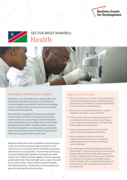
Namibia has a two-tier health system: public health under the Ministry of Health and Social Services (MoHSS) and the private health service. MoHSS‘ vision is to be the leading provider of quality health care and social services according to intern
...
ational set standards. Since Namibia’s independence, the government adopted Primary Health Care (PHC) as the approach to providing health service and as a key strategy in attaining the goal of health. Good health is also strengthened by the Sustainable Development Goals (SDGs). The SDGs provide a road map for human development and, among others, systematically address the social determinants of health. Notable is Goal 3, which focuses on good health and well-being.
more

Africa’s health sector is facing an unprecedented financing crisis, driven by a sharp decline of 70% in Official Development Assistance (ODA) from 2021 to 2025 and deep-rooted structural vulnerabilities. This collapse is placing immense pressure on Africa’s already fragile health systems as ODA
...
is seen as the backbone of critical health programs: pandemic preparedness, maternal and child health services, disease control programs are all at
risk, threatening Sustainable Development Goal 3 and Universal Health Coverage. Compounding this is Africa’s spiraling debt, with countries expected to service USD 81 billion by 2025—surpassing anticipated external financing inflows—further eroding fiscal space for health investments. Level of domestic resources is low. TThe Abuja Declaration of 2001, a pivotal commitment made by African Union (AU) member states, aimed to reverse this trend by pledging to allocate at least 15% of national budgets to the health sector. However, more than two decades later, only three countries—Rwanda, Botswana, and Cabo Verde—have
consistently met or exceeded this target (WHO, 2023). In contrast, over 30 AU member states remain well below the 10% benchmark, with some allocating as little as 5–7% of their national budgets to health.
In addition, only 16 (29%) of African countries currently have updated versions of National Health Development Plan (NHDP) supported by a National Health Financing Plan (NHFP). These two documents play a critical role in driving internal resource mobilisation. At the same time, public health emergencies are surging, rising 41%—from 152 in 2022 to
213 in 2024—exposing severe under-resourcing of health infrastructure and workforce. Recurring outbreaks (Mpox, Ebola, cholera, measles, Marburg…) alongside effects of climate change and humanitarian crises in Eastern DRC, the Sahel, and Sudan, are overwhelming systems stretched by chronic underfunding. The situation is worsened by Africa’s heavy dependency with over 90% of vaccines, medicines, and diagnostics being externally sourced—leaving countries vulnerable to global supply chain shocks. Health worker shortages persist, with only 2.3 professionals
per 1,000 people (below the WHO’s recommended 4.45), and fewer than 30% of systems are digitized, undermining disease surveillance and early warning. Without decisive action, Africa CDC projects the continent could reverse two decades of health progress, face 2 to 4 million additional preventable deaths annually, and a heightened risk of a pandemic emerging from within. Furthermore, 39 million more
Africans could be pushed into poverty by 2030 due to intertwined health and economic shocks. This is not just a sectoral crisis—it is an existential threat to Africa’s political, social, and economic resilience, and global stability. In response, African leaders, under Africa CDC’s stewardship, are advancing a comprehensive three-pillar strategy centered on domestic resource mobilization, innovative financing, and blended finance.
more

The objective of this guideline is to present the complete set of all WHO recommendations and best practice statements relating to abortion. While legal, regulatory, policy and service-delivery contexts may vary from country to country, the recommen
...
dations and best practices described in this document aim to enable evidence-based decision-making with respect to quality abortion care.
more

Strategic information and analytics report No 1, published 17 April 2025. 75 out of 106
surveyed countries reported disruptions in at least one essential health service area.

The guide presents a structured framework covering assessment and planning, service delivery models, integration with broader health and social services, monitoring, and sustainability. It emphasizes community leadership, human rights, equitable acc
...
ess and adaptation to local contexts, including closed settings. Practical tools are included to support implementation and accelerate progress towards global targets for controlling HIV and eliminating viral hepatitis epidemics.
more
Hand hygiene is a simple yet powerful tool in interrupting the transmission of the monkeypox virus (MPXV) and other infectious disease both in healthcare facilities and communities. However millions still lack access to basic hygiene services particularly in vulnerable and resource limited settings.
...
Governments must urgently ensure universal access to functioning hand hygiene stations in public and healthcare facilities, promote correct hand hygiene practices, and integrate hand hygiene into national polices and response strategies, to contain mpox. There is a need for multimodal approach- combining political leadership, availability of supplies, evidence based behavioral change strategies and strengthened healthcare practices is critical.
more

This predominantly qualitative research on disability and development in Myanmar was conducted between August 2011 and February 2012, in three commercial centres of Yangon, Mandalay and Taunggyi. Stakeholders of service providers, persons with disab
...
ilities (PWDs) and families of disabled people were interviewed in order to discover the needs and challenges that they face. Discoveries were made concerning independent living and adaptive education, vocational training and livelihoods challenges, community-based rehabilitation, organisational and human resource capacity, and information channels, networking and cooperation between organisations.
The study found that PWDS, especially those with intellectually disabilities, need training for independent living, adaptive special education, motor development programs and behaviour modification programs in special institutions. Effective services and programs are necessary in all of these areas of need. more
The study found that PWDS, especially those with intellectually disabilities, need training for independent living, adaptive special education, motor development programs and behaviour modification programs in special institutions. Effective services and programs are necessary in all of these areas of need. more

In fragile, conflict-affected and vulnerable settings, delivery of quality health services faces significant challenges, including disruption of a routine health service organization and delivery systems, increased health needs, complex and unpredic
...
table resourcing issues, and vulnerability to multiple public health crises. Despite the difficulty of addressing quality in such settings, the necessity for action is acute, given the significant health needs of the populations in these environments and the increasing numbers of people for whom such settings are home.
This manual has been developed to provide a starting point for multi-actor efforts and actions to address quality of care in the most challenging settings. This includes practical approaches to action planning and implementation of a contextualised set of quality interventions.
more

31 Janaury 2021
SCORE for health data technical package. The first global assessment on the status and capacity of health information systems in 133 countries, covering 87% of the global population.
It identifies gaps and provides guidance for investment in areas that can have the greatest impact
...
on the quality, availability, analysis, accessibility and use of health data.
more

Uganda hosts approximately 1.1 million refugees making it Africa’s largest refugee hosting country and one of the five largest refugee hosting countries in the world. Most recently, throughout 2016- 2018, Uganda was impacted by three parallel emergencies from South Sudan, the Democratic Republic o
...
f the Congo (DRC), and Burundi. In view of the on-going conflicts and famine
vulnerabilities in the Great Lakes Region, more refugee influxes and protracted refugee situations are anticipated in the foreseeable future. The unprecedented mass influx of refugees into Uganda in 2016-2018 has put enormous pressure on
the country’s basic service provision, in particular health and education services. Refugees share all social services with the local host communities. The refugee hosting districts are among the least developed districts in the country, and thus the additional refugee population is putting a high strain on already limited resources.
more

It is against this background that the Ministry of Health and Sanitation with its partners have
taken the lead to develop Essential Health Services Package (EHSP). The MOHS believes that the
development of EHSP; defining the services that should be available at each level of care
(community to
...
tertiary level), for each age cohort, and across each public health functions, not
only allows for more effective and equitable health service delivery, but also for the
establishment of a functional referral system and allocation of appropriate investments for high
impact interventions. The package is expected to set precedence in defining ‘essential’ set of
services for the population in Sierra Leone, structurally promoting integration of health services,
and providing succinct guidance to partners and stakeholders on the country priorities.
more

This guidance document has been produced by WHO to assist blood services in the development of national plans to respond to any emerging infectious threats to the sufficiency or safety of the blood supply, whether from an existing infectious agent that is changing in incidence and spread, or from a
...
newly identified infectious agent. It is intended that this document be followed to guide the national blood service through the process of planning how to respond in a timely, controlled and appropriate way to any specific infectious threat that may subsequently emerge. It is acknowledged that it is not only the blood supply that may be affected by such emerging infectious threats; in those countries undertaking transplantation, the supply of cell, tissues and organs may also be threatened. Increasingly, blood services are taking overall national responsibility for transplantation in their capacity as the organization responsible for the collection, processing, storage and supply of cells, tissues and organs. This approach is both sensible and appropriate, as the overall donor selection and screening processes are the same or very similar. This guidance document can therefore also be used to assist those bodies responsible for the provision of cells, tissues and organs to prepare for an emerging infectious threat.
more
This document assembles these best practices and provides a resource for the proper management of equipment in the laboratory to ensure accurate, reliable and timely testing, and maintain a high level of laboratory performance. Improved equipment management also lowers repair costs, lengthens instru
...
ment life, reduces interruption of services due to breakdowns and failures, and enables laboratory accreditation and the achievement of high-quality and accessible laboratory services at all levels of healthcare service delivery.
more
The elimination scenario planning (ESP) manual provides malaria-endemic countries with a comprehensive framework to assess different scenarios for moving towards this goal, depending on programme coverage and funding availability. It also helps coun
...
tries set realistic timelines and provides essential knowledge for strategic planning in the long term.
more

A lack of knowledge about the threat of vaccine-preventable diseases, risks and benefits of vaccines, mistrust of government and health workers, poor service delivery and alternative health or religious beliefs play a role in lower uptake of some va
...
ccines. These challenges underscore the importance of early integration and investment in a thoughtful communication plan for immunization programmes. This World Health Organization (WHO) report presents communication guidance and specific considerations for countries that plan to introduce human papillomavirus (HPV) vaccine into their national immunisation programme as part of an effort to prevent cervical cancer.
more
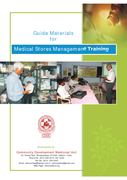
Drugs and medical supplies are dispensed at the cutting edge level of the interface between the public health system and the people. Availability or lack of it brings either credit or discredit to the public health system. The primary reason for hol
...
ding stocks of medicines and medical supplies in a proper scientific manner is to ensure continuous and uninterrupted availability to prevent stock-outs, especially of critical items of supply while at the same time ensuring that stocks of medicines do not get expired. An efficient inventory management is a pre-requisite for optimal stock management. It enables the management of health facilities to know the current pattern of consumption of drug trends over a period of time and also variances. The environmental control of the drugs and other medical supplies play an important role to keep the products' efficacy intact. Some medicines and vaccines need special storage temperature, otherwise, there may be wastage. The quality of the medicines can be adversely affected by poor storage, transportation and distribution. Thus, maintaining proper storage condition for health commodities is vital for ensuring their quality. So, by this training, CDMU wants to educate different people dealing with medicines and equip them for the roles they have to perform efficiently so that the wastage does not take place or can be minimized.
more
