
Filter
2412
Text search:
general
guideline
Featured
350
696
Language
2227
133
57
44
23
18
8
6
5
5
4
3
3
3
3
3
2
2
2
2
2
2
2
1
1
1
1
1
1
1
1
1
1
1
1
1
1
1
1
1
1
Document type
1198
622
263
174
69
39
29
7
4
2
1
1
1
Countries
141
92
81
74
71
68
54
50
48
42
33
33
28
28
27
26
23
23
23
22
20
20
18
18
15
12
11
11
10
10
10
10
10
10
9
9
8
8
7
7
7
7
6
6
6
6
6
6
5
5
5
5
5
4
4
4
4
4
4
4
4
4
4
3
3
3
3
3
3
3
3
3
2
2
2
2
2
2
2
2
2
2
2
2
2
2
1
1
1
1
1
1
1
1
1
1
1
1
1
1
1
1
1
1
1
Authors & Publishers
460
108
83
68
62
40
38
33
28
25
20
17
14
14
13
13
13
13
11
11
11
11
10
10
10
9
9
9
8
8
8
6
6
6
6
6
6
6
6
6
5
5
5
5
5
5
5
5
5
5
5
5
5
5
5
5
5
5
5
4
4
4
4
4
4
4
4
4
4
4
4
4
4
4
4
4
4
4
4
4
4
4
4
4
4
4
4
4
4
3
3
3
3
3
3
3
3
3
3
3
3
3
3
3
3
3
3
3
3
3
3
3
3
3
3
3
3
3
3
3
3
3
3
3
3
3
3
3
3
3
3
3
3
3
3
3
3
3
3
3
3
2
2
2
2
2
2
2
2
2
2
2
2
2
2
2
2
2
2
2
2
2
2
2
2
2
2
2
2
2
2
2
2
2
2
2
2
2
2
2
2
2
2
2
2
2
2
2
2
2
2
2
2
2
2
2
2
2
2
2
2
2
2
2
2
2
2
2
2
2
2
2
2
2
2
2
2
2
2
2
2
2
2
2
2
2
2
2
2
2
2
2
2
2
2
2
2
2
2
2
2
2
2
2
2
2
2
2
2
2
2
2
2
2
2
2
2
2
2
2
2
2
2
2
2
2
2
2
2
2
2
2
2
2
2
2
2
2
2
2
2
2
2
2
1
1
1
1
1
1
1
1
1
1
1
1
1
1
1
1
1
1
1
1
1
1
1
1
1
1
1
1
1
1
1
1
1
1
1
1
1
1
1
1
1
1
1
1
1
1
1
1
1
1
1
1
1
1
1
1
1
1
1
1
1
1
1
1
1
1
1
1
1
1
1
1
1
1
1
1
1
1
1
1
1
1
1
1
1
1
1
1
1
1
1
1
1
1
1
1
1
1
1
1
1
1
1
1
1
1
1
1
1
1
1
1
1
1
1
1
1
1
1
1
1
1
1
1
1
1
1
1
1
1
1
1
1
1
1
1
1
1
1
1
1
1
1
1
1
1
1
1
1
1
1
1
1
1
1
1
1
1
1
1
1
1
1
1
1
1
1
1
1
1
1
1
1
1
1
1
1
1
1
1
1
1
1
1
1
1
1
1
1
1
1
1
1
1
1
1
1
1
1
1
1
1
1
1
1
1
1
1
1
1
1
1
1
1
1
1
1
1
1
1
1
1
1
1
1
1
1
1
1
1
1
1
1
1
1
1
1
1
1
1
1
1
1
1
1
1
1
1
1
1
1
1
1
1
1
1
1
1
1
1
1
1
1
1
1
1
1
1
1
1
1
1
1
1
1
1
1
1
1
1
1
1
1
1
1
1
1
1
1
1
1
1
1
1
1
1
1
1
1
1
1
1
1
1
1
1
1
1
1
1
1
1
1
1
1
1
1
1
1
1
1
1
1
1
1
1
1
1
1
1
1
1
1
1
1
1
1
1
1
1
1
1
1
1
1
1
1
1
1
1
1
1
1
1
1
1
1
1
1
1
1
1
1
1
1
1
1
1
1
1
1
1
1
1
1
1
1
1
1
1
1
1
1
1
1
1
1
1
1
1
1
1
1
1
1
1
1
1
1
1
1
1
1
1
1
1
1
1
1
1
1
1
1
1
1
1
1
1
1
1
1
1
1
1
1
1
1
1
1
1
1
1
1
1
1
1
1
1
1
1
1
1
1
1
1
1
1
1
1
1
1
1
1
1
1
1
1
1
1
1
1
1
1
1
1
1
1
1
1
1
1
1
1
1
1
1
1
1
1
1
1
1
1
1
1
1
1
1
1
1
1
1
1
1
1
1
1
1
1
1
1
1
1
1
1
1
1
1
1
1
1
1
1
1
1
1
1
1
1
1
1
1
1
1
1
1
1
1
1
1
1
1
1
1
1
1
1
1
1
1
1
1
1
1
1
1
1
1
1
1
1
1
1
1
1
1
1
1
1
1
1
1
1
1
1
1
1
1
1
1
1
1
1
1
1
1
1
1
1
1
1
1
1
1
1
1
1
1
1
1
1
1
1
1
1
1
1
1
1
1
1
1
1
1
1
1
1
1
1
1
1
1
1
1
1
1
1
1
1
1
1
1
1
1
1
1
1
1
1
1
1
1
1
1
1
1
1
1
1
1
1
1
1
1
1
1
1
1
1
1
1
1
1
1
1
1
1
1
1
1
1
1
1
1
1
1
1
1
1
1
1
1
1
1
1
1
1
1
1
1
1
1
1
1
1
1
1
1
1
1
1
1
1
1
1
1
1
1
1
1
1
1
1
1
1
1
1
1
1
1
1
1
1
1
1
1
1
1
1
1
1
1
1
1
1
1
1
1
1
1
1
1
1
1
1
1
1
1
1
1
1
1
1
1
1
1
1
1
1
1
1
1
1
1
1
1
1
1
1
1
1
1
1
1
1
1
1
1
1
1
1
1
1
1
1
1
1
1
1
1
1
1
1
1
1
1
1
1
1
1
1
1
1
1
1
1
1
1
1
1
1
1
1
1
1
1
1
1
1
1
1
1
1
1
1
1
1
1
1
1
1
1
1
1
1
1
1
1
1
1
1
1
1
1
1
1
1
1
1
1
1
1
1
1
1
1
1
1
1
1
1
1
1
1
1
1
1
1
1
1
1
1
1
1
1
1
1
1
1
1
1
1
1
1
1
1
1
1
1
1
1
1
1
1
1
1
1
1
1
1
1
1
1
1
1
1
1
1
1
1
1
1
1
1
1
1
1
1
1
1
1
1
1
1
1
1
1
1
1
1
1
1
1
1
1
1
1
1
1
1
1
1
1
1
1
1
1
1
1
1
1
1
1
1
1
1
1
1
1
1
1
1
1
1
1
1
1
1
1
1
1
1
1
1
1
1
1
1
1
1
1
1
1
1
1
1
1
1
1
1
1
1
1
1
1
1
1
1
1
1
1
1
1
1
1
1
1
1
1
1
1
1
1
1
1
1
1
1
1
1
1
1
1
1
1
1
1
1
1
1
1
1
1
1
1
1
1
1
1
1
1
1
1
1
1
1
1
1
1
1
1
1
1
1
1
1
1
1
1
1
1
1
1
1
1
1
1
1
1
1
1
1
1
1
1
1
1
1
1
1
1
1
1
1
1
1
1
1
1
1
1
1
1
1
1
1
1
1
1
1
1
1
1
1
1
1
1
1
1
1
1
1
1
1
1
1
1
1
1
1
1
1
1
1
1
1
1
1
1
1
1
1
1
1
1
1
1
1
1
1
1
1
1
1
1
1
1
1
1
1
1
1
1
1
1
1
1
1
1
1
1
1
1
1
1
1
1
1
1
1
1
1
1
1
1
1
1
1
1
1
1
1
1
1
1
1
1
1
1
1
1
1
1
1
1
1
1
1
1
1
1
1
1
1
1
1
1
1
1
1
1
1
1
1
1
1
1
1
1
1
1
1
1
1
1
1
1
1
1
1
1
1
1
1
1
1
1
1
1
1
1
1
1
1
1
1
1
1
1
1
1
1
1
1
1
1
1
1
1
1
1
1
1
1
1
1
1
1
1
1
1
1
1
1
1
1
1
1
1
1
1
1
1
1
1
1
1
1
1
1
1
1
1
1
1
1
1
1
1
1
1
1
1
1
1
1
1
1
1
1
1
1
1
1
1
1
1
1
1
1
1
1
1
1
1
1
1
1
1
1
1
1
1
1
1
1
1
1
1
1
1
1
1
1
1
1
1
1
1
1
1
1
1
1
1
1
1
1
1
1
1
1
1
1
1
1
1
1
1
1
1
1
1
1
1
1
1
1
1
1
1
1
1
1
1
1
1
1
1
1
1
1
1
1
1
1
1
1
1
1
1
1
1
1
1
1
1
1
1
1
1
1
1
1
1
1
1
1
1
1
1
1
1
1
1
1
1
1
1
1
1
1
1
1
1
1
1
1
1
1
1
1
1
1
1
1
1
1
1
1
1
1
1
1
1
1
1
1
1
1
1
1
1
1
1
1
1
1
1
1
1
1
1
1
1
1
1
1
1
1
1
1
1
1
1
1
1
1
1
1
1
1
1
1
1
1
1
1
1
1
1
1
1
1
1
1
1
1
1
1
1
1
1
1
1
1
1
1
1
1
1
1
1
1
1
1
1
1
1
1
1
1
1
1
1
1
1
1
1
1
1
1
1
1
1
1
1
1
1
1
1
1
1
1
1
1
1
1
1
1
1
1
1
1
1
1
1
1
1
1
1
1
1
1
1
1
1
1
1
1
1
1
1
1
1
1
1
1
1
1
1
1
1
1
1
1
1
1
1
1
1
Publication Years
735
1487
182
8
Category
941
306
191
168
160
35
32
Toolboxes
213
187
124
104
99
91
83
67
55
52
50
49
48
38
35
28
27
23
22
20
13
11
11
6
4

The National Strategic Plan on Malaria Prevention and Elimination Period 2021 – 2025 seeks to build on the previous national successes of the National Institute of Malariology, Parasitology, and Entomology (NIMPE) while addressing current challenges to reduce the overall burden of malaria in the S
...
outhern and Central provinces and to initiate elimination activities in remaining focal areas of transmission throughout the country. The overall targets proposed to be reached by 2025 are:
Reduce malaria morbidity rate to below 0.015/1,000 population
Reduce malaria mortality rate to below 0.002/100,000 population
Eliminate malaria in 55 provinces
Ensure no malaria outbreaks
To address the urgent threat of drug resistance, Viet Nam has committed to accelerate efforts to eliminate locally-acquired P. falciparum by 2023.
more

This handbook is designed to provide essential information as well as quick tips to improve foot care for people with dark skin tone living with diabetes.

This toolkit is a comprehensive set of practical tools and resources designed to support country-level risk communication and community engagement (RCCE) practitioners, decision-makers and partners to plan and implement readiness and response activities for Ebola disease outbreaks. The toolkit conta
...
ins: information about Ebola disease; RCCE considerations on how to approach key issues during Ebola disease outbreaks; tools for understanding the context in which Ebola disease outbreaks occur; methods for collecting data to inform strategy development and bring evidence into the planning and implementation of activities; guidance to support prevention and response interventions; and links to existing RCCE tools and training. It is one of a suite of toolkits on RCCE readiness and response to a range of disease and response areas.
more
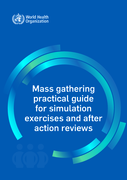
This guide provides strategic direction for host countries, event organizers, health authorities, and key stakeholders to effectively plan and conduct Simulation Exercises (SimEx) and After Action Reviews (AARs) for mass gathering events. Packed with practical tools, it empowers users to seamlessly
...
integrate these activities into ongoing learning and emergency risk management processes. Aligned with the International Health Regulations (IHR, 2005), the guide serves as a critical resource for strengthening global and national health resilience, ensuring safer and more prepared mass gatherings.
more

Integrated Outbreak Analytics (IOA) applies a multidisciplinary approach to understanding outbreak dynamics and to inform outbreak response. It aims to drive comprehensive, accountable, and effective public health and clinical strategies by enabling communities, and national and subnational health a
...
uthorities to use data for operational decision-making. IOA embraces a holistic perspective of outbreak dynamics throughout: from the trigger questions to the data that are collected or accessed, to the interpretation of results and the recommendations that follow. In addition, IOA promotes co-development and monitoring of evidence informed actions.
The IOA toolkit aims to provide a clear understanding of IOA and highlight the importance of using an integrated, holistic approach to manage outbreak responses. It provides step-by-step guidance for setting up IOA and putting IOA principles into action. Finally, this toolkit provides guidance on applying IOA in humanitarian and emergency contexts, offering a practical and adaptable approach to informing public health emergency responses.
Developed based on the model from the Democratic Republic of the Congo (DRC), its creation involved extensive consultation with experts experienced in IOA applications. The toolkit was piloted in Tanganyika Province, DRC, as well as Somalia and Sudan, demonstrating its adaptability to diverse emergency scenarios. It builds upon an existing array of tools, templates, reports, case studies, animations, and publications used by stakeholders in diverse contexts.
more

Access to safe, effective and quality-assured health products and technologies is crucial for achieving universal health coverage and primary health care goals. The continued growth of the aging population; increasing burden of noncommunicable diseases; growing burden of mental health issues; climat
...
e change; shifting patterns of vector borne diseases, fungal disease and waterborne diseases; antimicrobial resistance; and new infectious hazards create an ongoing need for equitable access to safe, effective and quality-assured health products and technologies, and renewed investments in research and development for innovative health products and technologies.
The coronavirus pandemic exposed the inequalities in access to health products, highlighting the need for longer-term strategies to strengthen access to health products and technologies outside of and in emergency situations. While technological and scientific advances present an opportunity to increase access to health products and technologies, the risk of increasing inequality due to higher prices for new health products and technologies; the persisting problem of substandard and falsified medical products; a lack of skilled workforce in many low- and middle-income countries; and a lack of data for decisionmaking and for measuring progress present significant challenges.
more

Breastfeeding is a cornerstone of healthy infant nutrition, development and survival. It is critical for countries* to improve breastfeeding rates in order to achieve global targets for newborn and child health and survival, as well as economic growth and environmental sustainability

Malaria remains a significant public health concern in the SADC region, accounting for 20% of childhood deaths, as well as prompting numerous outpatient visits and hospitalisations. Around three-quarters of the population, including 35 million children under the age of five and 8.5 million pregnant
...
women, are at risk. Transmission patterns vary from high and stable in the north to malaria-free in the south, with low, unstable and seasonal zones in between. Although interventions such as indoor residual spraying (IRS), insecticide-treated nets (ITNs/LLINs), intermittent preventive treatment in pregnancy (IPTp), rapid diagnostic tests (RDTs), and artemisinin-based combination therapies (ACTs) have reduced the malaria burden, challenges persist in terms of funding, human resources, surveillance, and cross-border coordination. Achieving malaria elimination in the SADC region requires harmonised regional standards, strengthened surveillance, and improved access to quality treatment and policy prioritisation.
Accessed on 27/08/2025.
more

This guidance synthesizes current evidence on dengue laboratory testing and diagnostics and provides practical recommendations for laboratories, clinicians, public health officials, and programme managers involved in dengue diagnosis, surveillance, and control, in the context of the global emergency
...
. It includes a diagnostic algorithm for suspected cases, outlining appropriate testing methods based on days post symptom onset.
more

Non-Communicable Diseases (NCDs) have emerged as conditions of great public health concern in Kenya accounting for 39% of deaths annually. The Ministry of Health through the Department of Non-Communicable Diseases has adopted the vision of achieving a nation free from preventable burden of NCDs. Fur
...
ther, the mission of this strategy is to halt and reverse the rising burden of NCDs through effective multisectoral collaboration and partnerships by ensuring Kenyans receive the highest attainable standard of NCD continuum of care that is accessible, affordable, quality, equitable and sustainable thus alleviating suffering, disease and death for their well-being and socio-economic development.
The scope of NCDs covered by this strategy include; cardiovascular diseases, cancer, diabetes, chronic respiratory diseases, mental health conditions, violence and injuries, hemoglobinopathies, haemophilia and other bleeding disorders, auto immune diseases, chronic renal diseases, epilepsy and other neurological disorders, chronic skin conditions and oral diseases and conditions. It equally addresses seven risk factors; tobacco use, harmful use of alcohol, unhealthy diets and toxins, physical inactivity, indoor air pollution, environmental pollutants and toxins and stress.
more

This resulting toolkit is a practical guide intended to assist users to become advocates for palliative care in a practical and effective
way. It is not necessarily a resource to read from cover to cover; rather, it can also be used selectively to each reader’s needs to engage audiences and
...
ensure that there is a real understanding of the need for palliative care. It should also be read in conjunction with the supplementary resources listed at the end of each of the toolkit’s sections.
more

WHO, as the coordinating authority on international health, supports countries in protecting public health through evidence-based policies and actions. Considering the significant health burden and the multiple potential benefits of interventions, the WHO Air Quality, Energy and Health Unit aims to
...
support countries by providing evidence, building institutional capacity and leveraging the “health argument” to convene sectors to tackle air pollution and accelerate energy access.
more

Building on the WHO guidelines for disclosure to children up to age 12 in 2011, this implementation guidance provides evidence on existing interventions that support children and adolescents living with HIV in the process of disclosure. It includes interventions that focuses on safe disclosure, as w
...
ell as supporting children and adolescents with onwards disclosure. Specifically, this brief collates existing interventions via a scoping review; assesses key interventions through a realist evaluation lens, identifying what works, for whom, and in what contexts; and highlights emerging considerations, key gaps, and key actions.
more

Adolescents and young adults aged 10-24 remain underserved in the global response against HIV. Combination prevention, treatment and care programmes use a mix of evidence-based interventions to meet the current HIV prevention needs of adolescents and young adults. However, there needs to be a focus
...
on priority interventions that are evidence-based, practical, contextual and sustainable. This document highlights interventions and recommendations that have passed through the evidence-based lens of the WHO.
more
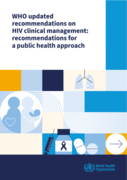
WHO updated recommendations on HIV clinical management: recommendations for a public health approach
recommended
This document provides an overview of the updated World Health Organization recommendations for HIV clinical management, which focus on optimizing antiretroviral therapy, preventing vertical transmission, and enhancing tuberculosis prevention among individuals with HIV. These updates are intended to
...
support global initiatives aimed at ending AIDS as a public health threat by 2030. Key changes include the introduction of new antiretroviral drugs and regimens, revised postnatal prophylaxis and breastfeeding guidelines for managing infants at risk of vertical transmission, and the endorsement of shorter tuberculosis preventive treatments to improve efficacy and adherence.
more
Guidelines for the Prevention and Treatment of Opportunistic Infections in Adults and Adolescents With HIV
recommended
Panel on Guidelines for the Prevention and Treatment of Opportunistic Infections in Adults and Adolescents With HIV
ClinicalInfo.gov
(2025)
C_CDC
The Guidelines for the Prevention and Treatment of Opportunistic Infections in Adults and
Adolescents With HIV document is published in an electronic format and updated as relevant changes
in prevention and treatment recommendations occur.
Archives of Medicine vo.7 no.5:10
Individuals infected with human immunodeficiency virus (HIV) often develop
multiple complications and comorbidities, among them, opportunistic infections.
The highest incidence of opportunistic infections was reported in the group
of patients with CD4 lymphocyte
...
levels below 200 cells / mm. Candidiasis,
toxoplasmosis and pneumocystis pneumonia (PCP) were the main representatives.
more
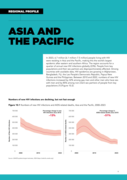
In 2023, 6.7 million [6.1 million–7.5 million] people living with HIV were residing in Asia and the Pacific, making this the world’s largest epidemic after eastern and southern Africa. The region accounts for a quarter of annual new HIV infections globally (23%). People from key populations and
...
their sex partners are disproportionately affected.
more

These 2025 guidelines respond to the need for better approaches to identify advanced HIV disease, improve the poor outcomes of people living with HIV being discharged from hospital and provide updated guidance for treatment for Kaposi’s sarcoma through evidence-informed recommendations. The public
...
ation contains recommendations that are from previously published WHO guidelines documents on advanced HIV disease and introduces new recommendations that were developed in 2025.
more

Weekly epidemiological record.
This report presents progress made in 2023–2024 towards the 2030 targets set in Ending the neglect to attain the Sustainable Development Goals: a road map for neglected tropical diseases 2021–2030 (the road map), including several important analytical updates
