
Filter
2673
Text search:
population
and
youth
Featured
177
813
Language
2554
86
73
39
39
18
18
8
7
6
4
4
3
3
3
3
3
3
2
2
2
2
2
2
2
2
2
2
2
2
2
2
1
1
1
1
1
1
1
1
1
1
1
1
1
1
1
1
1
1
1
1
1
1
1
1
1
1
1
1
1
1
1
1
Document type
1622
492
208
132
102
36
31
29
8
5
5
1
Countries
115
111
109
83
80
70
65
63
61
61
59
58
57
49
48
45
44
41
41
40
39
35
32
29
28
28
25
25
24
21
21
18
17
16
16
15
15
14
14
13
13
12
12
11
10
10
10
9
9
9
8
7
7
7
7
7
7
6
6
5
5
5
5
5
4
4
4
4
4
4
4
3
3
3
3
3
3
3
3
3
3
3
3
2
2
2
2
2
2
2
2
2
2
2
2
2
2
1
1
1
1
1
1
1
1
1
1
1
1
1
1
1
1
1
1
1
1
1
1
1
1
1
1
1
1
Authors & Publishers
186
82
76
69
65
61
56
45
45
42
25
23
20
20
18
17
17
16
16
15
15
14
14
14
13
13
13
12
12
11
11
11
10
10
10
10
10
10
9
9
9
9
9
8
8
8
8
8
8
8
8
7
7
7
7
7
6
6
6
6
6
6
6
6
5
5
5
5
5
5
5
5
5
5
5
5
5
5
5
4
4
4
4
4
4
4
4
4
4
4
4
4
4
4
4
4
4
4
4
4
4
4
4
4
4
4
4
4
4
4
4
3
3
3
3
3
3
3
3
3
3
3
3
3
3
3
3
3
3
3
3
3
3
3
3
3
3
3
3
3
3
3
3
3
3
3
3
3
3
3
3
3
3
3
3
3
3
3
3
3
3
3
3
3
3
3
3
3
3
3
3
3
3
3
3
3
3
3
3
3
2
2
2
2
2
2
2
2
2
2
2
2
2
2
2
2
2
2
2
2
2
2
2
2
2
2
2
2
2
2
2
2
2
2
2
2
2
2
2
2
2
2
2
2
2
2
2
2
2
2
2
2
2
2
2
2
2
2
2
2
2
2
2
2
2
2
2
2
2
2
2
2
2
2
2
2
2
2
2
2
2
2
2
2
2
2
2
2
2
2
2
2
2
2
2
2
2
2
2
2
2
2
2
2
2
2
2
2
2
2
2
2
2
2
2
2
2
2
2
2
2
2
2
2
2
2
2
2
2
2
2
2
2
2
2
2
2
2
2
2
2
2
2
2
2
2
2
2
2
2
2
2
2
2
2
2
2
2
2
2
2
2
2
2
2
2
2
2
2
2
2
2
2
2
2
2
2
2
2
2
2
2
2
2
2
2
2
2
2
2
2
2
2
1
1
1
1
1
1
1
1
1
1
1
1
1
1
1
1
1
1
1
1
1
1
1
1
1
1
1
1
1
1
1
1
1
1
1
1
1
1
1
1
1
1
1
1
1
1
1
1
1
1
1
1
1
1
1
1
1
1
1
1
1
1
1
1
1
1
1
1
1
1
1
1
1
1
1
1
1
1
1
1
1
1
1
1
1
1
1
1
1
1
1
1
1
1
1
1
1
1
1
1
1
1
1
1
1
1
1
1
1
1
1
1
1
1
1
1
1
1
1
1
1
1
1
1
1
1
1
1
1
1
1
1
1
1
1
1
1
1
1
1
1
1
1
1
1
1
1
1
1
1
1
1
1
1
1
1
1
1
1
1
1
1
1
1
1
1
1
1
1
1
1
1
1
1
1
1
1
1
1
1
1
1
1
1
1
1
1
1
1
1
1
1
1
1
1
1
1
1
1
1
1
1
1
1
1
1
1
1
1
1
1
1
1
1
1
1
1
1
1
1
1
1
1
1
1
1
1
1
1
1
1
1
1
1
1
1
1
1
1
1
1
1
1
1
1
1
1
1
1
1
1
1
1
1
1
1
1
1
1
1
1
1
1
1
1
1
1
1
1
1
1
1
1
1
1
1
1
1
1
1
1
1
1
1
1
1
1
1
1
1
1
1
1
1
1
1
1
1
1
1
1
1
1
1
1
1
1
1
1
1
1
1
1
1
1
1
1
1
1
1
1
1
1
1
1
1
1
1
1
1
1
1
1
1
1
1
1
1
1
1
1
1
1
1
1
1
1
1
1
1
1
1
1
1
1
1
1
1
1
1
1
1
1
1
1
1
1
1
1
1
1
1
1
1
1
1
1
1
1
1
1
1
1
1
1
1
1
1
1
1
1
1
1
1
1
1
1
1
1
1
1
1
1
1
1
1
1
1
1
1
1
1
1
1
1
1
1
1
1
1
1
1
1
1
1
1
1
1
1
1
1
1
1
1
1
1
1
1
1
1
1
1
1
1
1
1
1
1
1
1
1
1
1
1
1
1
1
1
1
1
1
1
1
1
1
1
1
1
1
1
1
1
1
1
1
1
1
1
1
1
1
1
1
1
1
1
1
1
1
1
1
1
1
1
1
1
1
1
1
1
1
1
1
1
1
1
1
1
1
1
1
1
1
1
1
1
1
1
1
1
1
1
1
1
1
1
1
1
1
1
1
1
1
1
1
1
1
1
1
1
1
1
1
1
1
1
1
1
1
1
1
1
1
1
1
1
1
1
1
1
1
1
1
1
1
1
1
1
1
1
1
1
1
1
1
1
1
1
1
1
1
1
1
1
1
1
1
1
1
1
1
1
1
1
1
1
1
1
1
1
1
1
1
1
1
1
1
1
1
1
1
1
1
1
1
1
1
1
1
1
1
1
1
1
1
1
1
1
1
1
1
1
1
1
1
1
1
1
1
1
1
1
1
1
1
1
1
1
1
1
1
1
1
1
1
1
1
1
1
1
1
1
1
1
1
1
1
1
1
1
1
1
1
1
1
1
1
1
1
1
1
1
1
1
1
1
1
1
1
1
1
1
1
1
1
1
1
1
1
1
1
1
1
1
1
1
1
1
1
1
1
1
1
1
1
1
1
1
1
1
1
1
1
1
1
1
1
1
1
1
1
1
1
1
1
1
1
1
1
1
1
1
1
1
1
1
1
1
1
1
1
1
1
1
1
1
1
1
1
1
1
1
1
1
1
1
1
1
1
1
1
1
1
1
1
1
1
1
1
1
1
1
1
1
1
1
1
1
1
1
1
1
1
1
1
1
1
1
1
1
1
1
1
1
1
1
1
1
1
1
1
1
1
1
1
1
1
1
1
1
1
1
1
1
1
1
1
1
1
1
1
1
1
1
1
1
1
1
1
1
1
1
1
1
1
1
1
1
1
1
1
1
1
1
1
1
1
1
1
1
1
1
1
1
1
1
1
1
1
1
1
1
1
1
1
1
1
1
1
1
1
1
1
1
1
1
1
1
1
1
1
1
1
1
1
1
1
1
1
1
1
1
1
1
1
1
1
1
1
1
1
1
1
1
1
1
1
1
1
1
1
1
1
1
1
1
1
1
1
1
1
1
1
1
1
1
1
1
1
1
1
1
1
1
1
1
1
1
1
1
1
1
1
1
1
1
1
1
1
1
1
1
1
1
1
1
1
1
1
1
1
1
1
1
1
1
1
1
1
1
1
1
1
1
1
1
1
1
1
1
1
1
1
1
1
1
1
1
1
1
1
1
1
1
1
1
1
1
1
1
1
1
1
1
1
1
1
1
1
1
1
1
1
1
1
1
1
1
1
1
1
1
1
1
1
1
1
1
1
1
1
1
1
1
1
1
1
1
1
1
1
1
1
1
1
1
1
1
1
1
1
1
1
1
1
1
1
1
1
1
1
1
1
1
1
1
1
1
1
1
1
1
1
1
1
1
1
1
1
1
1
1
1
1
1
1
1
1
1
1
1
1
1
1
1
1
1
1
1
1
1
1
1
1
1
1
1
1
1
1
1
1
1
1
1
1
1
1
1
1
1
1
1
1
1
1
1
1
1
1
1
1
1
1
1
1
1
1
1
1
1
1
1
1
1
1
1
1
1
1
1
1
1
1
1
1
1
1
1
1
1
1
1
1
1
1
1
1
1
1
1
1
1
1
1
1
1
1
1
1
1
1
1
1
1
1
1
1
1
1
1
1
1
1
1
1
1
1
1
1
1
1
1
1
1
1
1
1
1
1
1
1
1
1
1
1
1
1
1
1
1
1
1
1
1
1
1
1
1
1
1
1
1
1
1
1
1
1
1
1
1
1
1
1
1
1
1
1
1
1
1
1
1
1
1
1
1
1
1
1
1
1
1
1
1
1
1
1
1
1
1
1
1
1
1
1
1
1
1
1
1
1
1
1
1
1
1
1
1
1
1
1
1
1
1
1
1
1
1
1
1
1
1
1
1
1
1
1
1
1
1
1
1
1
1
1
1
1
1
1
1
1
1
1
1
1
1
1
1
1
1
1
1
1
1
1
1
1
1
1
1
1
1
1
1
1
1
1
1
1
1
1
1
1
1
1
1
1
1
1
1
1
1
1
1
1
1
1
1
1
1
1
1
1
1
1
1
1
1
1
1
1
1
1
1
1
1
1
1
1
1
1
1
1
1
1
1
1
1
1
1
1
1
1
1
1
1
1
1
1
1
1
1
1
1
1
1
1
1
1
1
1
1
1
1
1
1
1
1
1
1
1
1
1
1
1
1
1
1
1
1
1
1
1
1
1
1
1
1
1
1
1
1
1
1
1
1
1
1
1
1
1
1
1
1
1
1
1
1
1
1
1
1
1
1
1
1
1
1
1
1
1
1
1
1
1
1
1
1
1
1
1
1
1
1
1
1
1
1
1
1
1
1
1
1
1
1
1
1
1
1
1
1
1
1
1
1
1
1
1
1
1
1
1
1
1
1
1
1
1
1
1
1
1
1
1
1
1
1
1
1
1
1
1
1
1
1
1
1
1
1
1
1
1
1
1
1
1
1
1
1
1
1
1
1
1
1
1
1
1
1
1
1
1
1
1
1
1
1
1
1
1
1
1
1
1
1
1
1
1
1
1
1
1
1
1
1
1
1
1
1
1
1
1
1
1
1
1
1
1
1
1
1
1
1
1
1
1
1
1
1
1
1
1
1
1
1
1
1
1
1
1
1
1
1
1
1
1
1
1
1
1
1
1
1
1
1
1
1
1
1
1
1
1
1
1
1
1
1
1
1
1
1
1
1
1
1
1
1
1
1
1
1
1
1
1
1
1
1
1
1
1
1
1
1
1
1
1
1
1
1
1
1
1
1
1
1
1
1
1
1
1
1
1
1
1
1
1
1
1
1
1
1
1
1
1
1
1
1
1
1
1
1
1
1
1
1
1
1
1
1
1
1
1
1
1
1
1
1
1
1
1
1
1
1
1
1
1
1
1
1
1
1
1
1
1
1
1
1
1
1
1
1
1
1
1
1
1
1
1
1
1
1
1
1
1
1
1
1
1
1
1
1
1
1
1
1
1
1
1
1
1
1
1
1
1
1
1
1
1
1
1
1
1
1
1
1
1
1
1
1
1
1
1
1
1
1
1
1
1
1
1
1
1
1
1
1
1
1
1
1
1
1
1
1
1
1
1
1
1
1
1
1
1
1
1
1
1
1
1
1
1
1
1
1
1
1
1
1
1
1
1
1
1
1
1
1
1
1
1
1
1
1
1
1
1
1
1
1
1
1
1
1
1
1
1
1
1
1
1
1
1
1
1
1
1
1
1
1
1
1
1
1
1
1
1
1
1
1
1
1
1
1
1
1
1
1
1
1
1
Publication Years
749
1695
225
4
Category
1278
160
132
121
54
40
2
Toolboxes
379
193
168
132
125
99
74
73
46
42
36
35
30
23
19
18
12
10
9
7
6
5
3
3
2
1

Drawing on the World Health Organization’s package of NCD best buys, the report demonstrates how these evidence-based measures can help countries reduce premature deaths, strengthen health systems, and advance progress towards the Sustainable Deve
...
lopment Goals. It provides policymakers, donors, advocates, and partners with a clear economic and social rationale for scaling up implementation of proven solutions. By framing NCD prevention and control as both a health and development priority, the report offers a roadmap for action that delivers benefits across populations, economies, and generations. The evidence is clear: investing in WHO’s best buys is not only possible—it is imperative. The time to act is now.
more

Abrupt reductions in international HIV assistance in 2025 have deepened existing funding shortfalls. The OECD estimates that external health assistance is projected to drop by 30–40% in 2025 compared with 2023, causing immediate and even more seve
...
re disruption to health services in low- and middle-income countries.
more

The Gender Assessment Tool for National HIV Responses (Gender Assessment Tool) is intended to assist countries in assessing their HIV epidemic, context and response through an intersectional gender lens, with the aim of strengthening gender-transfor
...
mative, equitable and rights-based HIV responses. The 2025 tool places greater emphasis on cost-effectiveness, alignment with national plans, integration and sustainability. Together with a new costing tool and monitoring and evaluation plan template, it is designed to inform the development of country investment cases, funding requests to the Global Fund to Fight AIDS, Tuberculosis and Malaria, and other key national opportunities.
more
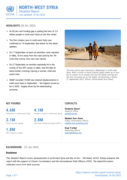
An 82 percent funding gap is putting the lives of 2.5 million people in north-west Syria at risk this winter.
The first cholera case in north-west Syria was confirmed on 19 September. See below for the latest updates.
On 17 September, at least six airstrikes were reported in Idleb, 10
...
km away from the road used by the 7th cross-line convoy. One man was injured.
On 27 September, an airstrike reportedly hit in the vicinity of five IDP camps in Idleb, near the Bab AlHawa border crossing, injuring a woman, child and seven men.
HNAP recorded 19,545 new internal displacements in north-west Syria in September – the highest record so far in 2022 - largely driven by the deteriorating economy.
more
The WHO Regional Office for Europe has established the Childhood Obesity Surveillance Initiative in more than half the countries in the Region for routine monitoring of the policy response to the emerging obesity epidemic. The aim of the Initiative is to measure trends in overweight
...
and obesity in children aged 6.0–9.9 years to get a clear understanding of the epidemic and to allow inter-country comparisons. This document outlines the common protocol agreed for use in the Initiative.
more
A national faecal examination of 27 729 schoolchildren from 395 schools carried out in
2008 indicated that intestinal parasitic worms affected an estimated five million (56.8%)
children in Kenya. Existing evidence shows that worm infections lead to reduced literacy
levels due to impaired growth
...
and physical fitness.
more
The executive summary of the WHO Global oral health status report presents a snapshot of the most recent data on major oral diseases, risk factors, health system challenges and opportunities for reform. The report’s clear conclusion is that the st
...
atus of global oral health is alarming and requires urgent action. The report will serve as a reference for policy-makers and an orientation for a wide range of stakeholders across different sectors to guide advocacy towards better prioritization of oral health in global, regional and national contexts. In addition, the report provides, as a separate online resource, the first-ever country oral health profiles for all 194 WHO Member States, giving unique insights into key areas and markers of oral health that are relevant for decision-makers.
more

The Global Aids Strategy 2026-2031
recommended
United- Towards Ending AIDS. The Global AIDS Strategy 2026-2031 focuses global efforts for the future of the AIDS response to end AIDS as a public health threat by 2030 and sustain the HIV response after 2030. This is a strategy uniting the world.
...
The Strategy will shape the June 2026 United Nations General Assembly High-Level Meeting on Ending AIDS and its political declaration. It provides all actors in the field with guidance to overcome the challenges and to ensure effective country-led AIDS responses. The Global AIDS Strategy 2026-2031 includes new global targets for 2030 and resource needs estimates.
more

Based on WHO South-East Asia Regional Strategy on Autism Spectrum Disorder
The collaborative framework for implementation of the “WHO South-East Asia Regional Strategy on Autism Spectrum Disorders” articulates to Member States: the nature of autism spectrum disorder ... and the issues faced by PwASD and their caregivers; the foundation on which the Regional Strategy and the collaborative framework is based; desired outcomes against each objective of the ASD Regional Strategy; recommended actions to fulfill each objective; requisite parameters that should govern the recommended actions; and suggested guidelines for monitoring, evaluating and reporting a Member State’s progress towards fulfilling the objectives. It encourages Member States to share best practices and information for promoting cooperation and partnerships for development of effective and sustainable programmes. more
The collaborative framework for implementation of the “WHO South-East Asia Regional Strategy on Autism Spectrum Disorders” articulates to Member States: the nature of autism spectrum disorder ... and the issues faced by PwASD and their caregivers; the foundation on which the Regional Strategy and the collaborative framework is based; desired outcomes against each objective of the ASD Regional Strategy; recommended actions to fulfill each objective; requisite parameters that should govern the recommended actions; and suggested guidelines for monitoring, evaluating and reporting a Member State’s progress towards fulfilling the objectives. It encourages Member States to share best practices and information for promoting cooperation and partnerships for development of effective and sustainable programmes. more

Despite growing evidence on the impact of psychosocial support interventions, there is an urgent need for a stronger evidence base on approaches that effectively support children affected by armed conflict. To contribute to this evidence base, and b
...
uilding on a pilot study conducted in Uganda in 2009, War Child conducted an exploratory outcome evaluation of its psychosocial support intervention ‘I DEAL’ in South Sudan and Colombia in 2012. The objective of the evaluation was to explore the outcomes that I DEAL achieves for children and the factors that influence the achievement of those outcomes to further inform and strengthen the intervention
more
Based on Human Rights Watch (HRW)'s reporting on the human rights dimensions of the COVID-19 pandemic (see Related Summary, and the video, below), this document presents 40 questions to provoke thinking about a rights-respecting response to the cris
...
is. The questions address the needs - including around issues of information and communication - of groups most at risk, such as people living in poverty, ethnic and religious minorities, women, people with disabilities, older people, migrants, refugees, children, and lesbian, gay, bisexual, and transgender (LGBT) people. The resource also identifies a variety of responses to the crisis, some of which are positive and others problematic - with many links to related stories and resources online.
more
28 May 2021
Contact tracing is a key component of a public health response to infectious disease outbreaks. The purpose of this guidance is to reinforce the place of community engagement and participation in the contact tracing process. The guidanc
...
e and related products articulate best practice principles for community engagement and how they can be operationalized as part of any community-centred contact tracing strategy. The material provided can stand on its own or be used to complement other documents that support strategies, implementation plans or training and capacity building modules.
more
One approach to development assistance for health, or health aid, emphasizes the ex ante selection of cost-effective health interventions, an approach that began with the World Development Report (1993) on Investing in Health and has since been adop
...
ted by the Effective Altruism community. But just how much of health aid is cost-effective? In this paper, we examine projects in the Organisation for Economic Co-operation and Development (OECD) Creditor Reporting System, the standard dataset that measures and characterizes development assistance for health, for the
years 2019 to 2021, and count the number of projects that refer to interventions from a list of highly cost-effective interventions as defined by the Disease Control Priorities Project, third edition. This exploratory quantitative analysis indicates that 61% of projects used a key word/phrase of a costeffective intervention. There were 11.9 interventions mapped per project on average. There is little evidence that donors tailor the set of interventions to country income levels by cost-effectiveness.
Policymakers may benefit from reviewing the full portfolio of interventions covered by domestic and external resources.
more

The ILO has joined forces with Gallup to carry out a groundbreaking global survey covering 50 countries that sheds further light on the causes of the persistence of HIV-related stigma and discrimination in the world of work.
Men As Partners - A Program for Supplementing the Training of Life Skills Educators
EngenderHealth; PPASA
(2001)
A manual intended for use by Men As Partners (MAP) educators in facilitating workshops on male involvement in reproductive health. Contains a variety of interactive educational activities on such topics as gender and sexuality, male
...
and female sexual health, HIV and AIDS, and other sexually transmitted infections, relationships, and violence, as well as general resources for facilitators.
more
Designed for trainers of health workers, this manual offers skills-building sessions on developing more “male-friendly” health services. Utilizing participatory and experiential activities, the manual examines attitudinal
...
and structural barriers that inhibit men from seeking HIV and AIDS services (both from the client and the provider perspectives), as well as strategies for overcoming such barriers. The manual is designed for all workers in a health care system—frontline staff, clinicians, and administrative, operational, and outreach workers.
more
This study examines the gendered impacts of the Ebola virus disease (EVD) in Liberia in the largest outbreak of EVD ever recorded. The findings are based on an extensive two-week desk study and one-week participatory field study conducted in January
...
2015 in the cities of Monrovia and Buchanan in Liberia
more
The Country Cooperation Strategy (CCS) is a document to guide WHO’s work in countries. CCS is a medium-term vision for WHO’s technical cooperation with a given Member State, and supports the country's national health policy, strategy or plan. Th
...
e CCS time frame is flexible to align with national cycles and processes. It is the basis for aligning WHO’s collaboration with other United Nations bodies and development partners at the country level.
more
This field study to assess the pharmaceutical situation was undertaken in Ghana in May-June 2008 using a standardized methodology developed by the World Health Organization. The study assessed medicines availability and affor
...
dability, geographical accessibility, quality and rational use among other issues. The survey was conducted in six regions. In each region, 6 public health care facilities, 12 private pharmacies and 1 warehouse were surveyed.
more
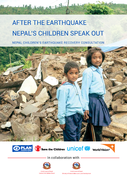
After The Earthquake: Nepal’s Children Speak Out
Lucia Withers, Nir Dahal, Tara Bajracharya, Naina Puri
Save the Children, World Vision International, Plan International, UNICEF
(2016)
C1
NEPAL CHILDREN’S EARTHQUAKE RECOVERY CONSULTATION - To better understand the consequences of the Nepal Earthquake for children, four child-centred agencies, in coordination with the Ministry of Federal Affairs and Local Development (MoFALD)
...
and the Central Child Welfare Board (CCWB), conducted a Children’s Earthquake Recovery Consultation using Focus Group Discussions (FGDs) with more than 1,800 girls and boys from the 14 most severely-affected districts. The objectives of the consultation were to hear directly from children the challenges they are facing in the aftermath of the earthquakes; to assess the impact of the crisis on their roles, responsibilities and future opportunities; and to seek their views on and recommendations for recovery.
more
