Filter
167
Text search:
assistive
device
Featured
22
37
Language
Document type
128
14
12
9
3
1
Countries
12
5
5
5
4
4
4
3
3
2
2
2
2
2
2
2
2
2
1
1
1
1
1
1
1
1
1
1
1
1
1
1
1
1
1
1
1
1
1
1
1
1
1
1
Authors & Publishers
Publication Years
Category
59
21
5
4
3
2
Toolboxes
99
6
5
4
4
2
2
2
1
1
1
1

User satisfaction with assistive devices is a predictor of use and an important outcome measure. This study evaluated client satisfaction with prosthetic and orthotic assistive devices and services
...

Global Report on assistive technology
recommended
The report notes that the number of people in need of one or more assistive products is likely to rise to 3.5 billion by 2050, due to populations ageing and the prevalence of noncommunicable diseases rising across the world. The report also highligh
...


Medical devices are used for the prevention, diagnosis and treatment of illness and diseases and for rehabilitation. WHO developed guidance on medical device donation in 2011, which has been now reviewed, with new evidence, new references on conside
...

Public health, innovation, intellectual property and trade
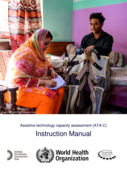
The assistive technology capacity assessment (ATA-C) is a system-level tool to evaluate a country’s capacity to finance, regulate, procure and provide assistive technology. It can be used for awar
...

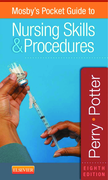
Mosby’s Pocket Guide to Nursing Skills and Procedures, eighth edition, is
a practical, portable reference for students and practitioners in the
clinical setting. Grouped alphabetically, 85 commonly performed skills
are presented in a clear, step-by-step format that includes:
■ Purpose for pe
...
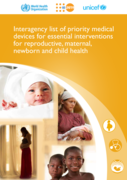
The objective of this project was to list the medical devices required to provide the essential reproductive, maternal, newborn and child health interventions defined by existing WHO guidelines and publications, in order to improve access to these devices in low- and middle-income countries, support
...

WHO, in partnership with the International Society for Prosthetics and Orthotics (ISPO) and the United States Agency for International Development (USAID), has published global standards for prosthetics and orthotics. Its aim is to ensure that prosthetics and orthotics services are people-centred an
...

WHO list of priority medical devices for management of cardiovascular diseases and diabetes
recommended
This publication was developed in response to the need for a reference list of priority medical devices required for management of noncommunicable diseases (NCDs), focusing on cardiovascular diseases and diabetes, especially for low- and middle-income countries to support universal health coverage a
...


Guidance on Disability Inclusion for GBV Partners in Lebanon
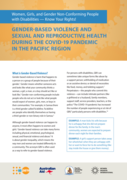
Sexual and reproductive health is health issues that have to do with your body, sex, relationships, and having and giving birth to children. This includes having the information you need to be able to make your own decisions about your body, when to have sex, and whether or not to become a parent. T
...
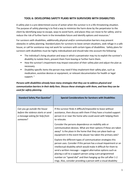
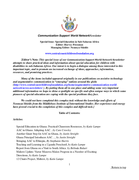
Special Issue: Special Education in Sub-Saharan Africa | This special issue of our Communication*Support*World*Network*Newsletter attempts to share practical ideas and information about special education for children with disabilities in sub-Saharan Africa. Our intent is to begin a dialogue among th
...
Fever Diagnostic Technology Landscape
recommended
1st edition.
Unitaid’s report describes a slate of new devices that can more efficiently identify dangerously ill children so that they can be treated immediately. These tools make it easier to recognize danger signs, and support integrated approaches to reducing childhood deaths from the three
...
Available in: English, French, Chinese, Spanish, Russian, Arabic, Thai, Korean, Tajik, Vietnamese, Uzbek
http://www.who.int/disabilities/cbr/guidelines/en/