
Filter
1575
Text search:
Fact
Sheet
Featured
123
463
Language
Document type
859
190
166
147
87
46
30
15
14
10
6
1
1
Countries
77
67
46
40
37
34
34
26
25
24
24
21
21
20
19
19
18
18
18
15
15
15
15
12
11
11
10
9
9
9
8
8
7
7
7
7
7
7
6
6
6
6
5
5
5
4
4
4
4
4
3
3
3
3
3
3
3
2
2
2
2
2
2
2
2
2
2
2
2
2
2
2
2
1
1
1
1
1
1
1
1
1
1
1
1
1
1
1
1
1
1
1
1
1
1
1
1
1
Authors & Publishers
Publication Years
Category
549
108
106
100
78
50
9
Toolboxes
108
80
71
67
66
63
61
56
43
42
42
41
41
37
31
27
26
24
22
19
18
15
14
9
5
Accessed 4 March 2019.

WORLD DRUG REPORT 2017
Die Globalisierung erleichtert den Export von Medikamenten, Medizingeräten und anderen Waren oder Dienstleistungen; gleichzeitig wächst die weltweite Mobilität der Menschen. Die Integration von Migrant*innen in die Gesundheits- und Sozialsysteme stellt alle Länder vor große Herausforderungen. D
...
Überall auf der Welt mangelt es an qualifiziertem Gesundheitspersonal. Nach Berechnungen der Weltgesundheitsorganisation (WHO) fehlen derzeit weltweit über 17 Millionen Gesundheitsfachkräfte, davon 2,6 Millionen Ärzt*innen sowie 9 Millionen Krankenpfleger*innen und Hebammen. Die WHO errechnet di
...

Available in Englisch, Spanish and Portuguese

Available in English, Spanish and Portuguese



FEY ENFOMASYON POU MOUN K’AP RESEVWA AVEK MOUN K’AP BAY SWEN OTORIZASYON POU ITILIZASYON IJANS (EUA) POU VAKSIN MODERNA COVID-19 POU ANPECHE CORONAVIRUSDISEASE 2019
(COVID-19) NAN PERSONN 18 ANE AK PI GRAN

Unhealthy diets and excess body weight are leading risk factors for death and disability in the WHO European Region. Addressing malnutrition in all its forms is essential to ensure health and well-being for all and, consequently, sustainable development. It requires coherent and innovative actions c
...
Monkeypox - Fact Sheet
recommended
Fact Sheet about Monkeypox
in English, Arabic, Russian, French, Spanish, Chinese
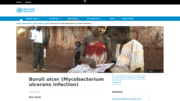
Key facts
Buruli ulcer is a chronic debilitating disease caused by an environmental Mycobacterium ulcerans.
At least 33 countries with tropical, subtropical and temperate climates have reported Buruli ulcer in Africa, South America and Western Pacific regions.
It often affects the skin an
...
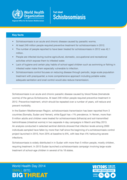
Schistosomiasis is an acute and chronic parasitic disease caused by blood flukes (trematode
worms) of the genus Schistosoma. At least 249 million people required preventive treatment in
2012. Preventive treatment, which should be repeated over a number of years, will reduce and
prevent morbidity.
...
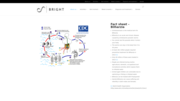
Schistosomiasis is the medical term for Bilharzia.
Bilharzia is an acute and chronic disease caused by schistosome parasitic worms.
You cannot see the parasite when it enters your body.
The worms can stay in the body from 5 to 30 years.
At least 261 million people required.
Lymphatic filariasis, commonly known as elephantiasis, is a neglected tropical disease. Infection occurs when filarial parasites are transmitted to humans through mosquitoes. When a mosquito with infective stage larvae bites a person, the parasites are deposited on the person’s skin from where the
...
