
Filter
130
Featured
14
6
Language
Document type
49
22
15
14
11
10
3
3
1
1
1
Countries / Regions
27
10
4
3
3
3
2
2
2
2
1
1
1
1
1
1
1
1
1
1
1
1
1
1
1
1
1
Authors & Publishers
Publication Years
Category
5
5
4
4
3
3
3
3
2
2
1
1
1
1
1
1
1
1
1
1
1
1
1
1
Toolboxes
56
28
14
9
8
7
6
6
5
5
5
5
5
5
4
4
4
4
3
3
3
3
2
2
1
1
1
1
1
1
1
1
1
1
1
1
1
1
1
1
1
1
1
1
1
1
1
1
1
1
1
1
1
1
1
1
1
1
1
1

The webpage introduces the “Health Cluster Coordination” channel on World Health Organization’s OpenWHO platform, focusing on training and resources for coordinating health-cluster operations in humanitarian emergencies. It outlines how participants can learn about setting up and managing heal
...
The WHO Global Respiratory Syncytial Virus (RSV) Surveillance page describes a World Health Organization initiative under the Global Influenza Programme to monitor RSV infections worldwide. It explains that WHO uses the existing Global Influenza Surveillance and Response System (GISRS) to collect st
...
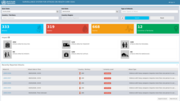
The Surveillance System for Attacks on Health Care (SSA) is a global monitoring platform run by the World Health Organization that systematically collects and displays standardized data on attacks against health care in settings affected by conflict or humanitarian emergencies. It records incidents
...
The WHO “Surveillance” page on the Emergencies section explains how the World Health Organization supports disease surveillance in the context of health emergencies. It highlights that effective surveillance systems are essential to detect disease outbreaks quickly in emergency settings, such as
...
The webpage ”H5 Reference Laboratories” on the WHO Global Influenza Surveillance and Response System (GISRS) site describes a network of specialized laboratories designated by the World Health Organization to support global influenza monitoring — particularly for H5 subtype avian influenza vir
...
The UNDP webpage “Climate Information and Early Warning Systems” explains how climate information and early warning systems help countries and communities better prepare for and respond to climate-related hazards such as extreme weather events, floods, heatwaves and droughts. It describes UNDPâ€
...
The text explains the National Outbreak Reporting System (NORS), a surveillance system used in the United States to collect and analyze data about disease outbreaks. It describes how health departments report outbreaks caused by food, water, person-to-person contact, environmental exposure, or unkno
...

WHO's Department for HIV, Tuberculosis, Hepatitis and Sexually Transmitted Infections (STIs) has consolidated all existing normative guidance on STIs into a single publication. Structured around 10 chapters that follow the STI prevention and care cascade, the handbook covers primary prevention, synd
...
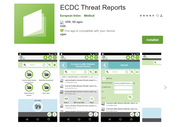
Free and open access application that gives you direct access to key updates and reports on communicable disease threats of concern to the EU on your mobile device.
The application is free to use and can be accessed by anyone. ECDC partners can access additional reports by logging in with their ECD
...
This template dossier complements and should be used after fulfilling the criteria and preconditions specified in the Process of validation of elimination of kala-azar as a public health problem in South-East Asia. The national kala-azar programme should be in the consolidation phase of elimination;
...
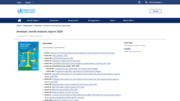
List of annexes in Excel format:
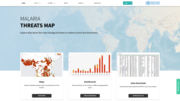
The WHO Malaria Threats Map is an interactive online platform that showcases the latest global data on four critical biological threats to effective malaria control and elimination: mosquito insecticide resistance, Plasmodium falciparum hrp2/3 gene deletions, antimalarial drug resistance, and the
...
Surveillance is a core malaria intervention. Data standards, tools and curricula materials have been developed to support countries to strengthen and monitor national routine surveillance systems and to support use of data for decision-making in all transmission settings. These standards have been d
...
The webinars aim to create awareness and convene discussion, bringing together Malaria Consortium technical experts and programmes teams with other actors working on the effective delivery of national and global health interventions worldwide.
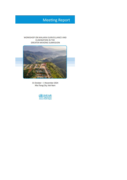
The WHO Mekong Malaria Elimination programme hosted a two-day workshop in Nha Trang City, Viet Nam, from 31 October to 1 November 2024, gathering representatives from the Greater Mekong Subregion (GMS) countries of Cambodia, China, the Lao People’s Democratic Republic, Thailand and Viet Nam, as we
...
Register on the Website for free to receive the weekly briefing
The WHO’s Early Warning, Alert and Response System (EWARS) is a tool used in emergencies such as conflicts or natural disasters to quickly detect and respond to disease outbreaks. It helps set up simple and reliable surveillance systems even in places without stable electricity or internet, using
...

EWARS is a surveillance system developed by the World Health Organization to detect and respond quickly to disease outbreaks in emergency settings where normal health systems are disrupted. It allows health facilities to report priority diseases on a regular basis and generates alerts when unusual p
...
The Rural Emergency Preparedness and Response Toolkit provides a comprehensive overview of how rural and tribal communities can prepare for, respond to, and recover from emergencies and disasters. It explains the unique challenges rural areas face—such as limited resources, geographic isolation, a
...
The WHO Health Security Learning Platform (HSLP) is an online training hub that provides courses and toolkits to strengthen countries’ capacities in public-health preparedness, emergency response, and implementation of the International Health Regulations (IHR). It offers self-paced modules and pr
...
