
Filter
70
Featured
1
Language
Document type
34
8
7
7
5
3
2
1
1
1
Countries / Regions
15
3
3
3
2
1
1
1
1
1
1
1
Authors & Publishers
Publication Years
Category
8
5
3
2
1
1
1
1
1
1
1
1
Toolboxes
12
8
6
6
5
5
5
4
4
4
3
2
2
2
2
2
1
1
1
1
1
1
1
1
1
1
1
1
1
1
1
1
1
1
1
1
1
1
1
1

Reprogramming examples for GC7. This document supports the introduction of climate change-related interventions
into programs to reduce transmission of malaria and protect vulnerable populations.

Thematic brief. Climate change and malaria are two defining challenges of our generation. Both affect disproportionately the
poorest and the most vulnerable, especially in Africa, and may further jeopardize human wellbeing in the future

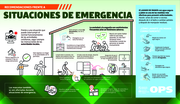
En esta sección se puede acceder a las principales recomendaciones sobre: seguimiento de instrucciones de autoridades locales; lavado de manos con agua segura para evitar enfermedades; cuidado de documentos personales y medicamentos; salud mental ante situaciones críticas o de emergencia; evacuaci
...
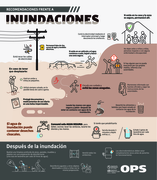
recomendaciones frente a inundaciones
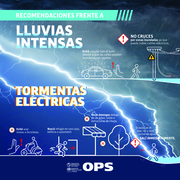
Recomendaciones frente a lluvias intensas
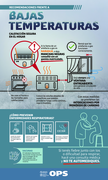
En esta sección vinculada al fenómeno climático de bajas temperaturas se puede acceder a las principales recomendaciones sobre: intoxicación por monóxido de carbono; calefacción segura en el hogar; cómo prevenir enfermedades respiratorias; vacunas.
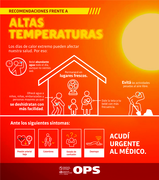
En esta sección vinculada al fenómeno climático de altas temperaturas se puede acceder a las principales recomendaciones sobre: medidas de cuidado y golpe de calor.
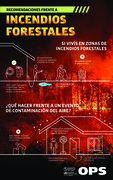
En esta sección vinculada al fenómeno climático de incendios forestales se puede acceder a las principales recomendaciones sobre: ¿qué hacer frente a un evento de contaminación del aire? y ¿qué hacer en zonas de incendios forestales?
El cambio climático afecta la salud humana a través de las condiciones meteorológicas extremas más frecuentes e intensas, el calor extremo, la contaminación atmosférica, la intensificación de las pandemias y los brotes de enfermedades, el aumento de las tasas de malnutrición por inseguridad
...
Divsion de migración y salud/división de migración, medio ambiente, cambio climatico y reducción de riesgos
El cambio climático está dando lugar a cada vez más violaciones del derecho a la vida y el derecho a la salud.
Ecosystem Variability and Malaria Transmission: The Role of Environmental Factors in Vector Dynamics
EURASIAN EXPERIMENT JOURNAL OF PUBLIC HEALTH (EEJP) Vol.6
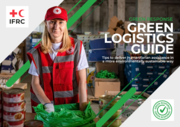
In line with the Climate and Environment Charter for Humanitarian Organisations which IFRC, ICRC and various Red Cross Red Crescent National Societies have endorsed, this short Guide aims to help practitioners integrate environmental and climate change considerations into their work. It has been dev
...

This guide presents a basis for understanding how diarrhoeal diseases are currently influenced by climate and weather, and may be further exacerbated by climate change. It is a technical guide on how to conduct a Vulnerability & Adaptation assessment for diarrhoeal diseases and climate change, and p
...

Background: The impacts of air pollutants on health range from short-term health impairments to hospital admissions
and deaths. Climate change is leading to an increase in air pollution.
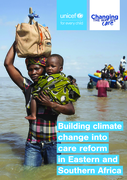
This papers argues that climate change is the greatest threat to children's care in the region
The WHO document, "High-level technical meeting on noncommunicable diseases and mental health in small island developing states: summary brief," outlines the outcomes of a January 2023 meeting in Barbados, focusing on NCDs and mental health challenges in small island developing states (SIDS). Key to
...
A systematic review of connections between climate change, globalization and NCD'S
A systematic review of connections between climate change, globalization and NCD'S
