Filter
72
Breadcrumb:
International Federation of Red Cross And Red Crescent Societies
Featured
7
39
Language
Document type
55
5
4
3
2
1
1
1
Countries
9
8
7
3
3
3
3
3
3
3
2
2
2
2
2
2
2
1
1
1
1
1
1
1
1
1
1
1
1
1
1
1
1
1
1
Authors & Publishers
Publication Years
Category
9
3
2
2
2
1
1
1
1
1
Toolboxes
13
7
4
4
4
4
4
3
3
3
3
3
3
3
2
2
2
2
2
2
2
2
1
1
1
1
1
1
1
1
1
1
1
1
1
1
1
1
1
1
1
1
1
1
1
1
1
1
1
1
1
1
1
1
1
1
1
1
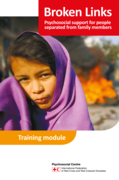
Broken Links: Psychosocial support for people separated from family members (Training
module) and the corresponding Broken Links field guide are designed to support staff and
volunteers in a wide range of settings where they may be in contact with families who have
been separated from their loved
...
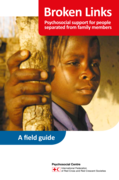
Broken links Psychosocial support for people separated from family members: a field guide
recommended
The 40-page field guide outlines possible causes of separation, discusses the psychosocial impacts of being separated, such as how we experience loss, and provides guidelines on how to support those who have been separated from family members – including delivering difficult news to loved ones, ba
...

УТРАЧЕННЫЕ СВЯЗИ Психосоциальная поддержка людей, утративших связь с членами своей семьи
recommended
Сломанные ссылки Психосоциальная поддержка людей, разлученных с членами семьи: руководство на местах. В 40-страничном руководстве описаны возможные причины разлук
...
The guide is divided into 3 sections —the first focuses on the conceptual framework for M&E; the second focuses on six key steps for M&E; and further, the appendix provides additional tools, resources, and projects for M&E. With a comprehensive breakdown of the important approaches as well as a ch
...
Advocacy report March 2011
303100 03/2011 E 1,000

Advocacy report March 2011
303100 03/2011 E 1,000
На пути
к миру, свободному от туберкулеза
Доклад, Март 2011

The nature of humanitarian work has also drastically changed over the last
decade. Humanitarian workers have paid dearly in the face of violence and
terrorism. Burn out and after-effects of traumatic experiences constitute a
major risk for humanitarian workers. After ten years of experience with
...

Depois de um desastre as famílias
necessitam de tratar a água nas suas
casas ou nos abrigos de emergencia
para se protegerem de doenças.