
Filter
277
Language
Document type
128
49
26
15
13
12
12
9
7
3
1
1
1
Countries
180
54
13
4
4
3
2
2
2
1
1
1
1
1
1
1
Authors & Publishers
Publication Years
Category
232
12
9
6
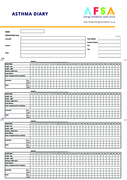

How to detect signs of Asthma
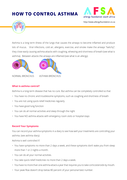
Asthma is a long term illness of the lungs that causes the airways to become inflamed and produce lots of mucus. Viral infections, cold air, allergens, exercise, and smoke make the airways “twitchy”; they close easily causing asthma attacks with coughing, wheezing and shortness of breath (see wh
...

Using an inhaler is the most common and effective way of taking asthma medicines. If you’re NOT using your inhaler correctly, you might not be getting the full dose of medicine your doctor or asthma nurse prescribed because the medicine can’t reach your
lungs. Instead it might be hitting the ba
...

Asthma is a chronic (long-term) lung condition that affects your airways or bronchial tubes. It can cause your airways to narrow and their lining to swell and to produce extra mucus, which makes it more difficult to breathe. The narrowing of the airways causes you to feel short of breath, wheeze, or
...
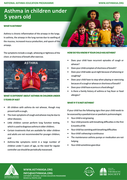
Asthma is chronic inflammation of the airways in the lungs.
In asthma, the airways in the lung narrow due to swelling of
the mucosa, increased mucus production, and spasm of the airways.

Severe asthma is associated with high morbidity, mortality, and health care utilization, but its burden in Africa is unknown. This article wants to determine the burden (prevalence,
mortality, and activity and work impairment) of severe asthma in 3 countries in East Africa: Uganda, Kenya, and Ethio
...

Respiratory viruses are viruses that cause illnesses in the respiratory system. These illnesses share similar symptoms, risk factors, and prevention strategies.

This document, with a focus on the built environment and health care facilities, intends to guide the audience in preparing for and responding to SARI pandemics caused by existing and novel pathogens. It provides technical guidance on designing, establishing, and managing health care facilities for
...
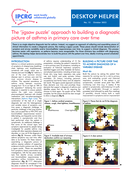
Since there is no single objective diagnostic test for asthma this study suggests an approach of collecting and assembling pieces of clinical information to create a diagnostic picture, like making a jigsaw puzzle. These pieces should include demonstration of symptom and airway variability and/or br
...

The World Health Organization's fact sheet on Chronic Obstructive Pulmonary Disease (COPD) - arabic version
Asthma is the most common chronic respiratory disease among school-going adolescents worldwide. However, the burden of severe asthma is highest in Sub-Saharan Africa. This study aimed to explore teachers’ perceptions of asthma care across six African countries. We conducted focus group discussions
...
This study investigated occupational risk factors and exposure–response relationships for airway disease among health workers (HWs) exposed to cleaning agents in two tertiary hospitals in South Africa and Tanzania.
Previous studies have demonstrated an association between asthma or respiratory
...

The webpage from the Institute for Health Metrics and Evaluation (IHME) features a podcast discussing chronic respiratory diseases and their global impact. It highlights the growing burden of diseases such as chronic obstructive pulmonary disease (COPD) and asthma worldwide. The podcast provides ins
...

The Cedars-Sinai webpage on occupational lung diseases provides an overview of various lung conditions caused by exposure to harmful substances in the workplace. It outlines common types of occupational lung diseases, including asbestosis, silicosis, coal workers’ pneumoconiosis, and chemical-rela
...
The article analyzes the prevalence and risk factors of chronic respiratory diseases, focusing on sub-Saharan Africa. It highlights that environmental exposures, such as biomass fuel usage and air pollution, significantly contribute to respiratory health issues in the region. The research underlines
...

The WHO fact sheet on household air pollution highlights that around 2.1 billion people rely on solid fuels like wood and coal for cooking, using open fires or inefficient stoves. This leads to severe indoor air pollution, contributing to about 3.2 million premature deaths each year, including over
...

The WHO fact sheet on household air pollution highlights that around 2.1 billion people rely on solid fuels like wood and coal for cooking, using open fires or inefficient stoves. This leads to severe indoor air pollution, contributing to about 3.2 million premature deaths each year, including over
...

The WHO fact sheet on household air pollution highlights that around 2.1 billion people rely on solid fuels like wood and coal for cooking, using open fires or inefficient stoves. This leads to severe indoor air pollution, contributing to about 3.2 million premature deaths each year, including over
...
Worldwide, around 2.3 billion people still cook using solid fuels (such as wood, crop waste, charcoal, coal and dung) and kerosene in open fires and inefficient stoves. Most of these people are poor and live in low- and middle-income countries. There is a large discrepancy in access to cleaner cooki
...
