
Toolboxes
Filter
879
Featured
3
6
Language
866
114
75
74
73
64
29
8
8
7
7
7
3
2
2
1
1
1
1
1
1
1
1
Document type
389
95
89
56
49
44
42
28
20
20
17
16
12
1
1
Countries
384
85
26
18
16
11
10
6
5
5
4
4
4
4
3
3
2
2
1
1
1
1
1
1
1
1
1
1
1
1
1
1
1
1
1
1
1
1
1
Authors & Publishers
111
89
73
33
24
12
12
11
11
10
9
9
8
8
8
8
8
7
7
7
7
6
6
6
6
6
6
6
6
5
5
5
5
5
5
4
4
4
4
4
4
4
4
4
3
3
3
3
3
3
3
3
3
3
3
3
3
3
3
3
3
3
3
3
3
3
3
3
3
3
3
3
3
3
3
3
3
3
2
2
2
2
2
2
2
2
2
2
2
2
2
2
2
2
2
2
2
2
2
2
2
2
2
2
2
2
2
2
2
2
2
2
2
2
2
2
2
2
2
2
2
2
2
2
2
2
2
2
2
2
2
2
2
2
2
2
2
2
2
2
2
2
2
2
2
2
2
2
2
2
2
2
2
2
2
2
2
2
2
2
2
2
1
1
1
1
1
1
1
1
1
1
1
1
1
1
1
1
1
1
1
1
1
1
1
1
1
1
1
1
1
1
1
1
1
1
1
1
1
1
1
1
1
1
1
1
1
1
1
1
1
1
1
1
1
1
1
1
1
1
1
1
1
1
1
1
1
1
1
1
1
1
1
1
1
1
1
1
1
1
1
1
1
1
1
1
1
1
1
1
1
1
1
1
1
1
1
1
1
1
1
1
1
1
1
1
1
1
1
1
1
1
1
1
1
1
1
1
1
1
1
1
1
1
1
1
1
1
1
1
1
1
1
1
1
1
1
1
1
1
1
1
1
1
1
1
1
1
1
1
1
1
1
1
1
1
1
1
1
1
1
1
1
1
1
1
1
1
1
1
1
1
1
1
1
1
1
1
1
1
1
1
1
1
1
1
1
1
1
1
1
1
1
1
1
1
1
1
1
1
1
1
1
1
1
1
1
1
1
1
1
1
1
1
1
1
1
1
1
1
1
1
1
1
1
1
1
1
1
1
1
1
1
1
1
1
1
1
1
1
1
1
1
1
1
1
1
1
1
1
1
1
1
1
1
1
1
1
1
1
1
1
1
1
1
1
1
1
1
1
1
1
1
1
1
1
1
1
1
1
1
1
1
1
1
1
1
1
1
1
1
1
1
1
1
1
1
1
1
1
1
1
1
1
1
1
1
1
1
1
1
1
1
1
1
1
1
1
1
1
1
1
1
1
1
1
1
1
1
1
1
1
1
1
1
1
1
1
1
1
1
1
1
1
1
1
1
1
1
1
1
1
1
1
1
1
1
1
1
1
1
1
1
1
1
1
1
1
1
1
1
1
1
1
1
1
1
1
1
1
1
1
1
1
1
1
1
1
1
1
1
1
1
1
1
1
1
1
1
1
1
1
1
1
1
1
1
1
1
1
1
1
1
1
1
1
1
1
1
1
1
1
1
1
1
1
1
1
1
1
1
1
1
1
1
1
1
1
1
1
1
1
1
1
1
1
1
1
1
1
1
1
1
1
1
1
1
1
1
1
1
1
1
1
1
1
1
1
1
1
1
1
1
1
1
1
1
1
1
1
1
1
1
1
1
1
1
1
1
1
1
1
1
1
1
1
1
1
1
1
1
1
1
1
1
1
1
1
1
1
1
1
1
1
1
1
1
1
1
1
1
1
1
1
1
1
1
1
1
1
1
1
1
1
1
1
1
1
1
1
1
1
1
1
1
1
1
1
1
1
1
1
1
1
1
1
1
1
1
1
1
1
1
1
1
1
1
1
1
1
1
1
1
1
1
1
1
1
1
1
1
1
1
1
1
1
1
1
1
1
1
1
1
1
1
1
1
1
1
1
1
1
1
1
1
1
1
1
1
1
1
1
1
1
1
1
1
1
1
1
1
1
1
1
1
1
1
1
1
1
1
1
1
1
1
1
1
1
1
1
1
1
1
1
1
1
1
1
1
1
1
1
1
1
1
1
1
1
1
1
1
1
1
1
1
1
1
1
1
1
1
1
1
1
1
1
1
1
1
1
1
1
1
1
1
1
1
1
1
1
1
1
1
1
1
1
1
1
1
1
1
1
1
1
1
1
1
1
1
1
1
1
1
1
1
1
1
1
1
1
1
1
1
1
1
1
1
1
1
1
1
1
1
1
1
1
1
1
1
1
1
1
1
1
1
1
1
1
1
1
1
1
1
1
1
1
1
1
1
1
1
1
1
1
1
1
1
1
1
1
1
1
1
1
1
1
1
1
1
1
1
1
1
1
1
1
1
1
1
1
1
1
1
1
1
1
1
1
1
1
1
1
1
1
1
1
1
1
1
1
1
1
1
1
1
1
1
1
1
1
1
1
1
1
1
1
1
1
1
1
1
1
1
1
1
1
1
1
1
1
1
1
1
1
1
1
1
1
1
1
1
1
1
1
1
1
1
1
1
1
1
1
1
1
1
1
1
1
1
1
1
1
1
1
1
1
1
1
1
1
1
1
1
1
1
1
1
1
1
1
1
1
1
1
1
1
1
1
1
1
1
1
1
1
1
1
1
1
1
1
1
1
1
1
1
1
1
1
Publication Years
633
209
35
2
Category
562
76
56
36
4
2

Significant progress has been made in the eradication of three priority diseases in the African Region, as a result of extensive collaboration between the Regional Office, WHO country offices and countries. For example, in August 2020, the region was certified free of wild poliovirus. In the area of
...
neglected tropical diseases, Guinea worm disease is on the verge of eradication, and 12 member states are within reach of being certified as having eradicated yaws by the end of this year.
more
A cardiac risk calculator is a screening tool to assess your future risk of cardiovascular disease. It uses personal health information to evaluate heart health.
The Summary of the Global status report on road safety 2023 shows that the number of annual road traffic deaths has fallen slightly to 1.19 million. The report shows that efforts to improve road safety are having an impact, and that significant reductions in road traffic deaths can be made if proven
...
measures are applied. Despite this, the price paid for mobility remains too high. Road traffic injuries remain the leading killer of children and young people aged 5-29 years. More than half of fatalities occur among pedestrians, cyclists and motorcyclists, in particular those living in low and middle-income countries. Urgent action is needed if the global goal of at least halving road traffic deaths and injuries by the year 2030 is to be achieved.
more
The website provides information on cardiovascular diseases (key facts, definitions, risk factors etc.).
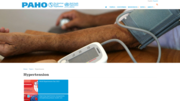
Hypertension is the main risk factor for developing cardiovascular disease. Each year 1.6 million deaths befall from cardiovascular disease in the region of the Americas, of which about half a million occur in people under age 70, which is considered premature and preventable death. Hypertension aff
...
ects between 20-40% of the adult population of the region, meaning that in the Americas around 250 million people suffer from high blood pressure. Hypertension is preventable or can be postponed by a set of preventive interventions, among which include the reduction of salt intake, a diet rich in fruits and vegetables, exercise and maintaining a healthy body weight. PAHO promotes policies and projects to impact on public health the prevention of hypertension through policies to reduce salt intake, to promote healthy eating, physical activity and to prevent obesity. Promotes and supports projects that facilitate access to essential medicines for the treatment of hypertension and promotes the development of human resources in health.
more

The Cardiovascular Journal of Africa (CVJA) is an international peer-reviewed journal that keeps cardiologists up to date with advances in the diagnosis and treatment of cardiovascular disease. Topics covered include coronary disease, electrophysiology, valve disease, imaging techniques, congenital
...
heart disease (fetal, paediatric and adult), heart failure, surgery, and basic science.
more

Master important clinical skills with our award-winning online courses and case-based workshops.

Cardiology Training is offered only at universities with linked medical schools and training hospitals in South Africa. Limited training positions are available for this subspecialty training, according to government allocations in the respective provinces.
Cardiology Training follows strict guid
...
elines. A logbook must be kept to prove proficiency in techniques, and a prescribed minimum number of each different procedure performed must be recorded.
The College of Medicine is responsible for conducting the qualifying examination.
more
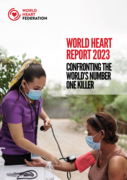
Global progress against cardiovascular disease (CVD) is flatlining.
Though rates of CVD deaths globally have fallen in the last three
decades, this trend has begun to stall and, without concerted
efforts, is at risk of reversing.

This campaign by Servier and the World Heart Federation builds on the success of the USE TO ACT NOW ON ANGINA campaign. In addition to raising awareness of the importance of acting now, this campaign explores some about the common, but less well-known signs of angina, and explains why it’s key to
...
not only act now, but act early in angina.
more

Cardiovascular diseases remain the leading cause of morbidity and mortality worldwide. There are significant differences in the burden of cardiovascular disease and associated risk factors, across high-income countries and low- and middle-income countries. Cardiac imaging by echocardiography, cardia
...
c computed tomography, cardiac magnetic resonance imaging, single-photon emission computed tomography, and positron emission tomography myocardial perfusion imaging are well-established non-invasive tests that aid in the diagnosis, risk stratification, and management of various cardiac diseases. However, there are significant inequalities in availability and access to imaging modalities in low- and middle-income countries attributed to financial constraints, disparities in healthcare and technical infrastructure. In the post-COVID-19 pandemic era, these disparities are exaggerated by the continued technological advancements driving innovations in the field of cardiovascular (CV) imaging in high-income countries, while there is an urgent need to provide sustainable access to diagnostic imaging for patients in economically strained healthcare systems in regions like Africa. This review aims to highlight the inequalities in the burden of cardiac disease, associated risk factors, and access to diagnostic CV imaging tests, while also exploring the need for sustainable solutions to implementing CV imaging all over the world.
more

The pharmacological treatment of heart failure has evolved over the last three decades since the demonstration of the effect of angiotensinconverting enzyme inhibitors on major cardiovascular events in patients with heart failure with reduced ejection fraction. Composite analysis of heart failure wi
...
th reduced ejection fraction trials and the recent identification of newer drug treatments show early benefits on the major cardiovascular outcomes, ushering in a change of the treatment strategy; from a ‘sequential’ initiation of the treatments to a ‘simultaneous’ initiation to harness the early benefits. The adoption and implementation of these changes at the bedside have been dismal in many healthcare settings. Papua New Guinea, like many other lower-to-middle-income countries, is facing many barriers that impact on the care of heart failure patients. It needs to adopt and implement these changes to provide evidence-based treatment for its people with heart failure with reduced ejection fraction.
more

Key facts
- An estimated 1.28 billion adults aged 30–79 years worldwide have hypertension, most (two-thirds) living in low- and middle-income countries
- An estimated 46% of adults with hypertension are unaware that they have the condition.
- Less than half of adults (42%) with hypertension are
...
diagnosed and treated.
- Approximately 1 in 5 adults (21%) with hypertension have it under control.
- Hypertension is a major cause of premature death worldwide.
- One of the global targets for noncommunicable diseases is to reduce the prevalence of hypertension by 33% between 2010 and 2030.
more

Almost all populations are consuming too much sodium. The global mean intake of adults is 4310 mg/day sodium (equivalent to 10.78 g/day salt). This is more than double the World Health Organization recommendation for adults of less than 2000 mg/day sodium (equivalent to < 5 g/day salt).
- The primary health effect ass
...
ociated with diets high in sodium is raised blood pressure, increasing the risk of cardiovascular diseases, gastric cancer, obesity, osteoporosis, Meniere’s disease, and kidney disease.
- An estimated 1.89 million deaths each year are associated with consuming too much sodium
more
Heart & Circulatory Diseases (Cardiovascular Disease; CVD)
Heart and circulatory diseases is an umbrella term for all diseases of the heart and circulation. It includes everything from conditions that are inherited or that a person is born with, to those that develop later, such as coronary heart d
...
isease, atrial fibrillation, heart failure, stroke and vascular dementia.
more

Background: Worldwide, maternal hypertensive disorders complicate one in ten pregnancies. As a result of changes in the life styles of society, currently, it is becoming a common public life encounter. However, Ethiopia lacks comprehensive and comparable maternal hypertensive disorders, causing burd
...
en and health loss to inform policy and practice.
Objective: To describe the incidence and prevalence of maternal hypertensive disorders and deaths, Disability Adjusted Life Years, and Years Life Lost attributable to maternal hypertensive disorders in Ethiopia and its regional distributions from 1990 to 2019 as part of a collaborative Global Burden of Diseases, (2019) Study.
Methods: The data for this study were collected from surveys, demographic surveillances, medical record reviews, health facility observations and interviews socio-demographic, health care service utilization, and other data sources such as case notifications, scientific literature, and unpublished data as per the Global Burden of Disease protocol and analysis techniques to produce national and regional estimates of maternal hypertensive disorders in Ethiopia. Cause of death ensemble modeling and Bayesian meta-regression disease modeling was employed to ascertain cause of death and morbidity. Each metric was estimated per 100,000 populations with a 95% uncertainty interval (UI).
Results: In the last thirty years, in Ethiopia, , the incidence of maternal hypertensive disorders among young women was raised by 52,596 cases per 100,000 population [199,707 (95% UI 150,261-267,221) to 252,303 (95% UI 191,335-332,524)], while decreased among adolescent women from 67,206 (95% UI 46,887-90,883) to 64, 622 (95% UI; 47,587-84,664) per 100,000 population. The prevalence among women of reproductive age had increased from 94, 818 (95% UI 59,434-135,332) in 1990 to 138, 263 (95% UI 88,447-196,029) in 2019. Between 1990 and 2019, deaths attributable to maternal hypertensive disorders among adolescents and young women had increased by 1.5 and 1.17 times, respectively. In 2019, disability adjusted life years among adolescent, young women and women of reproductive age due to maternal hypertensive disorders was 8,493 (UI 95% 5,370-12,849), 21,812 (UI 95% 14,682-32,139) and 57,867 (UI 95% 41,751-79,165) respectively. The highest daily adjusted life years due to maternal hypertensive disorders had occurred among young women, 13,319 (UI 95% 8,592-19,931) which was higher than 1990 whereas the young women years of life lost had increased.
Conclusions: Based on the finding, increasingly high new cases, prevalence and burden of maternal hypertensive disorders and significant health loss were observed in the last three decades in Ethiopia. Hence, prevention of cases, disabilities, deaths and health losses caused by maternal hypertensive disorders can be prevented by properly advocating lifestyle modifications with specifically designed age-specific interventions. On the top of continuing prevention efforts with newly devised magnesium sulphate administration in the new ANC initiative of the ministry, contextualized, need based, localized, and targeted interventions could be reconstituted. [Ethiop. J. Health Dev. 2023;37 (SI-2)]
more
The World Health Organization (WHO) released its first-ever report on the devastating global impact of high blood pressure, along with recommendations on the ways to win the race against this silent killer. The report shows approximately 4 out of every 5 people with hypertension are not adequately t
...
reated, but if countries can scale up coverage, 76 million deaths could be averted between 2023 and 2050.
more
Global burden of cardiovascular diseases and risks, 1990-2022
Mensah, G.A.; Fuster, V.; Murray, C.J.L. et al.
Journal of the American College of Cardiology
(2023)
CC
Age-standardized cardiovascular disease (CVD) mortality rates by region ranged from 73.6 per 100,000 in High-income Asia Pacific to 432.3 per 100,000 in Eastern Europe in 2022. Global CVD mortality decreased by 34.9% from 1990 to 2022. Ischemic heart disease had the highest global age-standardized D
...
ALYs of all diseases at 2,275.9 per 100,000. Intracerebral hemorrhage and ischemic stroke were the next highest CVD causes for age-standardized DALYs. Age-standardized CVD prevalence ranged from 5,881.0 per 100,000 in South Asia to 11,342.6 per 100,000 in Central Asia. High systolic blood pressure accounted for the largest number of attributable age-standardized CVD DALYs at 2,564.9 per 100,000 globally. Of all risks, household air pollution from solid fuels had the largest change in attributable age-standardized DALYs from 1990 to 2022 with a 65.1% decrease.
more

Background
Noncommunicable diseases are major contributors to morbidity and mortality worldwide. Modifying the risk factors for these conditions, such as physical inactivity, is thus essential. Addressing the context or circumstances in which physical activity occurs may promote physical activity a
...
t a population level. We assessed the effects of infrastructure, policy or regulatory interventions for increasing physical activity.
Methods
We searched PubMed, Embase and clinicaltrials.gov to identify randomised controlled trials (RCTs), controlled before-after (CBAs) studies, and interrupted time series (ITS) studies assessing population-level infrastructure or policy and regulatory interventions to increase physical activity. We were interested in the effects of these interventions on physical activity, body weight and related measures, blood pressure, and CVD and type 2 diabetes morbidity and mortality, and on other secondary outcomes. Screening and data extraction was done in duplicate, with risk of bias was using an adapted Cochrane risk of bias tool. Due to high levels of heterogeneity, we synthesised the evidence based on effect direction.
Results
We included 33 studies, mostly conducted in high-income countries. Of these, 13 assessed infrastructure changes to green or other spaces to promote physical activity and 18 infrastructure changes to promote active transport. The effects of identified interventions on physical activity, body weight and blood pressure varied across studies (very low certainty evidence); thus, we remain very uncertain about the effects of these interventions. Two studies assessed the effects of policy and regulatory interventions; one provided free access to physical activity facilities and showed that it may have beneficial effects on physical activity (low certainty evidence). The other provided free bus travel for youth, with intervention effects varying across studies (very low certainty evidence).
Conclusions
Evidence from 33 studies assessing infrastructure, policy and regulatory interventions for increasing physical activity showed varying results. The certainty of the evidence was mostly very low, due to study designs included and inconsistent findings between studies. Despite this drawback, the evidence indicates that providing access to physical activity facilities may be beneficial; however this finding is based on only one study. Implementation of these interventions requires full consideration of contextual factors, especially in low resource settings.
more

Background: Peripheral artery disease is a growing public health problem. We aimed to estimate the global disease burden of peripheral artery disease, its risk factors, and temporospatial trends to inform policy and public measures.
Methods: Data on peripheral artery disease were modelled using the
...
Global Burden of Disease, Injuries, and Risk Factors Study (GBD) 2019 database. Prevalence, disability-adjusted life years (DALYs), and mortality estimates of peripheral artery disease were extracted from GBD 2019. Total DALYs and age-standardised DALY rate of peripheral artery disease attributed to modifiable risk factors were also assessed.
more
