
Filter
10
Language
Document type
10
Authors & Publishers
Publication Years
Category
Dracunculiasis, also known as Guinea-worm disease is a parasitic disease caused by the nematode Dracunculus medinensis. The infection is transmitted to humans by drinking water contaminated with the small crustacean copepods (Cyclops) which contain the larvae of D. medinensis. Humans are the princip
...

Considered a neglected tropical disease, Guinea worm disease (dracunculiasis) is a parasitic infection caused by the nematode roundworm parasite Dracunculus medinensis. It is contracted when people consume water from stagnant sources contaminated with Guinea worm larvae. Inside a human's abdomen, Gu
...

About a year after infection, a painful blister forms – 90% of the time on the lower leg – and one or more worms emerge accompanied by a burning sensation. To soothe the burning pain, patients often immerse the infected part of the body in water. The worm(s) then releases thousands of larvae (ba
...

La dracunculosis rara vez es mortal, pero las personas infectadas quedan incapacitadas durante semanas o meses. Afecta a personas de comunidades rurales, desfavorecidas y aisladas que para beber dependen principalmente de fuentes superficiales abiertas en que el agua se estanca, como charcas o estan
...

La dracunculose est rarement mortelle, mais les personnes touchées peuvent souffrir d’invalidité pendant plusieurs semaines, voire plusieurs mois. La maladie sévit dans des communautés rurales défavorisées et isolées qui sont essentiellement tributaires de points d’eau stagnante superfici
...

Дракункулез редко приводит к смертельному исходу, но на много недель и месяцев нарушает нормальное функционирование пораженных инвазией лиц. Проблема затрагиваеÑ
...

ونادراً ما يسبب داء التنينات الوفاة، بيد أن المصابين به يعجزون عن القيام بأعمالهم على مدى أسابيع وأشهر من الزمن. ويصيب الداء الناس الذين يعيشون في مجتمعات ريفية ومحØ
...

Dracunculiasis (Guinea worm disease), caused by the parasite Dracunculus medinensis, is traditionally acquired by drinking water containing copepods (water fleas) infected with D. medinensis larvae, but in recent years also appears increasingly to be transmitted by eating fish or other aquatic anima
...

Global efforts to eradicate dracunculiasis have continued to progress, with only 542 cases reported in 2012, as compared with 1058 in 2011. It is a long thread-like worm. It is transmitted exclusively when people drink water contaminated with parasite-infected water fl eas. It is now found in some o
...
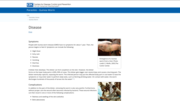
People with Guinea worm disease (GWD) have no symptoms for about 1 year. Then, the person begins to feel ill. Symptoms can include the following:
Slight fever
Itchy rash
Nausea
Vomiting
Diarrhea
Dizziness
A blister then develops. This blister can form anywhere on the skin. However, the blis
...
