
Filter
90
Featured
6
2
Language
Document type
23
18
15
12
5
5
5
4
1
1
1
Countries
33
10
4
3
3
3
2
2
2
2
2
2
2
1
1
1
1
1
1
1
1
1
1
1
1
1
1
1
1
1
1
1
1
1
1
1
1
Authors & Publishers
Publication Years
Category
18
12
6
3
1
In the Indian state of Bihar, visceral leishmaniasis (VL) is a major public health issue that has been aggravated by the rising incidence of new Human immunodeficiency virus (HIV) infections. In endemic areas, the risk of VL infections in patients living with HIV (PLHIV) is higher. It is important t
...
Leishmaniasis is still considered to be a global health problem, which spreads in most countries in the world. Leishmania is an intracellular obligate protistan parasite that causes different clinical symptoms in infected humans and other animals. There are clinically different types of the disease
...

Cutaneous leishmaniasis is a painful disease that exerts a serious toll on societies around the world that are afflicted by it. Although not life-threatening, the skin ulcers and scars it causes can lead to isolation and psychosocial pathologies due to social stigma, and its occurrence is often asso
...
Leishmaniasis is a parasitic disease that is found in parts of the tropics, subtropics, and southern Europe. Leishmaniasis is caused by infection with Leishmania parasites, which are spread by the bite of infected sand flies. There are several different forms of leishmaniasis in people. The most com
...
The term leishmaniasis encompasses multiple clinical syndromes, including the cutaneous, mucosal, and visceral forms, which result from infection of macrophages in the dermis, in the naso-orpharyngeal mucosa, and throughout the reticuloendothelial system, respectively. The infection can range from a
...

J Glob Health Sci. 2020 Jun;2(1):e3. A group of enzootic and zoonotic protozoan infections, the leishmaniases constitute among the most severely neglected tropical diseases (NTDs) and are found in all continents except Oceania. Representing the most common infectious diseases, NTDs comprise an open-
...
Leishmaniasis is a vector-borne tropical/subtropical disease caused by an intracellular parasite transmitted to humans by sand fly bite. It is endemic in Asia, Africa, the Americas, and the Mediterranean region. Worldwide reports include 1.5–2 million new cases each year, more than 300 million at
...
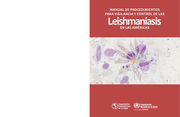
El manual tiene por objetivo ampliar los conocimientos sobre la enfermedad y aspira a ser una herramienta de trabajo para que el personal de salud y los equipos de gestión presten apoyo a los ministerios de salud en sus respectivos procesos de estructuración de los servicios de salud, así como en
...
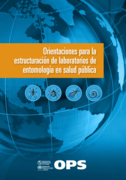
El documento ayudará a los países a identificar las áreas de necesidades y determinar cómo se puede reforzar la red de entomología, especialmente en el contexto de un sistema de salud descentralizado. Las recomendaciones también tienen en cuenta los diferentes grados de desarrollo y las difere
...

An interregional meeting on leishmaniasis among neighbouring endemic
countries in the Eastern Mediterranean, African and European regions was organized by the World Health Organization (WHO) Regional Office for the Eastern
Mediterranean in Amman, Jordan, from 23 to 25 September 2018. The meeting w
...
Leishmaniasis is an infectious disease caused by protozoan parasites of the genus, Leishmania. Protozoa are microscopic, single-celled organisms. The parasites that cause the disease are transmitted to people through the bites of certain species of infected sand flies.
Leishmaniasis is a vector-borne disease with a broad global distribution and an increasing number of recorded cases worldwide. However, it is still one of the world's most neglected diseases. Over the last decades, the disease has been found to expand geographically with a global increase of cases o
...
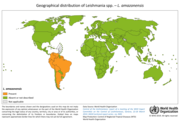
The boundaries and names shown and the designations used on this map do not imply
the expression of any opinion whatsoever on the part of the World Health Organization
concerning the legal status of any country, territory, city or area or of its authorites, or
concerning the delimitation of its f
...

1 billion people are at risk of infection with leishmaniasis, a neglected disease strongly linked to poverty. There’s no single, simple cure: current treatments are complex and need to be adapted to the form of the disease and geographical region.
De esta manera se presenta junto al equipo de trabajo estos ejemplares que abarcan
las priorizaciones de la vigilancia epidemiológica y condensan el conocimiento y el
esfuerzo de un grupo multidisciplinario de profesionales, del Ministerio de Salud Pública y
Asistencia Social, para responder a
...
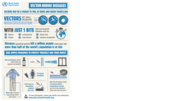
Vectors can be a threat to you, at home and when travelling.
Simple measures for protection.

Leishmaniasis is a parasitic disease caused by the Leishmania parasite. This parasite typically lives in infected sand flies. You can contract leishmaniasis from a bite of an infected sand fly.
The sand flies that carry the parasite typically reside in tropical and subtropical environments. Fatal
...
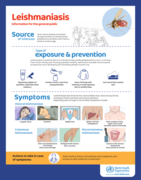
Leishmaniasis is a vector-borne disease that is transmitted by sandflies and caused by obligate intracellular protozoa of the genus Leishmania. Human infection is caused by about 21 of 30 species that infect mammals. These include the L. donovani complex with 3 species (L. donovani, L. infantum, and
...
Cutaneous Leishmaniasis (CL) is a painful disease that exerts a serious toll on societies around the world that are afflicted by it. Although not life-threatening, the skin ulcers and scars it causes can lead to isolation and psychosocial pathologies due to social stigma, and its occurrence is often
...

