Search database
Filter
139
Text search: nuclear attack
Featured
Language
Document type
No document type
78
Guidelines
23
Manuals
17
Studies & Reports
13
Resource Platforms
4
Situation Updates
2
Training Material
1
Strategic & Response Plan
1
Countries / Regions
India
7
Ukraine
7
Liberia
4
Syria
4
Global
4
Ethiopia
3
Venezuela
3
Uganda
2
Kenya
2
South Africa
2
Congo, Democratic Republic of
1
USA
1
Philippines
1
Somalia
1
Tanzania
1
Singapore
1
Central African Republic
1
North Macedonia
1
Mexico
1
South–East Asia Region
1
Western and Central Europe
1
Africa
1
Moldova
1
Iran
1
Authors & Publishers
World Health Organization WHO
19
Centers for Disease Control and Prevention (CDC)
7
et al.
7
World Health Organization
7
OCHA
6
International Atomic Energy Agency IAEA, WHO
5
International Crisis Group
4
Radiation Emergency Medical Management (REMM)
4
World Health Organization (WHO)
3
International Atomic Energy Agency (IAEA)
2
International Atomic Energy Agency IAEA
2
NSW Health and University of Western Sydney
2
Reliefweb OCHA Services
2
U.S. Department of Health & Human Services
2
World Health Organisation (WHO)
2
World Health Organization WHO, Regional Office of Europe
2
390: 898&ndash
1
912
1
A. Chiumento
1
A. Liland
1
A.Naess Herstad
1
American Public Health Association
1
Bangpan, M
1
Belgian Nuclear Research Centre
1
Benton, T.
1
Brehm, M
1
British Medical Association BMA
1
Butterworth Heinemann
1
C. Giannou, M. Baldan and A. Molde
1
Centers for Disease C ontrol and Prevention (CDC )
1
Centers for Disease Control and Prevention CDC
1
Centre for Excellence in Emergency Preparedness
1
Chatham House
1
Communicating with Disaster Affected Communities (CDAC)
1
Congressional Research Service
1
Cordaid
1
Coupland R, Loye D
1
Dan Hanfling, John Hick, and Clare Stroud
1
Data Friendly Space
1
David Lloyd Roberts
1
Dept. of Health, Republic of South Africa
1
Ehrenreich, John H
1
Ethiopian Health and Nutrition Research Institute Public Health Emergency Management Centre
1
European Society of Cardiology
1
European specialist nurse organisation (ESN)
1
F. Lambert
1
Federal Ministry of Health, Ethiopia
1
Federal Ministry of Health, Uganda
1
Geneva International Centre for Humanitarian Demining (GICHD)
1
Germany’s National Public Health Institute (RKI), et al.
1
Global Centre for the Responsibility to Protect
1
Government of India, National Disaster Management Authority
1
Government of Tanzania
1
Grotenhuis, R.
1
Health Cluster, WHO
1
hler, Oliver Razum, Jean-Olivier Schmidt
1
Hong Kong Jockey Club Disaster Preparedness and Response Institute (HKJCDPRI)
1
ICG
1
ICMR Indian Council of Medical Research
1
ICRC
1
Ilona Kickbusch, Christian Franz, Anna Holzscheiter, Iris Hunger, Albrecht Jahn, Carsten K&ouml
1
Indian Council of Medical Research
1
Institute de Radioprtection et de Sureté Nucléaire IRSN
1
Interagency Policy Coordination Subcommitee for Preparedness & Response to Radiological and Nuclear Threats
1
International Bureau for Epilepsy
1
International Comitee of the Red Cross (ICRC)
1
International Committee of the Red Cross
1
International Committee of the Red Cross ICRC
1
International Federation of Red Cross And Red Crescent Societies IFRC
1
International League Against Epilepsy
1
International Physicians for the Prevention of Nuclear War (IPPNW), World Medical Association, World Federation of Public Health Associations, International Council of Nurses
1
International Review of the Red Cross
1
Johanniter-Unfall-Hilfe e.V.
1
K. Dickson
1
Lancet 2017&#59
1
Linda Young Landesman,
1
Marie-Noel Bruné Drisse and Fiona Goldizen
1
McQuaide, Sharon
1
MEDBOX- The Aid libary
1
Medical Peace Work (MPW)
1
Mental Health Workers Without Borders
1
Médecins sans Frontières
1
Ministry of Health & Family Welfare, India
1
Ministry of Health and Social Welfare, Government of India
1
Ministry of Health and Social Welfare, Liberia
1
Ministry of Health Uganda
1
Ministry of Health, Community Development, Gender, Elderly and Children
1
Ministry of Health, Kenya
1
Ministry of Health, Liberia, World Health Organization (WHO), and Centers for Disease Control and Prevention (CDC)
1
Ministry of Health, Republic of South Africa
1
Ministry of Health, Rwanda
1
Ministry of Public Health and Sanitation Kenya
1
Multicultural Mental Health Australia
1
National AIDS Control Organization (NACO), Ministry of Health and Family Welfare, Government of India
1
National Disaster Management Authority Government of India
1
National Institue of communicable Diseases, India
1
National Institute of Environmental Health Sciences
1
National Public Health Institute of Liberia (NPHIL)
1
ORAU
1
Oxfam
1
Pan American Health Organization
1
Phillip Carson, Clive Mumford
1
Radiation Emergency Assistance Center
1
Red Cross Red Crescent Climate Centre
1
Regional Office for Africa
1
Religions for Peace
1
Robert Koch Institut RKI
1
Roja-Palma, C.
1
Salvage J, Rowson M, Melf K, Wilmen A
1
SCK-CEN
1
Shea, DA
1
Smithsonian Alerts
1
STUK
1
Swedish Physicians against Nuclear Weapons
1
T. Frieden
1
The International Federation of Red Cross and Red Crescent Societies IFRC
1
The National Academies
1
The Sphere Project
1
Trägerkreis Atomwaffen abschaffen, Internationale Ärzte für die Verhütung des Atomkriegs (IPPNW)
1
UN High Commissioner for Refugees
1
UN Interregional Crime and Justice Research Institute UNICRI
1
United Nations Institute for Disarmament Research (UNIDIR)ESEARCH
1
United Nations Office for Disaster Risk Reduction (UNISDR)
1
US Department of Homeland Security, US Department of Health and Human Services
1
US Dept. of Health and Human Services
1
WarTrauma Foundation
1
Western Pacific Region
1
WHO
1
WHO and DOH Philippines
1
Wood MC, DePaolo, F, Whitaker RD
1
World Health Organization WHO, Regional Office of Africa
1
World Health Organization, International Atomic Energy Agency
1
World Health Organization. Regional Office for Europe
1
World Vision Singapore
1
Publication Years
Category
Countries
25
Key Resources
12
Public Health
6
Clinical Guidelines
6
Capacity Building
3
Women & Child Health
1
Pharmacy & Technologies
1
Toolboxes
Specific Hazards
50
Conflict
28
Rapid Response
8
Mental Health
8
Planetary Health
7
2.0 Rapid Response
3
Ebola & Marburg
2
Natural Hazards
2
Global Health Education
2
COVID-19
2
NCDs
2
Cholera
1
Refugee
1
Zika
1
TB
1
AMR
1
Social Ethics
1
Caregiver
1
Pharmacy
1
NTDs
1
Malaria
1
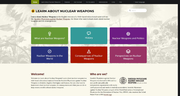
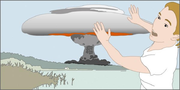
Welcome to Learn About Nuclear Weapons! Learn about nuclear weapons is a web-based educational material from the Swedish Physicians against Nuclear ... more
In this paper, we review the most significant health and environmental facts and explain why — from a medical perspective — a proper understanding of what nuclear weapons will do invalidates all arguments for continued possession of t ... more
The risks of the use of nuclear, radiological, biological or chemical (NRBC) weapons are heterogeneous. Each risk has its own implications for developing and deploying any capacity to assist victims of an NRBC event and, in parallel, for the health ... more

Recently there have been increased concerns about the development and possible use of nuclear weapons by certain countries or by terrorists. This document provides advice to the general public on how best to act to minimize any health co ... more
n view of the situation in Ukraine, IRSN has produced an information note presenting the nuclear facilities in Ukraine and an overview on the radiological monitoring of the country.​ An increase of the radiological atmosphere around the Chernob ... more
This course has been created for people with some experience in healthcare. It is particularly relevant to students in clinical healthcare professions (such as medicine, nursing, and allied health) and equally relevant to those working in broader disciplines (such as public health, global health, an ... more
You can find manuals, guidelines and information in our Section Radiological & Nuclear Hazards in the SPECIFIC HAZARDS TOOLBOX
IAEA Safety Standards for protecting people and the environment
n view of the situation in Ukraine, IRSN has produced an information note presenting the nuclear facilities in Ukraine and an overview on the radiological monitoring of the country.​ An increase of the radiological atmosphere around the Chernob ... more

Radiological and Nuclear Terrorism: Medical Response to Mass Casualties

Centers for Disease Control and Prevention (CDC) (2006) C_CDC
The purpose of this training is to prepare clinicians in first receiver settings to: (1) Identify factors impacting immediate medical response to mass casualties following major types of radiological incidents, and (2) Demonstrate appropriate patient assessment, triage, treatment and disposition dec ... more
IAEA Safety Standards for protecting people and the environment

A Decision Makers Guide: Medical Planning and Response for a Nuclear Detonation

U.S. Department of Health & Human Services (2017) C1
Successful detonation of an improvised nuclear device (IND) would be a catastrophic event, causing an unprecedented number of injuries and lives lost, as well as economic, political, and social disruption. However, an effective medical response and ... more
The main objective of the TMT Handbook project is to provide a practicable handbook for the effective and timely triage, monitoring and treatment of people exposed to radiation following a malevolent act.

Ukraine has four operational nuclear power plants (NPPs) containing 15 nuclear reactors, as well as two research nuclear reactors, radioactive wast ... more
What are the goals of this site? 1. Provide guidance for health care providers, primarily physicians, about clinical diagnosis and treatment of radiation injury during radiological and nuclear emergencies. 2. Provide just-in-time, evidence-based, u ... more
Radiation emergencies may be intentional (e.g., caused by terrorists) or unintentional. CDC provides some examples of different types of radiation emergencies and information what to do if a radiation emergency happens in your area.
This leaflet is intended to inform physicians — mainly GPs — and medical students on how to recognize a possible radiation injury. It is important to note that radiation injury has no special signs and symptoms. However, the combination of some of them may be typical of radiation injury. Arabic ... more