
Filter
114
Text search:
hernia
Featured
16
32
Language
Document type
67
22
13
5
3
3
1
Countries
12
4
4
4
4
4
4
3
2
2
2
2
2
2
2
1
1
1
1
1
1
1
1
1
1
1
Authors & Publishers
Publication Years
Category
48
34
15
7
3
1
Toolboxes
9
5
4
4
3
3
3
2
2
2
1
1
1
1
1
1
http://dx.doi.org/10.4172/2329-9088.1000136
Trop Med Surg 2013, 1:136

Accessed Febr. 6, 2020

Accessed Febr. 6 ,2020

Handout presentations in PDF for illustrating lectures
Accessed May 2014

Handout presentations in PDF for illustrating lectures
Accessed May 2014
The volume presents data on the surgical burden of disease, disability, congenital anomalies, and trauma, along with health impact and economic analyses of procedures, platforms, and packages to improve care in settings with severe budget limitations. Essential Surgery identifies 44 surgical procedu
...
Surgical Care At The District Hospital
recommended
Promotion of the quality of clinical care through the identification, promotion and standardization of appropriate procedures, equipment and materials, particularly at district hospital level.
Accessed 26 June 2014
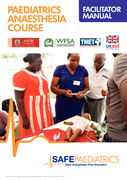
The SAFE Paediatric Anaesthesia course is an 'off the shelf package' supported by a facilitator manual, teaching materials and standard operating procedures. It is hoped that the course is clinically relevant and will improve the practice of anaesthesia for children to a safe standard.
Handbook of Hospital Care for Newborn Infants
recommended
Updated June 2021

Surgical site infection (SSI) is the most common postoperative complication worldwide. WHO guidelines to prevent SSI recommend alcoholic chlorhexidine skin preparation and fascial closure using triclosan-coated sutures, but called for assessment of both interventions in low-resource settings. This s
...

Vacunación Antigripal 2022 - Guía rapida
Safe Motherhood Series

Chapter 21 from "Where there is no doctor"

Developing protocols for use with refugees
and internally displaced persons

• provide scientific information on the safety, efficacy, and quality control/ quality assurance of widely used medicinal plants, in order to facilitate their appropriate use in Member States;
• provide models to assist Member States in developing their own mono- graphs or formularies for these
...
These guidelines are designed for ICRC and other health professionals – nurses, midwifes, doctors – who either lack experience in antenatal care or are not used to working in countries where medical infrastructure is underdeveloped or non-existent
