
Filter
341
Text search:
chlamydia
Featured
55
106
Language
Document type
176
65
49
24
8
7
7
3
2
Countries
12
11
11
11
8
7
7
6
6
5
5
4
4
4
4
4
3
3
3
3
3
2
2
2
2
2
2
2
2
2
2
2
2
2
2
2
1
1
1
1
1
1
1
1
1
1
1
1
1
1
1
Authors & Publishers
Publication Years
Category
118
43
37
14
8
7
4
Toolboxes
42
38
20
20
12
9
7
7
5
4
4
4
4
3
3
2
2
1
1
This document updates the 2009 ECDC guidance on chlamydia control in Europe. It was developed by a technical expert group which conducted a critical review of the scientific evidence on the epidemiology of
...
Trachoma disease
Trachoma is a sequela following infection by the bacterium Chlamydia trachomatis (C. trachomatis). The disease is preventable, but still the cause of blindness in 1.9 million people world wide.

This series highlights current challenges to the management of Neisseria gonorrhoeae, Chlamydia trachomatis, Mycoplasma genitalium, non-gonococcal urethris, bacterial vaginosis, syphilis and Trichomonas vaginalis. We have assembled a collection of s
...

Trachoma is one of oldest infectious diseases known to humans. It is caused by the bacteria Chlamydia trachomatis, which is transmitted through contact with eye secretions of infected people (shared use of towels and handkerchiefs, contact with fing
...
Despite the development of point-of-care diagnostic tests for syphilis, chlamydia, gonorrhoea, and trichomoniasis, none comply with all WHO criteria. This analysis overviews landscape analyses of point-of-care diagnostic technologies for
...
Trachoma is the leading infectious cause of blindness (2). It is characterized by repeated
conjunctival infection with particular strains of Chlamydia trachomatis. This scars the conjunctivae and,
in some cases, leads to trichiasis with or without
...

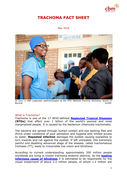
Trachoma is one of the 17 WHO-defined Neglected Tropical Diseases
(NTDs) that affect over 1 billion of the world’s poorest and most
marginalized people. It is caused by the bacterium chlamydia trachomatis.
Trachoma is an eye infection affecting both eyes. It is the world’s leading cause of infectious blindness. A bacterium called Chlamydia trachomatis causes trachoma. According to the World Health Organization (WHO), trachoma has caused the visual i
...

Trachoma causes more vision loss and blindness than any other infection in the world. This disease is caused by Chlamydia trachomatis bacteria. Other variants or strains of these bacteria can cause a sexually transmitted infection (
...
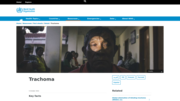
Trachoma is the leading infectious cause of blindness worldwide. It is caused by an obligate intracellular bacterium called Chlamydia trachomatis. The infection is transmitted by direct or indirect transfer of eye and nose discharges of infected peo
...
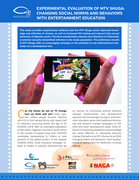
This study provides experimental evidence that the MTV Shuga series improved knowledge and attitudes of viewers, as well as increased HIV testing and reduced risky sexual behaviors of Nigerian youth. The show substantially reduced new infections of Chlamyd
...

Countries, partners, and donors are committed to the global elimination of blinding trachoma by 2020.
Achieving this public health milestone requires more than funding; it requires health personnel with the
right mix of skills, and well supported and managed health systems. Mass drug administratio
...
The Fifty-first World Health Assembly adopted resolution WHA51.11 in 1998, which targets the
global elimination of trachoma as a public health problem by 2020 (1). The strategy recommended
to achieve that goal is encapsulated by the acronym “SAFE”, which represents: Surgery for
individuals wi
...
En 1998, la Cinquante-et-Unième Assemblée mondiale de la Santé a adopté la résolution
WHA51.11 qui vise l’élimination mondiale du trachome en tant que problème de santé publique
à l’horizon 2020 (1). La stratégie recommandée pour atteindre cet objectif est récapitulée dans
le sig
...
La quincuagésima primera Asamblea de la Salud Mundial aprobó la resolución WHA51.11 en
1998, que busca la eliminación mundial del tracoma como problema de salud pública para el 2020
(1). La estrategia recomendada para lograr ese objetivo está encapsulada por las siglas "SAFE", que
represent
...
Este documento ha sido concebido para proporcionar un marco que respalde los estudios de prevalencia de las ITS en los niveles local y nacional. El propósito de estos estudios es conocer la carga de las infecciones por NG y CT, dos ITS prioritarias que dan lugar a resultados obstétricos y perinata
...

Accessed: 30.10.2019
