
Filter
1913
Text search:
Social
and
emotional
impact
Featured
182
411
Language
1848
54
47
33
25
16
15
7
7
6
5
4
4
4
4
4
4
3
3
3
3
3
3
3
2
2
2
2
2
2
2
2
2
2
1
1
1
1
1
1
1
1
1
1
1
1
1
Document type
1102
296
216
160
61
33
23
13
6
2
1
Countries
94
77
48
43
40
39
36
32
31
30
29
27
26
24
24
23
20
18
17
16
16
14
12
12
12
12
10
10
10
9
9
8
8
8
8
7
6
6
6
6
5
5
5
5
4
4
4
4
4
4
3
3
3
3
3
3
3
3
3
3
2
2
2
2
2
2
2
2
2
2
2
2
2
2
2
2
1
1
1
1
1
1
1
1
1
1
1
1
1
1
1
1
1
1
1
1
1
1
1
1
1
1
1
1
1
1
1
Authors & Publishers
205
77
68
66
47
45
38
37
32
29
28
24
23
20
19
16
15
12
12
11
11
10
9
9
8
8
8
8
8
7
7
6
6
6
6
6
6
5
5
5
5
5
5
5
5
5
5
5
5
5
5
5
5
5
4
4
4
4
4
4
4
4
4
4
4
4
4
4
4
4
4
4
4
4
4
4
4
4
3
3
3
3
3
3
3
3
3
3
3
3
3
3
3
3
3
3
3
3
3
3
3
3
3
3
3
3
3
3
3
3
3
3
3
3
3
3
3
2
2
2
2
2
2
2
2
2
2
2
2
2
2
2
2
2
2
2
2
2
2
2
2
2
2
2
2
2
2
2
2
2
2
2
2
2
2
2
2
2
2
2
2
2
2
2
2
2
2
2
2
2
2
2
2
2
2
2
2
2
2
2
2
2
2
2
2
2
2
2
2
2
2
2
2
2
2
2
2
2
2
2
2
2
2
2
2
2
2
2
2
2
2
2
2
2
2
2
2
2
2
2
2
2
2
2
2
2
2
2
2
2
2
2
2
2
2
2
2
2
2
2
2
2
2
2
2
2
2
2
2
2
2
2
1
1
1
1
1
1
1
1
1
1
1
1
1
1
1
1
1
1
1
1
1
1
1
1
1
1
1
1
1
1
1
1
1
1
1
1
1
1
1
1
1
1
1
1
1
1
1
1
1
1
1
1
1
1
1
1
1
1
1
1
1
1
1
1
1
1
1
1
1
1
1
1
1
1
1
1
1
1
1
1
1
1
1
1
1
1
1
1
1
1
1
1
1
1
1
1
1
1
1
1
1
1
1
1
1
1
1
1
1
1
1
1
1
1
1
1
1
1
1
1
1
1
1
1
1
1
1
1
1
1
1
1
1
1
1
1
1
1
1
1
1
1
1
1
1
1
1
1
1
1
1
1
1
1
1
1
1
1
1
1
1
1
1
1
1
1
1
1
1
1
1
1
1
1
1
1
1
1
1
1
1
1
1
1
1
1
1
1
1
1
1
1
1
1
1
1
1
1
1
1
1
1
1
1
1
1
1
1
1
1
1
1
1
1
1
1
1
1
1
1
1
1
1
1
1
1
1
1
1
1
1
1
1
1
1
1
1
1
1
1
1
1
1
1
1
1
1
1
1
1
1
1
1
1
1
1
1
1
1
1
1
1
1
1
1
1
1
1
1
1
1
1
1
1
1
1
1
1
1
1
1
1
1
1
1
1
1
1
1
1
1
1
1
1
1
1
1
1
1
1
1
1
1
1
1
1
1
1
1
1
1
1
1
1
1
1
1
1
1
1
1
1
1
1
1
1
1
1
1
1
1
1
1
1
1
1
1
1
1
1
1
1
1
1
1
1
1
1
1
1
1
1
1
1
1
1
1
1
1
1
1
1
1
1
1
1
1
1
1
1
1
1
1
1
1
1
1
1
1
1
1
1
1
1
1
1
1
1
1
1
1
1
1
1
1
1
1
1
1
1
1
1
1
1
1
1
1
1
1
1
1
1
1
1
1
1
1
1
1
1
1
1
1
1
1
1
1
1
1
1
1
1
1
1
1
1
1
1
1
1
1
1
1
1
1
1
1
1
1
1
1
1
1
1
1
1
1
1
1
1
1
1
1
1
1
1
1
1
1
1
1
1
1
1
1
1
1
1
1
1
1
1
1
1
1
1
1
1
1
1
1
1
1
1
1
1
1
1
1
1
1
1
1
1
1
1
1
1
1
1
1
1
1
1
1
1
1
1
1
1
1
1
1
1
1
1
1
1
1
1
1
1
1
1
1
1
1
1
1
1
1
1
1
1
1
1
1
1
1
1
1
1
1
1
1
1
1
1
1
1
1
1
1
1
1
1
1
1
1
1
1
1
1
1
1
1
1
1
1
1
1
1
1
1
1
1
1
1
1
1
1
1
1
1
1
1
1
1
1
1
1
1
1
1
1
1
1
1
1
1
1
1
1
1
1
1
1
1
1
1
1
1
1
1
1
1
1
1
1
1
1
1
1
1
1
1
1
1
1
1
1
1
1
1
1
1
1
1
1
1
1
1
1
1
1
1
1
1
1
1
1
1
1
1
1
1
1
1
1
1
1
1
1
1
1
1
1
1
1
1
1
1
1
1
1
1
1
1
1
1
1
1
1
1
1
1
1
1
1
1
1
1
1
1
1
1
1
1
1
1
1
1
1
1
1
1
1
1
1
1
1
1
1
1
1
1
1
1
1
1
1
1
1
1
1
1
1
1
1
1
1
1
1
1
1
1
1
1
1
1
1
1
1
1
1
1
1
1
1
1
1
1
1
1
1
1
1
1
1
1
1
1
1
1
1
1
1
1
1
1
1
1
1
1
1
1
1
1
1
1
1
1
1
1
1
1
1
1
1
1
1
1
1
1
1
1
1
1
1
1
1
1
1
1
1
1
1
1
1
1
1
1
1
1
1
1
1
1
1
1
1
1
1
1
1
1
1
1
1
1
1
1
1
1
1
1
1
1
1
1
1
1
1
1
1
1
1
1
1
1
1
1
1
1
1
1
1
1
1
1
1
1
1
1
1
1
1
1
1
1
1
1
1
1
1
1
1
1
1
1
1
1
1
1
1
1
1
1
1
1
1
1
1
1
1
1
1
1
1
1
1
1
1
1
1
1
1
1
1
1
1
1
1
1
1
1
1
1
1
1
1
1
1
1
1
1
1
1
1
1
1
1
1
1
1
1
1
1
1
1
1
1
1
1
1
1
1
1
1
1
1
1
1
1
1
1
1
1
1
1
1
1
1
1
1
1
1
1
1
1
1
1
1
1
1
1
1
1
1
1
1
1
1
1
1
1
1
1
1
1
1
1
1
1
1
1
1
1
1
1
1
1
1
1
1
1
1
1
1
1
1
1
1
1
1
1
1
1
1
1
1
1
1
1
1
1
1
1
1
1
1
1
1
1
1
1
1
1
1
1
1
1
1
1
1
1
1
1
1
1
1
1
1
1
1
1
1
1
1
1
1
1
1
1
1
1
1
1
1
1
1
1
1
1
1
1
1
1
1
1
1
1
1
1
1
1
1
1
1
1
1
1
1
1
1
1
1
1
1
1
1
1
1
1
1
1
1
1
1
1
1
1
1
1
1
1
1
1
1
1
1
1
1
1
1
1
1
1
1
1
1
1
1
1
1
1
1
1
1
1
1
1
1
1
1
1
1
1
1
1
1
1
1
1
1
1
1
1
1
1
1
1
1
1
1
1
1
1
1
1
1
1
1
1
1
1
1
1
1
1
1
1
1
1
1
1
1
1
1
1
1
1
1
1
1
1
1
1
1
1
1
1
1
1
1
1
1
1
1
1
1
1
1
1
1
1
1
1
1
1
1
1
1
1
1
1
1
1
1
1
1
1
1
1
1
1
1
1
1
1
1
1
1
1
1
1
1
1
1
1
1
1
1
1
1
1
1
1
1
1
1
1
1
1
1
1
1
1
1
1
1
1
1
1
1
1
1
1
1
1
1
1
1
1
1
1
1
1
1
1
1
1
1
1
1
1
1
1
1
1
1
1
1
1
1
1
1
1
1
1
1
1
1
1
1
1
1
1
1
1
1
1
1
1
1
1
1
1
1
1
1
1
1
1
1
1
1
1
1
1
1
1
1
1
1
1
1
1
1
1
1
1
1
1
1
1
1
1
1
1
1
1
1
1
1
1
1
1
1
1
1
1
1
1
1
1
1
1
1
1
1
1
1
1
1
1
1
1
1
1
1
1
1
1
1
1
1
1
1
1
1
1
1
1
1
1
1
1
1
1
1
1
1
1
1
1
1
1
1
1
1
1
1
1
1
1
1
1
1
1
1
1
1
1
1
1
1
1
1
1
1
1
1
1
1
1
1
1
1
1
1
1
1
1
1
1
1
1
1
1
1
1
1
1
1
1
1
1
1
1
1
1
1
1
1
1
1
1
1
1
1
1
1
1
1
1
1
1
1
1
1
1
1
1
1
1
1
1
1
1
1
1
1
1
1
1
1
1
1
1
1
1
1
1
1
1
1
1
1
1
1
1
1
1
1
1
1
1
1
1
1
1
1
1
1
1
1
1
1
1
1
1
1
1
1
1
1
1
1
1
1
1
1
1
1
1
1
1
Publication Years
539
1167
200
6
1
Category
572
186
100
98
91
73
2
Toolboxes
482
155
151
76
75
71
64
39
35
34
31
28
27
23
19
15
8
7
7
5
5
4
3
2
1
1
1
Under the theme “Stronger Together”, the campaign aims to offer information and strategies to assist communities in the region in better coping with the psychological impact of adverse events be
...
fore, during and after a disaster situation. It also aims to raise awareness to reduce the stigma about seeking mental health and psychosocial support.
You can download a wide range of communication material: videos, posters, radio jingles, guidebooks.
The Caribbean is highly prone to natural hazards, including seismic activity, hurricanes, landslides and floods. These events have resulted in lost lives, serious injuries and severe damage to housing and infrastructure. A single hurricane event can affect more than one island, and completely erase the gains of many years of productivity. As a result, these unpredictable hazards create disruption and have an ongoing impact on people’s lives - affecting their mental health and psychosocial well-being.
Although everyone is affected in some way by disaster events, there are a wide range of reactions and feelings that a person can experience. People may feel overwhelmed, confused or very uncertain about what is happening. They can also feel very fearful, anxious, numb or detached. People who feel safe, connected, calm and hopeful, have access to social, physical and emotional support and find ways to help themselves after a disaster, however, will be better able to recover long-term from mental health effects
more
Psychosocial Support and Social and Emotional Learning for Children and Youth in Emergency Settings
recommended
The purpose of this paper is to clarify relevant terminologies and approaches relating to psychosocial well-being and social
...
and emotional learning (SEL) in education in crisis affected contexts, and to explore how psychosocial support (PSS) and social and emotional learning relate to one another.
more

Improving Maternal Mental Health
recommended
The mental health of women not only adversely affects them, but its impact on their
developing infant is also severe. If the ability of women to take care of their baby is
compromised, the survival and
...
development of the infant is jeopardized. Maternal
depression in resource-constrained settings is linked directly to lower infant birth
weight, higher rates of malnutrition and stunting, higher rates of diarrhoeal disease,
infectious illness and hospital admission and reduced completion of recommended
schedules of immunization in children. It also adversely affects physical, cognitive,
social, behavioural and emotional development of children (1).
more

A paper presented during a conference on The Catholic Social Teaching and its Social and Politic
...
al impact on the Development 9thto 10th December, in Schloss Eichholz Koln/Cologne/GermanyPresented by Sr. Dr. Elizabeth Nduku
accessed July 2020
more

The objectives of the research presented in this report were to identify case studies of community-led HIV-related health and social inclusion service delivery organizations in eastern
...
and southern Africa; describe the typologies of the services provided; and identify evidence of their service delivery and contribution beyond HIV, including advancing universal health coverage.
more

There are social and environmental barriers faced by persons with disabilities which have been reported in literature. In discussing these barriers, attention is yet to be given to the support from
...
families to members with disabilities. This study aimed to examine family support and its impact on the lives of persons with disabilities in Ghana.
more
This manual serves as a toolkit of useful PM&E techniques for improving the performance and impact of community-based interventions, such as those involving the most vulnerable children, home-based
...
care and gender-based violence. The manual includes a five-step PM&E programme path and six community group tools.
more
The chapter Dementia in Latin America and the Caribbean: Prevalence, Incidence, Impact, and Trends over Time, is part of the publication series tit
...
led “Decade of Healthy Aging: situation and challenges”. This document aims to provide an outline of the current situation in Latin America and the Caribbean in respect of the prevalence and incidence of dementia and its impact on the health status of older people. As dementia is a significant global health problem which also has social and economic impacts this document highlights the importance of monitoring dementia in the region. The document evidences that dementia is one of the main contributors to dependence and disability in older people in Latin America and the Caribbean and, although its prevalence and incidence increase exponentially with age, it is not part of normal aging. Alzheimer’s disease is the most common dementia, and there is no cure for this condition, but with timely diagnosis is possible to ameliorate symptoms. It is important to assess what are the needs of people leaving with dementia and their families and to integrate dementia risk reduction strategies in pre-existing strategies for other non-communicable diseases. As shown in the report, despite the huge burden dementia is still underdiagnosed, and it is fundamental to better monitor its prevalence, incidence and the different societal impact that dementia can have. For that, it is crucial to promote the use of harmonized methodologies to address this information in a broader number of studies and countries in the region. This can contribute to the generation of direct actions to decrease dementia risk and lead to healthier lives for people with dementia and their families.
more
Healthcare 2020, 8(1), 26; https://doi.org/10.3390/healthcare8010026
The current article is an integrative and analytical literature review on the concept and meaning of empathy in
...
health and social care professionals. Empathy, i.e., the ability to understand the personal experience of the patient without bonding with them, constitutes an important communication skill for a health professional, one that includes three dimensions: the emotional, cognitive, and behavioral. It has been proven that health professionals with high levels of empathy operate more efficiently as to the fulfillment of their role in eliciting therapeutic change.The empathetic professional comprehends the needs of the health care users, as the latter feel safe to express the thoughts and problems that concern them. Although the importance of empathy is undeniable, a significantly high percentage of health professionals seem to find it difficult to adopt a model of empathetic communication in their everyday practice. Some of the factors that negatively influence the development of empathy are the high number of patients that professionals have to manage, the lack of adequate time, the focus on therapy within the existing academic culture, but also the lack of education in empathy. Developing empathetic skills should not only be the underlying objective in the teaching process of health and social care undergraduate students, but also the subject of the lifelong and continuous education of professionals
more
A toolkit for behavioural and social communication in outbreak response

Maternal Mental Health and child health and development in low and middle income countries
recommended
The impact of maternal mental health problems on infants in high income countries has been identified mostly in terms of psychosocial and emotional
...
development, thanks to the groundbreaking early work of Spitz (2) and of Bowlby (3), who studied the emotional needs of infants and mother-child attachment. Subsequently, a large body of literature, also from HICs, documented the effects of maternal mental health on the child's psychological development (4), intellectual competence(5), psychosocial functioning (6) and rate of psychiatric morbidity (7, 8).
more

The COVID-19 pandemic is causing untold fear and suffering for older people across the world. As of 26 April, the virus itself has already taken the lives of some 193,710 people, and fatality rates
...
for those over 80 years of age is five times the global average. As the virus spreads rapidly to developing countries, likely overwhelming health and social protection systems, the mortality rate for older persons could climb even higher.
Less visible but no less worrisome are the broader effects: health care denied for conditions unrelated to COVID-19; neglect and abuse in institutions and care facilities; an increase in poverty and unemployment; the dramatic impact on well-being and mental health; and the trauma of stigma and discrimination.
more

The recruitment and use of children violates their rights and causes them physical, developmental, emotional, mental,
...
and spiritual harm. The impact on their mental and physical well-being breaches the most fundamental human rights and represents a grave threat to durable peace and sustainable development, as cycles of violence are perpetuated. The Paris Commitments adopted in Paris in February 2007 are an expression of strengthened international resolve to prevent the recruitment of children and highlight the actions governments can and should take to protect children affected by conflict. The Paris Principles are the operational guidelines related to sustainable reintegration of children formerly associated with armed forces and groups.
more

Infectious diseases, such as COVID-19, can have a significant impact on children’s and their caregivers’
wellbeing beyond the disease itself. In terms of child protection, there are three main
...
potential
secondary impacts:
- Neglect and lack of parental care.
- Mental health and Psychosocial distress.
- Increased exposure to violence, including sexual violence, physical and emotional abuse.
more

Mental, Neurological, and Substance Use Disorders
Vikram Patel, Dan Chisholm, Tarun Dua et al.
International Bank for Reconstruction and Development The World Bank
(2016)
CC
Disease Control Priorities, 3rdEdition: Volume 4.
Mental, neurological, and substance use disorders are common, highly disabling, and associated with significant premature mortality. The
...
impact of these disorders on the social and economic well-beingof individuals, families, and societies is large, growing, and underestimated
more

This publication includes quotes from various respondents interviewed in Tripoli, Akkar and Beirut. We focused on three main questions: How are the relations between refugees and Lebanese? How are r
...
efugees faring in the job market? Which concrete initiatives have already demonstrated positive impact in terms of increasing their financial and/or social well-being? The combination of those factors are key to understanding refugees’ livelihoods and coping strategies and reflect on what more can be done by local and international actors to increase social stability in Lebanon on a temporary basis, pending durable solutions.
more

The report discusses the epidemiological and social aspects of ageing, health and functional changes experienced with ageing, the
...
impact of physical activity, assessment of the nutritional status of older persons, and nutritional guidelines for healthy ageing.
more
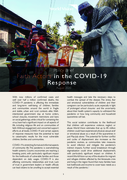
COVID-19 is stretching formal and informal aspects of community life. The pandemic is overwhelming health systems. Country economies are reaching a breaking point, with particularly significant impact
...
for the livelihoods of vulnerable families and those dependent on daily wages. COVID-19 is also affecting community relationships and trust. Lack of trust in government leaders or health officials can lead citizens to be unwilling to accept essential health messages and take the necessary steps to combat the spread of the disease. The stress, fear and emotional vulnerabilities of children and their caregivers can be particularly acute, especially in light of prolonged school closures and the uncertainty about their health system’s capacity to withstand the pandemic or how long community and household quarantines will last.
more

The COVID-19 HEalth caRe wOrkErs Study (HEROES): Regional Report from the Americas is a multicenter prospective cohort study to assess the impact of the COVID-19 pandemic on the mental health of health care workers in 26 countries on four continents
...
and how it is affected by several factors at different interrelated levels: individual, family, occupational, and social. This brief report presents the evidence generated from the baseline survey of 11 participating countries in the Region of the Americas. Using validated scales, the findings show high rates of depressive symptoms, suicidal ideation, and psychological distress in several countries of the Region. The spirit of the project is not only to generate quality scientific evidence on the mental health of health care workers, but also to help develop interventions (both individual and institutional) and policies to address the negative impacts of the COVID-19 pandemic on mental health.
more
