Filter
161
Text search:
Nutrient
profile
Featured
15
55
Language
Document type
84
47
13
7
5
5
Countries
9
7
7
6
5
4
3
3
3
3
3
3
2
2
2
2
2
2
2
1
1
1
1
1
1
1
1
1
1
1
1
1
1
1
1
1
1
1
Authors & Publishers
Publication Years
Category
69
21
19
12
11
5
2
Toolboxes
26
7
7
4
4
3
3
2
2
1
1
1
1
1
1
1
1

To implement the set of recommendations on the marketing of foods and non-alcoholic beverages to children
With the growing obesity crisis among children, WHO and other public health advocates and consumer groups have called for restrictions on advertising of ‘unhealthy foods’ high in salt, ...
With the growing obesity crisis among children, WHO and other public health advocates and consumer groups have called for restrictions on advertising of ‘unhealthy foods’ high in salt, ...
A discussion paper outlining the first steps in developing a nutrient profile model to drive changes to product composition and labelling and promotion practices in the WHO European Region
The aims
...
Despite recommendations on the marketing of commercial baby and toddler foods, two new reports from WHO find widespread evidence of inappropriate promotion and poor nutritional quality of foods for infants and young children across the WHO European Region. To address these issues and help countries
...
Climate change is a major risk to good development outcomes, and the World Bank Group is committed to playing an important role in helping countries integrate climate action into their core development agendas. The World Bank Group is committed to supporting client countries to invest in and build a
...

Peru celebrates 200 years of independence in 2021. Over this period of independent life, and despite the turbulent socio-political scenarios, from internal armed conflict to economic crisis to political instability over the last 40 years, Peru has experienced major changes on its epidemiological and
...
Refugee Health
recommended
An approach to emergency situations. Relief workers face rapidly changing and complex environments, new disease patterns, enormous humanitarian needs and relatively limited resources. The authors of this book use their experience in the area to produce an operational manual of the issues involved in
...
This Technical Brief focuses on current principles and approaches to Moderate Acute Malnutrition (MAM) management, highlighting key constraints, gaps in knowledge and areas still lacking consensus. It is intended to inform ongoing debates among practitioners, national partners, donors and analysts o
...
This Technical Brief reviews current practice and evidence on nutrition-specific preventive approaches to MAM, providing practical guidance for implementers and programme managers, and highlighting gaps in evidence and guidance.

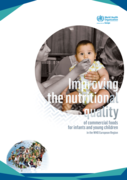
These new reports from WHO document evidence of widespread inappropriate promotion of baby and toddler foods. Despite the WHO Guidance on ending inappropriate promotion of foods for infants and young children agreed in 2016 and nearly 40 years since the introduction of the International Code of Mark
...

This report summarizes the results of a 2018 survey of food and beverage marketing to children via television in the Kyrgyz Republic. It explores the extent and nature of children’s exposure to marketing for food high in saturated fat, free sugars and/or salt via television in the country. The stu
...
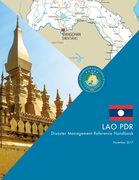
Lao People’s Democratic Republic (Lao PDR), also referred to as Laos, or Lao, is exposed to natural disasters such as flooding, typhoons, cyclones, drought, and earthquakes. The country is vulnerable to recurrent, sudden-onset and slow onset natural disasters with flooding, storms and typhoons hav
...
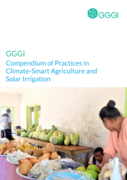
this publication serves as a practical guide and useful resource for practitioners, farmers, scientists, and technicians to better understand the initiative undertaken by GGGI. In this compendium, GGGI provides the latest knowledge and capacity building materials on these topics and offers informati
...
Part 2 Measurement
This publication provides directions for a logical, evidence informed approach to selecting, developing, implementing and monitoring population-based interventions within the context of the double-burden of malnutrition in South-East Asia. The focus of this guide is on processed or ultra-processed p
...
This report on progress achieved in the WHO European Region and Member States in implementing the European food and nutrition action plan 2015–2020 presents selected epidemiological data on the nutritional status of populations throughout the Region and on implementation of policies recommended in
...

There is growing international consensus that food systems transformation is important to address the challenges of malnutrition in all its forms, the burden of noncommunicable diseases (NCDs), environmental sustainability, increasing inequality and ensuring the welfare of workers and animals. In li
...