
Filter
626
Text search:
Неинфекционные
заболевания
Featured
15
15
Language
Document type
258
83
83
43
35
28
25
16
14
12
10
10
8
1
Countries
355
66
16
13
9
8
8
8
5
4
4
4
3
3
2
2
2
2
2
2
2
2
1
1
1
1
1
1
1
1
1
1
1
1
1
1
1
1
1
1
1
1
1
1
1
1
Authors & Publishers
Publication Years
Category
571
56
27
17
8
3
Toolboxes
545
18
16
6
4
4
2
2
1
1
1
1
1
The Noncommunicable Diseases (NCD) Data Portal provides comprehensive information on NCDs, including cardiovascular diseases, cancer, diabetes, and chronic respiratory diseases. It offers country-specific data on mortality rates, risk factors, and national responses, enabling analysis and comparison
...
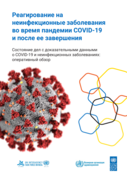
В настоящем документе представлен первоначальный обзор поступающей информации
(по состоянию на 2 июля 2020 г.) о взаимосвязи между COVID-19, НИЗ и факторами
риска НИЗ. Ре
...
The Noncommunicable Diseases (NCD) Data Portal offers comprehensive data on NCDs such as cardiovascular diseases, cancer, diabetes, and chronic respiratory diseases. It provides country-specific information on NCD mortality rates, risk factors, and national responses, facilitating analysis and compa
...
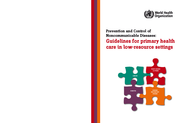
Cancer, diabetes, heart disease and stroke, chronic respiratory disease
Cardiovascular disease is a major cause of disability and premature death throughout the world, and contributes substantially to the escalating costs of health care. The underlying pathology is atherosclerosis, which develops over many years and is usually advanced by the time symptoms occur, genera
...
Third edition

This report reviews the current situation in relation to national capacity to address NCDs and the progress made at country level over the past decade. It highlights that, while progress is being made, there is still much work to be done to create the infrastructure, policies, surveillance and healt
...
Effective implementation of WHO PEN, combined with other very cost effective population-wide interventions, will help even resource constrained settings to attain the global voluntary targets related to reduction of premature mortality and preventionof heart attacks and strokes.

There are two sets of charts. One set (14 charts) can be used in settings where blood cholesterol can be measured. The other set (14 charts) is for settings in which blood cholesterol cannot be measured. Both sets are available in colour and shades of black on a compact disc. Each chart can only be
...
The World Health Organization (WHO) Global Status Report on Noncommunicable Diseases 2010 projects that noncommunicable diseases (NCDs) will be responsible for over 44 million deaths during the next decade, representing an increase of about 15% since 2010. Most of these deaths will occur in the WHO
...
Here access to all documents and articles http://thelancet.com/commissions/palliative-care
“The power of data to fight tobacco”
Interested in a specific country or countries? Find out which tobacco control measures match the country you are looking for.
Interested in specific tobacco control measures? Find out which countries match what you are looking for.

The WHO Framework Convention on Tobacco Control (WHO FCTC) is an evidence-based treaty that reaffirms the right of all people to the highest standard of health and was developed in response to the globalization of the tobacco epidemic. Member States of the WHO South-East Asia Region have made
...
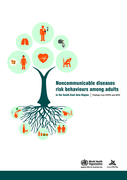
The publication conveys the most recent quantitative surveillance results focusing on noncommunicable disease (NCDs)-related risk behaviours among adults from the WHO STEPwise approach to NCD risk factor surveillance (STEPS) and tobacco use among adults from the Global Adult Tobacco Survey (GATS) in
...
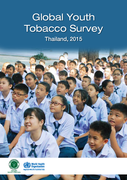
The publication conveys the quantitative surveillance results focusing on tobacco use and noncommunicable disease (NCD) related behaviours among youth (13–15 years) in Member States of the WHO South-East Asia Region, namely, the Global School-based Student Health Survey (GSHS) and the Global Youth
...
