
Filter
2507
Text search:
translation
Featured
324
516
Language
Document type
870
576
464
262
142
77
36
27
24
10
6
5
5
1
1
Countries
190
67
59
49
47
42
40
34
33
28
28
27
26
25
25
24
23
22
21
20
20
20
19
19
17
16
16
16
15
15
14
12
12
12
12
12
10
10
10
9
8
8
8
8
8
8
7
7
7
7
7
7
6
6
6
6
5
5
5
4
4
4
4
4
3
3
3
3
3
3
3
3
3
3
3
2
2
2
2
2
2
2
2
2
2
2
2
2
2
2
2
2
2
2
2
2
2
1
1
1
1
1
1
1
1
1
1
1
1
1
1
1
1
1
1
1
1
1
1
1
1
1
1
1
1
1
1
1
1
1
1
1
Authors & Publishers
Publication Years
Category
609
274
223
191
189
72
44
Toolboxes
248
226
129
129
113
109
108
103
89
84
82
76
72
65
55
49
48
42
33
23
12
11
9
9
6
2
This publication provides information for identifying, classifying, marking, labelling, packaging, documenting and refrigerating infectious substances for transportation and ensuring their safe delivery.
The document provides practical guidance to facilitate compliance with applicable international
...
(version 1.0): procedure: methods manual
The Country Cooperation Strategy (CCS) is a document to guide WHO’s work in countries. CCS is a medium-term vision for WHO’s technical cooperation with a given Member State, and supports the country's national health policy, strategy or plan. The CCS time frame is flexible to align with national
...
This updated version, endorsed by the World Health Assembly in May 2021 through resolution WHA74.9, reflects lessons learned in the global malaria response over the last 5 years. While the milestones and targets remain the same, the approaches to tackling the disease, in some areas, have evolved to
...
2nd edition .
This Framework applies to the sharing of H5N1 and other influenza viruses with human pandemic potential and the sharing of benefits. This Framework does not apply to seasonal influenza viruses or other non-influenza pathogens or biological substances that may be contained in clinical
...

Towards the Peoples Health Assembly Book - 4
Towards the Peoples Health Assembly Book - 5
Towards the Peoples Health Assembly Book - 1
Technical Update
Areas of Africa endemic for Buruli ulcer (BU), caused by Mycobacterium ulcerans, also have a high prevalence of human immunodeficiency virus (HIV), with adult prevalence rates between 1% and 5% (Maps). However, there is limited information on the prevalence of BU–HIV coinfection.
...
This is one of seven Medical Peace Work courses.
This is one of seven Medical Peace Work cases.

Immigrant and refugee mental health - Best practices in meeting the needs of immigrants and refugees
Compared to their native counterparts, immigrants and refugees are at higher risk for developing mental health problems due to previous trauma and/or the stress of migration and resettlement; such as war, violence, poverty, and acculturation.
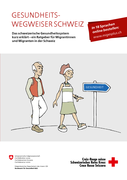
Der Gesundheitsratgeber hilft Personen, insbesondere Migrantinnen und Migranten sich im komplexen schweizerischen Gesundheitswesen zurechtzufinden. Der neue Gesundheitswegweiser bietet umfassende und leicht verständliche Informationen rund um das Thema Gesundheit in der Schweiz.
Der Wegweiser ist
...
Where must I go if I feel unwell or have had an accident? Is medical treatment free in Switzerland or must I pay for it? What should I do in an emergency? What types of insurance do I need? How can I protect myself from illness? Where can I find health information in my own language? The Health Guid
...
Surge in climate change-related disasters poses growing threat to food security
Document is available in Arabic, Bengali, Chinese, French, Gujarati, Hindi, Italian, Mirpuri, Polish, Portuguese, Punjabi, Russian, Somali, Spanish, Tamil, Turkish, Urdu. For other language versions go to http://www.unicef.org.uk/BabyFriendly/Resources/Resources-in-other-languages/
This curricula guide builds on several existing products of WHO and partners, aimed at supporting countries in their effort to address the first objective of the GAP-AMR (to improve awareness and understanding of AMR). It is targeted specifically at health educators and policy planners, and applies
...
Purpose of this document: to present eight practical steps that Member States can take at the national and sub-national level to improve WASH in health care facilities

The Strategy provides a high-level unifying framework to leverage existing capacities, address barriers and strengthen the use of genomic surveillance in the detection, monitoring and response to public health threats. Genomic surveillance is part of the broader surveillance and laboratory system, a
...
