
Filter
348
Text search:
Ministry
of
Health,
Ghana
Featured
Recommendations
23
New Publications
85
Language
Document type
No document type
193
Studies & Reports
77
Guidelines
40
Manuals
15
Strategic & Response Plan
15
Situation Updates
4
Training Material
1
App
1
Resource Platforms
1
Fact sheets
1
Countries / Regions
Ghana
39
Global
17
Kenya
13
Sierra Leone
10
Liberia
10
Uganda
10
Nigeria
9
Malawi
8
Africa
8
Guinea
7
Senegal
6
Zambia
6
Tanzania
6
Ethiopia
4
Cameroon
4
Zimbabwe
4
Nepal
4
Rwanda
4
South Africa
4
East and Southern Africa
4
West and Central Africa
4
Latin America and the Carribbean
4
Togo
3
Benin
3
Congo, Democratic Republic of
2
Mali
2
Côte d’Ivoire / Ivory Coast
2
India
2
Cambodia
2
Central African Republic
2
Burkina Faso
1
Guinea-Bissau
1
Niger
1
Pakistan
1
South Sudan
1
Jordan
1
Afghanistan
1
Syria
1
Chad
1
Mozambique
1
Namibia
1
Peru
1
Brazil
1
Ukraine
1
Colombia
1
Angola
1
Sri Lanka
1
Middle East and North Africa
1
South–East Asia Region
1
Eastern Europe and Central Asia
1
Western and Central Europe
1
Laos
1
Russia
1
Gabon
1
Authors & Publishers
Publication Years
Category
Countries
128
Clinical Guidelines
29
Public Health
24
Women & Child Health
20
Key Resources
17
Capacity Building
4
Pharmacy & Technologies
4
Toolboxes
HIV
35
Planetary Health
19
AMR
18
COVID-19
17
Disability
16
Ebola & Marburg
15
Mental Health
15
NTDs
14
Caregiver
13
TB
12
Pharmacy
12
2.0 Rapid Response
8
Global Health Education
7
NCDs
6
Health Financing Toolbox
4
Natural Hazards
3
Refugee
3
Social Ethics
3
Malaria
3
Cholera
2
Rapid Response
2
Polio
1
A survey was conducted in countries in all six WHO regions and focused on the building blocks that are considered prerequisites to combat antimicrobial resistance: a comprehensive national plan, laboratory capacity to undertake surveillance for resistant microorganisms, access to safe, effective ant
...
The World Health Organization’s comprehensive antenatal care (ANC) guideline WHO recommendations on antenatal care for a positive pregnancy experience was published in 2016 with the objective of i
...

Safe sanitation is essential for health, from preventing infections to improving and maintaining mental and social
well-being. Lack of adequate sanitation contributes to diarrhoeal diseases, parasi
...
A companion to the Child Friendly Schools Manual
WASH in Schools aims to improve the health and learning performance of school-aged children – and, by extension, that ...
WASH in Schools aims to improve the health and learning performance of school-aged children – and, by extension, that ...

WHO would like to express its gratitude and appreciation to all Member States that provided information to the WHO survey on policies and activities at the national level in the area of antimicrobial resistance. The contribution
...

Water, sanitation and hygiene (WASH) are critical in the prevention and care for all of the 17 neglected tropical diseases (NTDs) scheduled for intensified control or elimination by 2020.
Provision of ...
Provision of ...

This booklet presents key messages for action, summarized from a set of chapters on different environmental health issues, available at www.who.int/ ceh/publications/healthyenvironmentsforhealthychi
...

The WHO Global Antimicrobial Resistance and Use Surveillance System (GLASS) was launched in 2015 to foster AMR surveillance and inform strategies to contain AMR. The system started with surveillance of AMR in bacteria causing common human infections
...
Female Genital Schistosomiasis (FGS) is a gynaecological disease caused by Schistosoma haematobium, a parasitic worm that is acquired by skin contact with freshwater contaminated by schistosome cerceriae. Communities in which the infection is most endemic have limited access to clean water and healt
...

Health care-associated infections (HAIs) affect patients and health systems every day, causing immense suffering, driving higher health-care costs
...
This ten year global plan for measles and rubella outlines the strategy that needs to be fully implemented to achieve the measles and rubella goals endorsed by the World Health Assembly. The plan sets out the: vision, goals and targets for the 2011-
...

This tool offers practical advice on implementing HIV and STI programmes for and with sex workers. It is based on the recommendations in the guidance document on Prevention and treatment of HIV and other sexually transmitted infections for sex worke
...
Managing possible serious bacterial infection in young infants when referral is not feasible
recommended
It provides guidance on care for use in resource-limited settings or in settings where families with sick young infants do not accept or cannot access referral care, but can be managed in outpatient settings by an appropriately trained health worker
...

Cities are uniquely positioned to understand local needs and respond rapidly to changing conditions to safeguard health. These changes require strong city leadership to implement multisectoral, health
...
Every day in 2020, approximately 800 women died from preventable causes related to pregnancy and childbirth - meaning that a woman dies around every two minutes.
Sustainable Development Goal (SDG) target 3.1 is to reduce maternal mortality to less than 70 maternal deaths per 100 000 live births by
...
12 May 2021. This third survey in the series shows that the COVID-19 pandemic continues to impact societies, not only in terms of health, but also social and economic conditions and day-to-day life
WHO mhGAP Guideline update
recommended
Update of the Mental Health Gap Action Programme
(mhGAP) Guideline for Mental, Neurological and Substance use Disorders May 2015
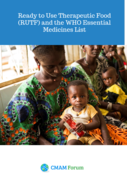
Severe Acute Malnutrition (SAM) is one of the greatest child survival challenges in the world today and
reportedly affects more than 16.2 million children each year1. High impact, proven treatment interventions exist
yet sadly approximately only 3
...

The Mapping Antimicrobial Resistance and Antimicrobial Use Partnership (MAAP) project has conducted a multi-year, multi-country study that provides stark insights on the under-reported depth of the antimicrobial resistance (AMR) crisis across Africa
...

The Mapping Antimicrobial Resistance and Antimicrobial Use Partnership (MAAP) project has conducted a multi-year, multi-country study that provides stark insights on the under-reported depth of the antimicrobial resistance (AMR) crisis across Africa
...
