
Filter
693
Text search:
Dengue
fever
Featured
71
231
Language
Document type
320
110
101
33
30
23
22
20
13
12
4
3
1
1
Countries
59
33
20
17
17
15
14
13
9
9
9
8
8
7
7
6
6
6
6
5
5
5
5
5
4
4
4
4
4
4
3
3
3
3
3
3
3
3
2
2
2
2
2
2
2
1
1
1
1
1
1
1
1
1
1
1
1
1
1
1
1
1
1
1
1
1
1
Authors & Publishers
Publication Years
Category
195
80
51
46
22
11
6
Toolboxes
127
104
49
38
37
28
28
26
19
17
10
8
8
5
4
4
4
4
3
3
3
1
1
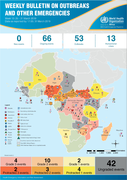
Response to the tropical cyclone in southern Africa
Ebola virus disease outbreak in the Democratic Republic of the Congo
Meningitis outbreak in Togo
Lassa fever outbreak in Liberia.
The purpose of this document is to inform the public about biological and chemical hazards and thereby prepare the population for an immediate response in the event of an incident until public health support is provided.
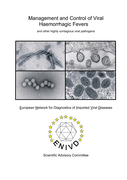
The agents reported here are: Anthrax, Botulism, Haemorrhagic
...

Leptospirosis is a zoonotic disease with epidemic potential, especially after a heavy rainfall,
caused by a bacterium called Leptospira. Leptospira interrogans is pathogenic to humans and
animals, with more than 200 serologic variants or serovars. Humans usually acquire
leptospirosis through dire
...

This report is one of the first major products of the newly established Precision Public Health Metrics unit of the UCN cluster of the WHO Regional Office for Africa. The report presents national trends in communicable and non-communicable disease burden and control in the WHO African region. It tra
...

Measles is one of the most contagious diseases for humans. It is caused by a paramyxovirus virus, manifesting as a febrile rash illness. The incubation period for measles usually is 10–14 days (range 7–23 days) from exposure to symptom onset. Initial symptoms (prodrome) generally consist of
...
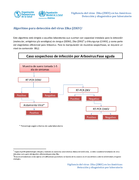
Este algoritmo está dirigido a aquellos laboratorios que cuentan con capacidad instalada para la detección (molecular, antigénica y/o serológica) de dengue (DENV), Zika (ZIKV) y chikungunya(CHIKV),y como parte del diagnóstico diferencial para
...
Las olas de transmisión de la fiebre amarilla ocurridas en la Región de las Américas entre el 2016 y el 2018 causaron el mayor número de casos humanos y epizoóticos registrados en varios decenios. La fiebre amarilla es una enfermedad hemorrágica viral grave que representa un desafío para el p
...
Las recomendaciones aquí presentadas fueron elaboradas a partir de una síntesis sistemática de la evidencia disponible y adoptan un enfoque pragmático, orientado a facilitar su aplicación en escenarios clínicos complejos y de alta demanda. Su desarrollo se fundamenta en los principios de la me
...

This document serves to provide interim guidance/ recommendations to carry out mpox surveillance activities mainly case investigation, contact tracing and isolation. For the development of this document WHO, UKHSA and CDC guidelines were referred to and adopted within the country context.
The African region reports the highest number of health emergencies of all the WHO regions every year: an average of
2-3 new events every week
Le monde est aujourd’hui confronté à de nombreux problèmes sanitaires, avec
des conséquences néfastes sur tous les plans, qui expliquent un changement de
paradigme en matière de gestion des risques. Aussi, compte tenu des limites notées
dans les cloisonnements entre les secteurs de la sa
...
This review article provides a comprehensive overview of Ebola Virus Disease (EVD), covering its epidemiology, clinical presentation, diagnosis, treatment, and prevention. It explains that Ebola is a severe zoonotic infection caused by the Ebola virus, most likely originating from fruit bats and tra
...
Between April 2018 and November 2020, the Democratic Republic of Congo (DRC) experienced its 11th Ebola virus disease (EVD) outbreak. Tanzania’s cross-border interactions with DRC through regular visitors, traders, and refugees are of concern, given the potential for further spread to neighboring
...
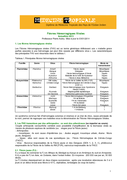


. Interim Guidelines. This interim guideline lays out some basic principles of optimal nutritional care for adults and paediatric patients during treatment and convalescence in Ebola treatment units, community care centres or to other centres where Ebola patients are receiving care and support. It h
...
