
Filter
3078
Text search:
respiratory
assessment
Featured
435
711
Language
2912
84
73
72
42
30
22
16
6
5
4
3
3
2
2
2
2
1
1
1
1
1
1
1
1
1
1
1
1
1
1
1
1
1
1
1
1
1
1
Document type
1356
685
535
200
126
63
57
33
10
6
4
3
Countries / Regions
165
154
105
74
70
61
57
56
56
51
50
49
47
45
44
43
40
40
40
36
35
31
29
28
28
27
24
24
23
20
20
19
18
18
17
17
16
14
13
12
12
11
11
11
10
9
9
9
8
8
7
7
7
6
6
6
6
5
5
5
5
5
5
5
5
4
4
4
4
4
4
3
3
3
3
3
3
3
3
3
3
3
3
3
2
2
2
2
2
2
2
2
2
2
2
2
2
2
2
2
2
2
2
2
2
1
1
1
1
1
1
1
1
1
1
1
1
1
1
1
1
1
1
1
Authors & Publishers
576
157
113
103
94
63
51
43
25
23
23
21
18
18
18
17
16
14
14
14
13
12
12
12
12
12
11
11
11
11
11
11
10
10
10
10
9
9
9
9
9
9
9
9
8
8
8
8
8
8
8
7
7
7
7
7
7
7
6
6
6
6
6
6
6
6
6
6
6
6
6
6
6
6
6
5
5
5
5
5
5
5
5
5
5
5
5
5
5
5
5
5
5
4
4
4
4
4
4
4
4
4
4
4
4
4
4
4
4
4
4
4
4
4
4
4
4
4
4
4
4
4
4
4
4
4
3
3
3
3
3
3
3
3
3
3
3
3
3
3
3
3
3
3
3
3
3
3
3
3
3
3
3
3
3
3
3
3
3
3
3
3
3
3
3
3
3
3
3
3
3
3
3
3
3
3
3
3
3
3
3
3
3
3
3
3
2
2
2
2
2
2
2
2
2
2
2
2
2
2
2
2
2
2
2
2
2
2
2
2
2
2
2
2
2
2
2
2
2
2
2
2
2
2
2
2
2
2
2
2
2
2
2
2
2
2
2
2
2
2
2
2
2
2
2
2
2
2
2
2
2
2
2
2
2
2
2
2
2
2
2
2
2
2
2
2
2
2
2
2
2
2
2
2
2
2
2
2
2
2
2
2
2
2
2
2
2
2
2
2
2
2
2
2
2
2
2
2
2
2
2
2
2
2
2
2
2
2
2
2
2
2
2
2
2
2
2
2
2
2
2
2
2
2
2
2
2
2
2
2
2
2
2
2
2
2
2
2
2
2
2
2
2
2
2
2
2
2
2
2
1
1
1
1
1
1
1
1
1
1
1
1
1
1
1
1
1
1
1
1
1
1
1
1
1
1
1
1
1
1
1
1
1
1
1
1
1
1
1
1
1
1
1
1
1
1
1
1
1
1
1
1
1
1
1
1
1
1
1
1
1
1
1
1
1
1
1
1
1
1
1
1
1
1
1
1
1
1
1
1
1
1
1
1
1
1
1
1
1
1
1
1
1
1
1
1
1
1
1
1
1
1
1
1
1
1
1
1
1
1
1
1
1
1
1
1
1
1
1
1
1
1
1
1
1
1
1
1
1
1
1
1
1
1
1
1
1
1
1
1
1
1
1
1
1
1
1
1
1
1
1
1
1
1
1
1
1
1
1
1
1
1
1
1
1
1
1
1
1
1
1
1
1
1
1
1
1
1
1
1
1
1
1
1
1
1
1
1
1
1
1
1
1
1
1
1
1
1
1
1
1
1
1
1
1
1
1
1
1
1
1
1
1
1
1
1
1
1
1
1
1
1
1
1
1
1
1
1
1
1
1
1
1
1
1
1
1
1
1
1
1
1
1
1
1
1
1
1
1
1
1
1
1
1
1
1
1
1
1
1
1
1
1
1
1
1
1
1
1
1
1
1
1
1
1
1
1
1
1
1
1
1
1
1
1
1
1
1
1
1
1
1
1
1
1
1
1
1
1
1
1
1
1
1
1
1
1
1
1
1
1
1
1
1
1
1
1
1
1
1
1
1
1
1
1
1
1
1
1
1
1
1
1
1
1
1
1
1
1
1
1
1
1
1
1
1
1
1
1
1
1
1
1
1
1
1
1
1
1
1
1
1
1
1
1
1
1
1
1
1
1
1
1
1
1
1
1
1
1
1
1
1
1
1
1
1
1
1
1
1
1
1
1
1
1
1
1
1
1
1
1
1
1
1
1
1
1
1
1
1
1
1
1
1
1
1
1
1
1
1
1
1
1
1
1
1
1
1
1
1
1
1
1
1
1
1
1
1
1
1
1
1
1
1
1
1
1
1
1
1
1
1
1
1
1
1
1
1
1
1
1
1
1
1
1
1
1
1
1
1
1
1
1
1
1
1
1
1
1
1
1
1
1
1
1
1
1
1
1
1
1
1
1
1
1
1
1
1
1
1
1
1
1
1
1
1
1
1
1
1
1
1
1
1
1
1
1
1
1
1
1
1
1
1
1
1
1
1
1
1
1
1
1
1
1
1
1
1
1
1
1
1
1
1
1
1
1
1
1
1
1
1
1
1
1
1
1
1
1
1
1
1
1
1
1
1
1
1
1
1
1
1
1
1
1
1
1
1
1
1
1
1
1
1
1
1
1
1
1
1
1
1
1
1
1
1
1
1
1
1
1
1
1
1
1
1
1
1
1
1
1
1
1
1
1
1
1
1
1
1
1
1
1
1
1
1
1
1
1
1
1
1
1
1
1
1
1
1
1
1
1
1
1
1
1
1
1
1
1
1
1
1
1
1
1
1
1
1
1
1
1
1
1
1
1
1
1
1
1
1
1
1
1
1
1
1
1
1
1
1
1
1
1
1
1
1
1
1
1
1
1
1
1
1
1
1
1
1
1
1
1
1
1
1
1
1
1
1
1
1
1
1
1
1
1
1
1
1
1
1
1
1
1
1
1
1
1
1
1
1
1
1
1
1
1
1
1
1
1
1
1
1
1
1
1
1
1
1
1
1
1
1
1
1
1
1
1
1
1
1
1
1
1
1
1
1
1
1
1
1
1
1
1
1
1
1
1
1
1
1
1
1
1
1
1
1
1
1
1
1
1
1
1
1
1
1
1
1
1
1
1
1
1
1
1
1
1
1
1
1
1
1
1
1
1
1
1
1
1
1
1
1
1
1
1
1
1
1
1
1
1
1
1
1
1
1
1
1
1
1
1
1
1
1
1
1
1
1
1
1
1
1
1
1
1
1
1
1
1
1
1
1
1
1
1
1
1
1
1
1
1
1
1
1
1
1
1
1
1
1
1
1
1
1
1
1
1
1
1
1
1
1
1
1
1
1
1
1
1
1
1
1
1
1
1
1
1
1
1
1
1
1
1
1
1
1
1
1
1
1
1
1
1
1
1
1
1
1
1
1
1
1
1
1
1
1
1
1
1
1
1
1
1
1
1
1
1
1
1
1
1
1
1
1
1
1
1
1
1
1
1
1
1
1
1
1
1
1
1
1
1
1
1
1
1
1
1
1
1
1
1
1
1
1
1
1
1
1
1
1
1
1
1
1
1
1
1
1
1
1
1
1
1
1
1
1
1
1
1
1
1
1
1
1
1
1
1
1
1
1
1
1
1
1
1
1
1
1
1
1
1
1
1
1
1
1
1
1
1
1
1
1
1
1
1
1
1
1
1
1
1
1
1
1
1
1
1
1
1
1
1
1
1
1
1
1
1
1
1
1
1
1
1
1
1
1
1
1
1
1
1
1
1
1
1
1
1
1
1
1
1
1
1
1
1
1
1
1
1
1
1
1
1
1
1
1
1
1
1
1
1
1
1
1
1
1
1
1
1
1
1
1
1
1
1
1
1
1
1
1
1
1
1
1
1
1
1
1
1
1
1
1
1
1
1
1
1
1
1
1
1
1
1
1
1
1
1
1
1
1
1
1
1
1
1
1
1
1
1
1
1
1
1
1
1
1
1
1
1
1
1
1
1
1
1
1
1
1
1
1
1
1
1
1
1
1
1
1
1
1
1
1
1
1
1
1
1
1
1
1
1
1
1
1
1
1
1
1
1
1
1
1
1
1
1
1
1
1
1
1
1
1
1
1
1
1
1
1
1
1
1
1
1
1
1
1
1
1
1
1
1
1
1
1
1
1
1
1
1
1
1
1
1
1
1
1
1
1
1
1
1
1
1
1
1
1
1
1
1
1
1
1
1
1
1
1
1
1
1
1
1
1
1
1
1
1
1
1
1
1
1
1
1
1
1
1
1
1
1
1
1
1
1
1
1
1
1
1
1
1
1
1
1
1
1
1
1
1
1
1
1
1
1
1
1
1
1
1
1
1
1
1
1
1
1
1
1
1
1
1
1
1
1
1
1
1
1
1
1
1
1
1
1
1
1
1
1
1
1
1
1
1
1
1
1
1
1
1
1
1
1
1
1
1
1
1
1
1
1
1
1
1
1
1
1
1
1
1
1
1
1
1
1
1
1
1
1
1
1
1
1
1
1
1
1
1
1
1
1
1
1
1
1
1
1
1
1
1
1
1
1
1
1
1
1
1
1
1
1
1
1
1
1
1
1
1
1
1
1
1
1
1
1
1
1
1
1
1
1
1
1
1
1
1
1
1
1
1
1
1
1
1
1
1
1
1
1
1
1
1
1
1
1
1
1
1
1
1
1
1
1
1
1
1
1
1
1
1
1
1
1
1
1
1
1
1
1
1
1
1
1
1
1
1
1
1
1
1
1
1
1
1
1
1
1
1
1
1
1
1
1
1
1
1
1
1
1
1
1
1
1
1
1
1
1
1
1
1
1
1
1
1
1
1
1
1
1
1
1
1
1
1
1
1
1
1
1
1
1
1
1
1
1
1
1
1
1
1
1
1
1
1
1
1
1
1
1
1
1
1
1
1
1
1
1
1
1
1
1
1
1
1
1
1
1
1
1
1
1
1
1
1
1
1
1
1
1
1
1
1
1
1
1
1
1
1
1
1
1
1
1
1
1
1
1
1
1
1
1
1
1
1
1
1
1
1
1
1
1
1
1
1
1
1
1
1
1
1
1
1
1
1
1
1
1
1
1
1
1
1
1
1
1
1
1
1
1
1
1
1
1
1
1
1
1
1
1
1
1
1
1
1
1
1
1
1
1
1
1
1
1
1
1
1
1
1
1
1
1
1
1
1
1
1
1
1
1
1
1
1
1
1
1
1
1
1
1
1
1
1
1
1
1
1
1
1
1
1
1
1
1
1
1
1
1
1
1
1
1
1
1
1
1
1
1
1
1
1
1
1
1
1
1
1
1
1
1
1
1
1
1
1
1
1
1
1
1
1
1
1
1
1
1
1
1
1
1
1
1
1
1
1
1
1
1
1
1
1
1
1
1
1
1
1
1
1
1
1
1
1
1
1
1
1
1
1
1
1
1
1
1
1
1
1
1
1
1
1
1
1
1
1
1
1
1
1
1
1
1
1
1
1
1
1
1
1
1
1
1
1
1
1
1
1
1
1
1
1
1
1
1
1
1
1
1
1
1
1
1
1
1
1
1
1
1
1
1
1
1
1
1
1
1
1
1
1
Publication Years
1149
1613
296
20
Category
1256
292
206
161
157
51
43
Toolboxes
529
226
162
123
114
113
103
83
76
73
67
62
59
53
43
37
35
34
32
18
15
14
13
11
2
1
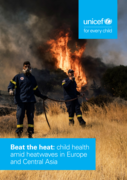
Beat the heat: child health amid heatwaves in Europe and Central Asia finds that half of these children died from heat-related illnesses in their first year of life. Most children died during the summer months.
"Around half of children across Europe and Central Asia – or 92 million children –
...
are already exposed to frequent heatwaves in a region where temperatures are rising at the fastest rate globally. The increasingly high temperatures can have serious health complications for children, especially the youngest children, even in a short space of time. Without care, these complications can be life-threatening,” said Regina De Dominicis UNICEF Regional Director for Europe and Central Asia.
Heat exposure has acute effects on children, even before they are born, and can result in pre-term births, low birth weight, stillbirth, and congenital anomalies. Heat stress is a direct cause of infant mortality, can affect infant growth and cause a range of paediatric diseases. The report also notes that extreme heat caused the loss of more than 32,000 years of healthy life among children and teenagers in the region.
As the temperatures continue to rise, UNICEF urges governments across Europe and Central Asia to:
- Integrate strategies to reduce the impact of heatwaves including through National Determined Contributions (NDC), National Adaptation Plans (NAP), and disaster risk reduction and disaster management policies with children at the centre of these plans
Invest in heat health action plans and primary health care to more adequately support heat-related illness among children
- Invest in early warning systems, including heat alert systems
- Adapt education facilities to reduce the temperatures in the areas children play in and equip teachers with skills to respond to heat stress
- Adapt urban design and infrastructure including ensuring buildings, particularly those housing the most vulnerable communities are equipped to minimize heat exposure
- Secure the provision of safe water, particularly in countries with deteriorating water quality and availability.
UNICEF works with governments, partners and communities across the region to build resilience against heatwaves. This includes equipping teachers, community health workers and families with the skills and knowledge to respond to heat stress.
more

The Global Asthma Report (GAR) 2022, prepared by the Global Asthma Network (GAN), is the fourth such report (others 2011, 2014, 2018). GAN builds upon the work of the International Study of Asthma and Allergies in Childhood (ISAAC) and The International Union Against Tuberculosis and Lung Disease (T
...
he Union) to monitor asthma and improve asthma care, particularly in low- and middle-income countries (LMICs).
more

Asthma is the most common non-communicable disease in children and remains one of the most common throughout the life course. The great majority of the burden of this disease is seen in low-income and middle-income countries (LMICs), which have disproportionately high asthma-related mortality relati
...
ve to asthma prevalence. This is particularly true for many countries in sub-Saharan Africa. Although inhaled asthma treatments (particularly those containing inhaled corticosteroids) markedly reduce asthma morbidity and mortality, a substantial proportion of the children, adolescents, and adults with asthma in LMICs do not get to benefit from these, due to poor availability and affordability. In this review, we consider the reality faced by clinicians managing asthma in the primary and secondary care in sub-Saharan Africa and suggest how we might go about making diagnosis and treatment decisions in a range of resource-constrained scenarios. We also provide recommendations for research and policy, to help bridge the gap between current practice in sub-Saharan Africa and Global Initiative for Asthma (GINA) recommended diagnostic processes and treatment for children, adolescents, and adults with asthma.
more

About one fourth of the world’s population is estimated to have been infected with the tuberculosis (TB) bacilli, and about 5–10% of those infected develop TB disease in their lifetime. The risk for TB disease after infection depends on several factors, the most important being the person’s im
...
munological status. TB preventive treatment (TPT) given to people at highest risk of progressing from TB infection to disease remains a critical element to achieve the global targets of the End TB Strategy, as reiterated by the second UN High Level Meeting on TB in 2023. Delivering TPT effectively and safely necessitates a programmatic approach to implement a comprehensive package of interventions along a cascade of care: identifying individuals at highest risk, screening for TB and ruling out TB disease, testing for TB infection, and choosing the preventive treatment option that is best suited to an individual, managing adverse events, supporting medication adherence and monitoring programmatic performance.
more
Asbestos-related cancers: the‘Hidden Killer’remains a global threat
van Zandwijk, N.; Reid, G.; Frank, A.
EXPERT REVIEW OF ANTICANCER THERAPY2020, VOL. 20, NO. 4, 271–278
(2020)
CC2
Asbestos, the most frequent cause of occupational cancer, continues to be consumed ona massive scale, with millions of people exposed on a daily basis. This review explains why we havefailed in curtailing the silent epidemic of asbestos-related disease and why the numbers of asbestosvictims are like
...
ly to remain high. Emerging and developed countries have to be reminded that asbestosexposure has yet to become a problem of the past. The worldwide spread of asbestos, followed by thesurge of asbestos-related cancers, resembles the lung cancer epidemic caused by smoking andstimulated by manufacturers.
more

Asthma is the most common chronic condition in children worldwide. It affects daytime activities, sleep and school attendance and causes anxiety to parents, families and other carers. The quality of asthma diagnosis and management globally still needs substantial improvement. From infancy to the tee
...
nage years, there are age-specific challenges, including both underdiagnosis and overdiagnosis with stigma-related barriers to treatment in some cultures and in adolescents. The Paediatric Asthma Project Plan has been initiated to strengthen diagnosis and management of asthma. This encompasses a vision for the next 10–15 years, building on the knowledge and experience from previous educational projects. It will take into account the educational needs of patients, carers and healthcare professionals as well as the accessibility and affordability of medication, particularly in low and middle-income countries where the prevalence of asthma is rising more rapidly. This overview presents a first step for those involved in the diagnosis and management of childhood asthma to strengthen care for children globally.
more

Preparedness planning is essential in order to respond effectively to outbreaks, including single case occurrences of highconsequence infectious diseases (HCID), such as the importation of a viral haemorrhagic fever (VHF) case

Antimicrobials are medicines, including antibiotics, antivirals, antifungals, and antiparasitics, that are used to prevent and treat infections in humans, animals, and plants. Antimicrobial Resistance (AMR) arises when bacteria, viruses, fungi, and parasites no longer respond to these medicines, ren
...
dering them ineffective and making infections more difficult to treat. This resistance increases the risk of disease spread, severe illness, disability, and death. Although AMR is a natural phenomenon driven by genetic
changes in pathogens, it is significantly accelerated by human activities such as the misuse and overuse of antimicrobials in healthcare, agriculture, and animal husbandry.
more

Caring for burns patients from the incident scene to definitive treatment can be a complex, resource-consuming process with the potential to overwhelm health system capacity.This document provides practical guidance for building capacity and capability for burns care from clinical, human resources a
...
nd operational perspectives. It is therefore recommended that guidance in this document be applied to any contexts in which the local health system might struggle to cope and require surge support.
more

The Ministry of Education, Arts and Culture (MoEAC) has been implementing the Integrated School Health Programme in various forms since before the country attained political independence in 1990. School health goes beyond the physical health of the learner, in that it includes the holistic wellbeing
...
of the individual learner, meaning that the school environment should be safe and conducive to learning. The National Safe Schools Framework (NSSF) is an exciting dimension of the Integrated School Health Programme. The Programme focuses on promoting the health, safety and wellbeing of learners and other school stakeholders in Namibia, and the NSSF was developed to provide practical guidance to the schools and school stakeholders on how to systematically improve the standards of school safety, and how to develop a culture of care in any school.
more

Pneumonia and diarrhoea account for 23% of under-five mortality and were responsible for an estimated 1.17 million deaths in children under five globally. Furthermore, pneumonia and diarrhoea were responsible for 18% of mortality in children 5–9 years of age, resulting in an estimated 86 000 preve
...
ntable deaths globally in 2021. Existing World Health Organization (WHO) guidance on the clinical management of pneumonia and diarrhoea has mainly focused on children less than 5 years of age.
more
Schweizerische Fachgesellschaft für Tropen‐ und Reisemedizin FMH

Lessons learned from recent public health events such as the COVID-19 pandemic, Ebola virus disease, Zika virus disease outbreaks, and other public health threats, including earthquakes and floods, have highlighted the need for countries to continuously develop, strengthen, and maintain capacities r
...
equired under the International Health Regulations (2005) (IHR (2005)).
Developing capacities for health security in a country requires the engagement of public and private entities across a broad range of sectors, including human and animal health, agriculture, environment, finance, security, emergency management, education, and transportation. The World Health Organization (WHO) is mandated through various resolutions, decisions, and reports of the World Health Assembly, and through the IHR (2005), to provide technical guidance and support to its Member States in developing, strengthening, and maintaining their health systems, including capacities required under the IHR (2005).
For countries to better prevent, prepare for, detect, notify, respond to, and recover from public health emergencies, they must build and maintain IHR core capacities and support the strengthening of health emergency prevention, preparedness, response, and resilience (HEPR) capacities. National Action Plans for Health Security (NAPHS), as capacity development plans, provide the tasks and resources needed to ensure adequate capacities are in place to prevent, detect, respond to, and recover from public health events in a sustainable manner. Investing in the resilience of these capacities within national health systems at national and local levels not only improves national health security but also helps safeguard economic, social, and political developments.
more
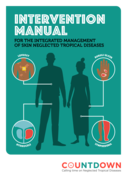
This manual details a collaboratively developed intervention to detect and refer Buruli ulcer, Hydrocele, Leprosy
and Lymphedema cases through the use of integrated approaches at community levels. This intervention has
been developed as part of the consortium in partnership with the Nigerian Feder
...
al Ministry
of Health, and Ogun and Kaduna State Ministries of Health. This manual is designed to assist community and
primary level health workers to identify, refer, diagnose and treat people affected by Buruli ulcer, Hydrocele,
Leprosy and Lymphedema, within the existing patient care pathway
more
Weekly Epidemiological Record. This report summarizes application of the SAFE strategy against trachoma during 2023. It includes estimates of the global population at risk of trachoma blindness based on district-by-district data submitted to WHO by national programmes. Summarizing the epidemiologica
...
l situation in this way is inherently complex because, for any district, up to 3 serial estimates of prevalence may be valid at different times during a calendar year.
more

This document is for public health specialists, health emergency responders, clinicians, health facility managers, health and care workers and IPC practitioners including but not limited to those working in primary care clinics, sexual health clinics, emergency departments, dental practices, infecti
...
ous diseases clinics, genitourinary clinics, maternity services, paediatrics, obstetrics and gynaecology and acute care facilities that provide care for patients with suspected or confirmed mpox.
more

This manual is designed to provide comprehensive malaria case management training for health workers at all levels, including clinical, nursing, dispensing, laboratory and records staff. The training covers the use of malaria rapid diagnostic tests (RDTs) and the treatment of severe malaria. The fiv
...
e-day training programme includes interactive modules supported by job aids. The ideal group size is 20–30 participants, supported by a team of three trainers. Trainers should thoroughly review the manual, including the 'Adult Learning Techniques' module, and follow the 'Facilitator's Guide', while participants should use the 'Simplified Participant's Guide'. The training includes pre- and post-tests to assess knowledge improvement. Continuing Medical Education (CME) is encouraged after the training, and resources are provided in the appendix.
more

Community led-monitoring is based on the principle that «Nothing that is done for us should
be done without us”. The combination of this principle with evidence shows that community-led
monitoring is an important driver of improved service delivery and health outcomes that needs to
be re-empha
...
sized. Thus, the community must participate at all stages of the fight against malaria.
This guide will be useful to CSOs working in the field of malaria in the conduct of community-led
monitoring of activities efficiently and allow these CSOs to know their role and responsibilities in this
exercise at each key stage. This guide will also provide CSOs and communities affected by malaria
with templates of monitoring tools adapted to key malaria programs.
more

4th edition, Reference Manual
The MalariaCare Toolkit. Tools for maintaining high-quality malaria
case management services.
Developed by MalariaCare, this module supports health supervisors in improving the management of severe malaria by providing focused, case-based learning and mentorship. It provides clinical supervisors w
...
ith the necessary tools to guide healthcare providers during outreach training and supportive supervision (OTSS) visits. The module is designed to strengthen diagnostic and treatment skills, particularly in areas that are often overlooked, such as severe malaria. It uses real-life case studies and guided discussions to assess and enhance clinical understanding. Its flexible structure can be adapted based on the knowledge level of the provider, promoting effective, practical learning in healthcare settings.
Accessed on 03/07/2025.
more
