
Filter
3213
Text search:
directrices
Featured
358
910
Language
1557
874
649
139
59
57
56
23
20
15
13
10
6
5
4
3
3
3
3
2
2
2
2
2
2
2
1
1
1
1
1
1
1
1
1
1
1
1
1
1
1
1
1
1
1
1
Document type
1514
950
222
184
134
80
57
22
18
12
11
2
2
1
1
Countries
316
117
98
98
97
86
78
72
70
65
63
58
58
58
57
57
56
56
53
52
43
40
40
38
38
37
35
35
34
33
32
31
28
28
27
23
22
21
21
21
21
19
19
19
17
16
16
16
16
16
14
14
14
14
11
11
10
10
8
6
6
6
6
5
5
5
5
5
5
5
4
4
4
4
3
3
3
3
3
3
3
3
3
2
2
2
2
2
2
2
2
2
1
1
1
1
1
1
1
1
1
1
1
1
1
1
1
1
1
1
1
1
1
1
1
1
1
1
Authors & Publishers
158
78
73
67
56
49
45
38
34
34
33
33
32
30
30
29
29
28
27
25
25
24
24
20
19
18
18
17
16
16
16
16
15
15
15
15
15
15
15
15
15
14
14
14
13
13
13
13
12
12
12
12
12
12
12
11
11
11
11
11
10
10
10
10
10
10
10
10
10
10
9
9
9
9
9
8
8
8
8
8
8
8
8
8
8
8
8
7
7
7
7
7
7
7
7
7
7
7
6
6
6
6
6
6
6
6
6
6
6
6
6
6
6
6
6
6
6
6
6
6
5
5
5
5
5
5
5
5
5
5
5
5
5
5
5
5
5
5
5
5
5
5
5
5
5
5
5
5
5
4
4
4
4
4
4
4
4
4
4
4
4
4
4
4
4
4
4
4
4
4
4
4
4
4
4
4
4
4
4
4
4
4
4
4
4
4
4
4
4
4
4
3
3
3
3
3
3
3
3
3
3
3
3
3
3
3
3
3
3
3
3
3
3
3
3
3
3
3
3
3
3
3
3
3
3
3
3
3
3
3
3
3
3
3
3
3
3
3
3
3
3
3
3
3
3
3
3
3
3
3
3
3
3
3
3
3
3
3
3
3
3
3
3
3
3
3
2
2
2
2
2
2
2
2
2
2
2
2
2
2
2
2
2
2
2
2
2
2
2
2
2
2
2
2
2
2
2
2
2
2
2
2
2
2
2
2
2
2
2
2
2
2
2
2
2
2
2
2
2
2
2
2
2
2
2
2
2
2
2
2
2
2
2
2
2
2
2
2
2
2
2
2
2
2
2
2
2
2
2
2
2
2
2
2
2
2
2
2
2
2
2
2
2
2
2
2
2
2
2
2
2
2
2
2
2
2
2
2
2
2
2
2
2
2
2
2
2
2
2
2
2
2
2
2
2
2
2
2
2
2
2
2
2
2
2
2
2
2
2
2
2
2
2
2
2
2
2
2
2
2
2
2
2
2
2
2
2
2
2
2
2
2
2
2
2
2
2
2
2
2
2
2
2
2
2
2
2
2
2
2
2
2
2
2
2
2
2
2
2
2
2
2
2
2
2
2
1
1
1
1
1
1
1
1
1
1
1
1
1
1
1
1
1
1
1
1
1
1
1
1
1
1
1
1
1
1
1
1
1
1
1
1
1
1
1
1
1
1
1
1
1
1
1
1
1
1
1
1
1
1
1
1
1
1
1
1
1
1
1
1
1
1
1
1
1
1
1
1
1
1
1
1
1
1
1
1
1
1
1
1
1
1
1
1
1
1
1
1
1
1
1
1
1
1
1
1
1
1
1
1
1
1
1
1
1
1
1
1
1
1
1
1
1
1
1
1
1
1
1
1
1
1
1
1
1
1
1
1
1
1
1
1
1
1
1
1
1
1
1
1
1
1
1
1
1
1
1
1
1
1
1
1
1
1
1
1
1
1
1
1
1
1
1
1
1
1
1
1
1
1
1
1
1
1
1
1
1
1
1
1
1
1
1
1
1
1
1
1
1
1
1
1
1
1
1
1
1
1
1
1
1
1
1
1
1
1
1
1
1
1
1
1
1
1
1
1
1
1
1
1
1
1
1
1
1
1
1
1
1
1
1
1
1
1
1
1
1
1
1
1
1
1
1
1
1
1
1
1
1
1
1
1
1
1
1
1
1
1
1
1
1
1
1
1
1
1
1
1
1
1
1
1
1
1
1
1
1
1
1
1
1
1
1
1
1
1
1
1
1
1
1
1
1
1
1
1
1
1
1
1
1
1
1
1
1
1
1
1
1
1
1
1
1
1
1
1
1
1
1
1
1
1
1
1
1
1
1
1
1
1
1
1
1
1
1
1
1
1
1
1
1
1
1
1
1
1
1
1
1
1
1
1
1
1
1
1
1
1
1
1
1
1
1
1
1
1
1
1
1
1
1
1
1
1
1
1
1
1
1
1
1
1
1
1
1
1
1
1
1
1
1
1
1
1
1
1
1
1
1
1
1
1
1
1
1
1
1
1
1
1
1
1
1
1
1
1
1
1
1
1
1
1
1
1
1
1
1
1
1
1
1
1
1
1
1
1
1
1
1
1
1
1
1
1
1
1
1
1
1
1
1
1
1
1
1
1
1
1
1
1
1
1
1
1
1
1
1
1
1
1
1
1
1
1
1
1
1
1
1
1
1
1
1
1
1
1
1
1
1
1
1
1
1
1
1
1
1
1
1
1
1
1
1
1
1
1
1
1
1
1
1
1
1
1
1
1
1
1
1
1
1
1
1
1
1
1
1
1
1
1
1
1
1
1
1
1
1
1
1
1
1
1
1
1
1
1
1
1
1
1
1
1
1
1
1
1
1
1
1
1
1
1
1
1
1
1
1
1
1
1
1
1
1
1
1
1
1
1
1
1
1
1
1
1
1
1
1
1
1
1
1
1
1
1
1
1
1
1
1
1
1
1
1
1
1
1
1
1
1
1
1
1
1
1
1
1
1
1
1
1
1
1
1
1
1
1
1
1
1
1
1
1
1
1
1
1
1
1
1
1
1
1
1
1
1
1
1
1
1
1
1
1
1
1
1
1
1
1
1
1
1
1
1
1
1
1
1
1
1
1
1
1
1
1
1
1
1
1
1
1
1
1
1
1
1
1
1
1
1
1
1
1
1
1
1
1
1
1
1
1
1
1
1
1
1
1
1
1
1
1
1
1
1
1
1
1
1
1
1
1
1
1
1
1
1
1
1
1
1
1
1
1
1
1
1
1
1
1
1
1
1
1
1
1
1
1
1
1
1
1
1
1
1
1
1
1
1
1
1
1
1
1
1
1
1
1
1
1
1
1
1
1
1
1
1
1
1
1
1
1
1
1
1
1
1
1
1
1
1
1
1
1
1
1
1
1
1
1
1
1
1
1
1
1
1
1
1
1
1
1
1
1
1
1
1
1
1
1
1
1
1
1
1
1
1
1
1
1
1
1
1
1
1
1
1
1
1
1
1
1
1
1
1
1
1
1
1
1
1
1
1
1
1
1
1
1
1
1
1
1
1
1
1
1
1
1
1
1
1
1
1
1
1
1
1
1
1
1
1
1
1
1
1
1
1
1
1
1
1
1
1
1
1
1
1
1
1
1
1
1
1
1
1
1
1
1
1
1
1
1
1
1
1
1
1
1
1
1
1
1
1
1
1
1
1
1
1
1
1
1
1
1
1
1
1
1
1
1
1
1
1
1
1
1
1
1
1
1
1
1
1
1
1
1
1
1
1
1
1
1
1
1
1
1
1
1
1
1
1
1
1
1
1
1
1
1
1
1
1
1
1
1
1
1
1
1
1
1
1
1
1
1
1
1
1
1
1
1
1
1
1
1
1
1
1
1
1
1
1
1
1
1
1
1
1
1
1
1
1
1
1
1
1
1
1
1
1
1
1
1
1
1
1
1
1
1
1
1
1
1
1
1
1
1
1
1
1
1
1
1
1
1
1
1
1
1
1
1
1
1
1
1
1
1
1
1
1
1
1
1
1
1
1
1
1
1
1
1
1
1
1
1
1
1
1
1
1
1
1
1
1
1
1
1
1
1
1
1
1
1
1
1
1
1
1
1
1
1
1
1
1
1
1
1
1
1
1
1
1
1
1
1
1
1
1
1
1
1
1
1
1
1
1
1
1
1
1
1
1
1
1
1
1
1
1
1
1
1
1
1
1
1
1
1
1
1
1
1
1
1
1
1
1
1
1
1
1
1
1
1
1
1
1
1
1
1
1
1
1
1
1
1
1
1
1
1
1
1
1
1
1
1
1
1
1
1
1
1
1
1
1
1
1
1
1
1
1
1
1
1
1
1
1
1
1
1
1
1
1
1
1
1
1
1
1
1
1
1
1
1
1
1
1
1
1
1
1
1
1
1
1
1
1
1
1
1
1
1
1
1
1
1
1
1
1
1
1
1
1
1
1
1
1
1
1
1
1
1
1
1
1
1
1
1
1
1
1
1
1
1
1
1
1
1
1
1
1
1
1
1
1
1
1
1
1
1
1
1
1
1
1
1
1
1
1
1
1
1
1
1
1
1
1
1
1
1
1
1
1
1
1
1
1
1
1
1
1
1
1
1
1
1
1
1
1
1
1
1
1
1
1
1
1
1
1
1
1
1
1
1
1
1
1
1
1
1
1
1
1
1
1
1
1
1
1
1
1
1
1
1
1
1
1
1
1
1
1
1
1
1
1
1
1
1
1
1
1
1
1
1
1
1
1
1
1
1
1
1
1
1
1
1
1
1
1
1
1
1
1
1
1
1
1
1
1
1
1
1
1
1
1
1
1
1
1
1
1
1
1
1
1
1
1
1
1
1
1
1
1
1
1
1
1
1
1
1
1
1
1
1
1
1
1
1
1
1
1
1
1
1
1
1
1
1
1
1
1
1
1
1
1
1
1
1
1
1
1
1
1
1
1
1
1
1
1
1
1
1
1
1
1
1
1
1
1
1
1
1
1
1
1
1
1
1
1
1
1
1
1
1
1
1
1
1
1
1
1
1
1
1
1
1
1
1
1
1
1
1
1
1
1
1
1
1
1
1
1
1
1
1
1
1
1
1
1
1
1
1
1
1
1
1
1
1
1
1
1
1
1
1
1
1
1
1
1
1
1
1
1
1
1
1
1
1
1
1
1
1
1
1
1
1
1
1
1
1
1
1
1
1
1
1
1
1
1
1
1
1
1
1
1
1
1
1
1
1
1
1
1
1
1
1
1
1
1
1
1
1
1
1
1
1
1
1
1
1
1
1
1
1
1
1
1
1
1
1
1
1
1
1
1
1
1
1
1
1
1
1
1
1
1
1
1
1
1
1
1
1
Publication Years
1083
1864
249
14
2
1
Category
2263
238
206
98
61
32
27
Toolboxes
486
250
137
92
91
91
68
60
58
45
44
44
37
37
34
32
25
24
24
15
8
8
6
4
1
Reliable cause specic mortality statistics are the cornerstone of national health information
systems. They are essential for evidence-based decision making for monitoring health of
populations, health services planning and delivery, programme implementation, policy development
and epidemiolog
...
ical research.
more
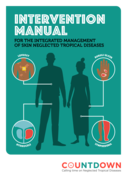
This manual details a collaboratively developed intervention to detect and refer Buruli ulcer, Hydrocele, Leprosy
and Lymphedema cases through the use of integrated approaches at community levels. This intervention has
been developed as part of the consortium in partnership with the Nigerian Feder
...
al Ministry
of Health, and Ogun and Kaduna State Ministries of Health. This manual is designed to assist community and
primary level health workers to identify, refer, diagnose and treat people affected by Buruli ulcer, Hydrocele,
Leprosy and Lymphedema, within the existing patient care pathway
more
A guide to management in Primary Health Care. A practical, instructive training guide that has proven its capacity to improve the managerial skills of middle-level health workers responsible for the management or supervision of health services. Presented as an activity-centered working guide, the bo
...
ok uses numerous questionnaires, exercises, practical examples, illustrations, charts, and sample forms to help readers relate advice and suggestions to their own daily problems. Emphasis is placed on ways to improve the management of health services provided by full-time, qualified staff. The guide features 18 chapters presented in four main parts, any one of which can be studied separately or as part of the whole, according to individual learning needs.
more

Doing What Matters in Times of Stress: An Illustrated Guide is a stress management guide for coping with adversity. The guide aims to equip people with practical skills to help cope with stress. A few minutes each day are enough to practice the self-help techniques. The guide can be used alone or wi
...
th the accompanying audio exercises.
Informed by evidence and extensive field testing, the guide is for anyone who experiences stress, wherever they live and whatever their circumstances.
Different languages available: https://www.who.int/publications/i/item/9789240003927
more
Technical Note: Cholera treatment facilities provide inpatient care for cholera patients during outbreaks. Proper case management and isolation of cholera patients is essential to prevent deaths and help control the spread of
the disease. Traditionally, these structures have been referred to as ch
...
olera treatment centres (CTCs) and
cholera treatment units (CTUs). CTCs are usually large structures set up at central level (e.g. urban areas),
while CTUs are smaller structures set up in the periphery (e.g. peri-urban or rural areas). CTCs/CTUs can
be set up as independent structures in tents or within existing buildings or wards of health structures.
Whatever the structure, the principles described in this document should be respected
more
Note technique. Les centres de traitement de choléra fournissent des soins hospitaliers aux patients atteints de choléra
pendant les épidémies. Une prise en charge de qualité et l’isolement des patients atteints du choléra sont
essentiels pour prévenir les décès et aider à lutter con
...
tre la propagation de la maladie. Traditionnellement,
ces structures sont appelées centres de traitement du choléra (CTC) et unités de traitement du choléra (UTC).
Les CTC sont généralement de grandes structures mises en place au niveau central (zones urbaines, par
exemple), tandis que les UTC sont des structures plus petites, installées en périphérie (zones périurbaines ou
rurales, par exemple). Les CTC/UTC peuvent être mis en place en tant que structures indépendantes dans
des tentes ou à l’intérieur de bâtiments existants ou dans des unités sanitaires. Quelle que soit la structure,
les principes décrits dans ce document doivent être respectés.
more
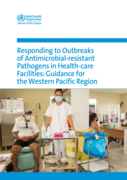
Responding to Outbreaks of Antimicrobial-resistant Pathogens in Health-care Facilities: Guidance for the Western Pacific Region is developed following requests from Member States in the Western Pacific Region for additional information and support in managing AMR outbreaks. It aims to provide: a ste
...
p-by-step guide for health-care facilities to respond to AMR outbreaks; a practical resource for health-care workers to support AMR outbreak response in low- and middle-income countries; and practical guidance to implement effective AMR outbreak response policies and procedures in clinical settings.
more
Policy Brief. More languages available here https://apps.who.int/iris/handle/10665/179517

Government of Nepal has an obligation to ensure availability of affordable and high quality basic health care services to its population

Rational of the Standard Treatment Protocol (STP)
The aim of this toolkit is to guide countries on how to best estimate their current burden of dengue by combining existing data from dengue surveillance systems with on-going research efforts to measure the community burden
of dengue.

Conflicts and disasters, including pandemics, affect women and men in all their diversity differently, and women and girls often suffer the most. Crisis-related hardships combine and compound pre-existing disadvantages, for example, they often cause women’s working conditions to worsen while incre
...
asing their overall workload and care responsibilities. At the same time, crises can give rise to changes that enable women to take up roles that were previously available only to men, and crises can open opportunities to address existing gender-based discrimination and violations of rights.
more

The response to a cholera outbreak must focus on limiting mortality and reducing the spread of the disease. It should be comprehensive and multisectoral, including epidemiology, case management, water, sanitation and hygiene, logistics, community engagement and risk communication. All efforts must b
...
e well coordinated to ensure a rapid and effective response across sectors.
This document provides a framework for detecting and monitoring cholera outbreaks and organizing the response. It also includes a short section linking outbreak response to both preparedness and long-term prevention activities.
more
World Health Organization. Country Office for Timor-Leste. (2020). National strategic plan for ending TB 2020--2024. World Health Organization. Country Office for Timor-Leste.

South Sudan continues to struggle with a severe health crisis affecting 8.9 million people, primarily in flood- and conflict-affected regions with population movements (displacement and returns), and disease outbreaks. The nation's health system, heavily reliant on international aid, faces staffing
...
and resource shortages. Vulnerable groups, including women, children, the elderly, and those with disabilities, have limited healthcare access and face heightened risks of mortality and illness.
The life expectancy at birth (55 years) is among the lowest globally, as mortality rates remain among the highest with neonatal, infant, under-five mortality rates estimated at 39.63, 63.76 and 98.69 deaths per 1000 live births respectively, and a maternal mortality ratio of 1,223 deaths per 100,000 live births. Although some disease specific mortality rates such as TB and AIDS-related mortality have declined, mortality due to malaria and non-communicable diseases have increased over the past five years.
The main causes of morbidity remain communicable diseases; malaria, is the top cause of morbidity (64%) and mortality (45%) among outpatients, followed by pneumonia and diarrhea.20 Several Counties report malaria cases above the threshold perennially especially during the rainy seasons, affecting mainly children under five years. The last malaria indicator survey (2017) estimated malaria prevalence of 32%, 34% and 18% among children under-five, protection of civilian’s sites, and internally displaced persons, respectively.
more

The Disaster Recovery Framework (DRF) Guide for the Health Sector provides guidance on how to implement a comprehensive, integrated, and structured approach to disaster recovery. Its overarching goal is to minimize the impact of the disaster on communities and help countries to recover quickly and e
...
ffectively from disasters, in coordination with key stakeholders.
The DRF Guide for the Health Sector is adapted from the generic DRF Guide, and draws on the Implementation Guide For Health Systems Recovery in Emergencies, the Health Emergency and Disaster Risk Management Framework as well as the Disaster Recovery Guidance Series. The guide also makes links with multi-sectoral, government-led recovery planning processes such as the Post-Disaster Needs Assessment (PDNA), and it supports the implementation of the HDPN.
more

Zimbabwe has, over the years, grappled with the repercussions of the climate crisis, which have led to erratic rainfall patterns characterized by either severe floods or prolonged periods of drought. The nation has experienced a concerning trend of numerous regions reporting rainfall levels below th
...
e usual during what should be "normal" years. The upcoming El Niño event forecasted for 2023-2024, which is associated with drier-than-average rainfall, is poised to exacerbate this predicament. It is expected to intensify aridity, significantly impacting food and animal production across many areas, including those typically classified as "dry regions."
more

Heart failure with a reduced ejection fraction (HFrEF) is a condition frequently encountered by healthcare professionals and, in order to achieve the best outcomes for patients, needs to be managed optimally. This guideline document is based on the European Society of Cardiology Guidelines for the t
...
reatment of acute and chronic heart failure published in 2016, and summarises what is considered the best current management of patients with the condition. It provides information on the definition, diagnosis and epidemiology of HFrEF in the African context. The best evidence-based treatments for HFrEF are discussed, including established therapies (beta-blockers, ACE-i/ARBs, mineralocorticoid receptor antagonists (MRAs), diuretics) that form the cornerstone of heart failure management as well as therapies that have only recently entered clinical use (angiotensin receptor-neprilysin inhibitor (ARNI), sodium/glucose cotransporter-2 (SGLT2) inhibitors). Guidance is offered in terms of more invasive therapies (revascularisation, implantable cardioverter defibrillators (ICDs) and cardiac resynchronisation therapy (CRT) by implantation of a biventricular pacemaker with (CRT-D) or without (CRT-P) an ICD, left ventricular assist device (LVAD) use and heart transplantation) in order to ensure efficient use of these expensive treatment modalities in a resourcelimited environment. Furthermore, additional therapies (digoxin, hydralazine and nitrates, ivabradine, iron supplementation) are discussed and advice is provided on general preventive strategies (vaccinations). Sections to discuss conditions that are particularly prevalent in sub-Saharan Africa (HIV-associated cardiomyopathy (CMO), peripartum CMO, rheumatic heart disease, atrial fibrillation) have been added to further improve clinical care for these commonly encountered disease processes.
more

Zambia has completed the implementation of the National TB Strategic Plan (2017-2021) that set in motion the TB elimination agenda in Zambia through coordinated and accelerated TB response. During this period, the National TB and Leprosy Programme (NTLP) registered tremendous success.
The NTLP is
...
poised to attain the ambitious goal pronounced by the government of eliminating TB by 2030, in line with the Sustainable Development Goals (SDGs) and the World Health Organization End TB Strategy. The programme exponentially increased TB notifications from as low as 35,922 people with TB in 2018 to 40,726 in 2020 and in 2021 the TB notifications rose to 50,825 (a 25% increase against 2020 performance). The NTLP also registered incredible success in sustaining high TB Preventive Treatment (TPT) initiations among persons living with HIV and a high TB treatment success rate among drug-susceptible TB cases. New and relapse TB notifications in children below 15 years increased by 43%, from 2,724 in 2020 to 3,890 in 2021. TB notifications ratio between children aged 0-4 and 5-14 was 0.9, an improvement from what we achieved in 2018 (the ratio was 0.7). The proportion of TB patients who are HIV positive continued to decrease, reaching 34% in 2021 from 39% in 2020. Sustained increases in TB notifications, treatment success rate, and TPT initiations have resulted in a rapid decrease in the TB incidence rate that reached 307 per 100,000 population in 2021 against a rate of 391 in 2015.
more

Humanitarian crises exacerbate nutritional risks and often lead to an increase in acute malnutrition. Emergencies include both manmade (conflict) and natural disasters (floods, drought, cyclones, typhoons, earthquakes, volcanic eruptions, etc.). Complex emergencies are combinations of both manmade a
...
nd natural disasters, often of a protracted nature. Millions of people are affected by humanitarian crises every year. The increasing frequency and scale of emergencies requires nutrition to be addressed in all phases of a response.
Crisis situations, whether acute or protracted, impact on a range of factors that can increase the risk of undernutrition, morbidity, and mortality. They may involve: the large-scale destruction of property and infrastructure; the erosion of livelihood strategies and purchasing power; a breakdown of and reduced access to essential services, including health services, water supply, and sanitation; and the displacement of large numbers of people. Emergencies can also disrupt social systems and the quality of care/feeding practices. Household access to food may be negatively affected and people may find themselves in overcrowded settlements with their families divided. As a result, at the individual level, there is often an increased risk of deteriorating health and nutritional status, resulting in a greater likelihood of death.
more
