
Filter
2322
Text search:
programming
Featured
194
767
Language
2235
60
35
31
24
13
5
4
4
4
3
3
2
2
2
2
2
2
1
1
1
1
1
1
1
1
1
1
1
1
1
1
1
1
Document type
1359
385
229
141
113
41
24
20
3
3
1
1
Countries
111
79
75
72
70
68
56
56
56
52
52
50
44
43
34
29
27
27
27
26
25
25
24
23
22
20
20
19
19
19
18
18
16
15
15
15
14
14
13
12
11
10
10
9
9
8
8
8
8
6
6
6
6
6
6
5
5
5
4
4
4
4
3
3
3
3
3
3
3
3
3
3
3
3
3
3
3
2
2
2
2
2
2
2
2
1
1
1
1
1
1
1
1
1
1
1
1
1
1
1
1
1
1
1
1
1
1
1
1
1
1
1
1
1
1
1
1
1
1
1
1
1
1
1
Authors & Publishers
175
87
59
57
54
53
41
41
35
28
27
21
18
17
17
16
16
15
15
15
15
14
14
13
13
13
12
11
11
11
11
10
10
10
10
9
9
9
9
9
8
8
8
8
8
8
8
8
7
7
7
7
6
6
6
6
6
6
6
6
6
6
6
5
5
5
5
5
5
5
5
5
5
5
5
5
5
5
5
5
5
5
5
4
4
4
4
4
4
4
4
4
4
4
4
4
4
4
4
4
4
4
4
4
4
4
4
4
4
3
3
3
3
3
3
3
3
3
3
3
3
3
3
3
3
3
3
3
3
3
3
3
3
3
3
3
3
3
3
3
3
3
3
3
3
3
3
3
3
3
3
3
3
3
3
3
3
3
3
3
3
3
3
3
3
3
3
3
2
2
2
2
2
2
2
2
2
2
2
2
2
2
2
2
2
2
2
2
2
2
2
2
2
2
2
2
2
2
2
2
2
2
2
2
2
2
2
2
2
2
2
2
2
2
2
2
2
2
2
2
2
2
2
2
2
2
2
2
2
2
2
2
2
2
2
2
2
2
2
2
2
2
2
2
2
2
2
2
2
2
2
2
2
2
2
2
2
2
2
2
2
2
2
2
2
2
2
2
2
2
2
2
2
2
2
2
2
2
2
2
2
2
2
2
2
2
2
2
2
2
2
2
2
2
2
2
2
2
2
2
2
2
2
2
2
2
2
2
2
2
2
2
2
2
2
2
2
2
2
2
1
1
1
1
1
1
1
1
1
1
1
1
1
1
1
1
1
1
1
1
1
1
1
1
1
1
1
1
1
1
1
1
1
1
1
1
1
1
1
1
1
1
1
1
1
1
1
1
1
1
1
1
1
1
1
1
1
1
1
1
1
1
1
1
1
1
1
1
1
1
1
1
1
1
1
1
1
1
1
1
1
1
1
1
1
1
1
1
1
1
1
1
1
1
1
1
1
1
1
1
1
1
1
1
1
1
1
1
1
1
1
1
1
1
1
1
1
1
1
1
1
1
1
1
1
1
1
1
1
1
1
1
1
1
1
1
1
1
1
1
1
1
1
1
1
1
1
1
1
1
1
1
1
1
1
1
1
1
1
1
1
1
1
1
1
1
1
1
1
1
1
1
1
1
1
1
1
1
1
1
1
1
1
1
1
1
1
1
1
1
1
1
1
1
1
1
1
1
1
1
1
1
1
1
1
1
1
1
1
1
1
1
1
1
1
1
1
1
1
1
1
1
1
1
1
1
1
1
1
1
1
1
1
1
1
1
1
1
1
1
1
1
1
1
1
1
1
1
1
1
1
1
1
1
1
1
1
1
1
1
1
1
1
1
1
1
1
1
1
1
1
1
1
1
1
1
1
1
1
1
1
1
1
1
1
1
1
1
1
1
1
1
1
1
1
1
1
1
1
1
1
1
1
1
1
1
1
1
1
1
1
1
1
1
1
1
1
1
1
1
1
1
1
1
1
1
1
1
1
1
1
1
1
1
1
1
1
1
1
1
1
1
1
1
1
1
1
1
1
1
1
1
1
1
1
1
1
1
1
1
1
1
1
1
1
1
1
1
1
1
1
1
1
1
1
1
1
1
1
1
1
1
1
1
1
1
1
1
1
1
1
1
1
1
1
1
1
1
1
1
1
1
1
1
1
1
1
1
1
1
1
1
1
1
1
1
1
1
1
1
1
1
1
1
1
1
1
1
1
1
1
1
1
1
1
1
1
1
1
1
1
1
1
1
1
1
1
1
1
1
1
1
1
1
1
1
1
1
1
1
1
1
1
1
1
1
1
1
1
1
1
1
1
1
1
1
1
1
1
1
1
1
1
1
1
1
1
1
1
1
1
1
1
1
1
1
1
1
1
1
1
1
1
1
1
1
1
1
1
1
1
1
1
1
1
1
1
1
1
1
1
1
1
1
1
1
1
1
1
1
1
1
1
1
1
1
1
1
1
1
1
1
1
1
1
1
1
1
1
1
1
1
1
1
1
1
1
1
1
1
1
1
1
1
1
1
1
1
1
1
1
1
1
1
1
1
1
1
1
1
1
1
1
1
1
1
1
1
1
1
1
1
1
1
1
1
1
1
1
1
1
1
1
1
1
1
1
1
1
1
1
1
1
1
1
1
1
1
1
1
1
1
1
1
1
1
1
1
1
1
1
1
1
1
1
1
1
1
1
1
1
1
1
1
1
1
1
1
1
1
1
1
1
1
1
1
1
1
1
1
1
1
1
1
1
1
1
1
1
1
1
1
1
1
1
1
1
1
1
1
1
1
1
1
1
1
1
1
1
1
1
1
1
1
1
1
1
1
1
1
1
1
1
1
1
1
1
1
1
1
1
1
1
1
1
1
1
1
1
1
1
1
1
1
1
1
1
1
1
1
1
1
1
1
1
1
1
1
1
1
1
1
1
1
1
1
1
1
1
1
1
1
1
1
1
1
1
1
1
1
1
1
1
1
1
1
1
1
1
1
1
1
1
1
1
1
1
1
1
1
1
1
1
1
1
1
1
1
1
1
1
1
1
1
1
1
1
1
1
1
1
1
1
1
1
1
1
1
1
1
1
1
1
1
1
1
1
1
1
1
1
1
1
1
1
1
1
1
1
1
1
1
1
1
1
1
1
1
1
1
1
1
1
1
1
1
1
1
1
1
1
1
1
1
1
1
1
1
1
1
1
1
1
1
1
1
1
1
1
1
1
1
1
1
1
1
1
1
1
1
1
1
1
1
1
1
1
1
1
1
1
1
1
1
1
1
1
1
1
1
1
1
1
1
1
1
1
1
1
1
1
1
1
1
1
1
1
1
1
1
1
1
1
1
1
1
1
1
1
1
1
1
1
1
1
1
1
1
1
1
1
1
1
1
1
1
1
1
1
1
1
1
1
1
1
1
1
1
1
1
1
1
1
1
1
1
1
1
1
1
1
1
1
1
1
1
1
1
1
1
1
1
1
1
1
1
1
1
1
1
1
1
1
1
1
1
1
1
1
1
1
1
1
1
1
1
1
1
1
1
1
1
1
1
1
1
1
1
1
1
1
1
1
1
1
1
1
1
1
1
1
1
1
1
1
1
1
1
1
1
1
1
1
1
1
1
1
1
1
1
1
1
1
1
1
1
1
1
1
1
1
1
1
1
1
1
1
1
1
1
1
1
1
1
1
1
1
1
1
1
1
1
1
1
1
1
1
1
1
1
1
1
1
1
1
1
1
1
1
1
1
1
1
1
1
1
1
1
1
1
1
1
1
1
1
1
1
1
1
1
1
1
1
1
1
1
1
1
1
1
1
1
1
1
1
1
1
1
1
1
1
1
1
1
1
1
1
1
1
1
1
1
1
1
1
1
1
1
1
1
1
1
1
1
1
1
1
1
1
1
1
1
1
1
1
1
1
1
1
1
1
1
1
1
1
1
1
1
1
1
1
1
1
1
1
1
1
1
1
1
1
1
1
1
1
1
1
1
1
1
1
1
1
1
1
1
1
1
1
1
1
1
1
1
1
1
1
1
1
1
1
1
1
1
1
1
1
1
1
1
1
1
1
1
1
1
1
1
1
1
1
1
1
1
1
1
1
1
1
1
1
1
1
1
1
1
1
1
1
1
1
1
1
1
1
1
1
1
1
1
1
1
1
1
1
1
1
1
1
1
1
1
1
1
1
1
1
1
1
1
1
1
1
1
1
1
1
1
1
1
1
1
1
1
1
1
1
1
1
1
1
1
1
1
1
1
1
1
1
1
1
1
1
1
1
1
1
1
1
1
1
1
1
1
1
1
1
1
1
1
1
1
1
1
1
1
1
1
1
1
1
1
1
1
1
1
1
1
1
1
1
1
1
1
1
1
1
1
1
1
1
1
1
1
1
1
1
1
1
1
1
1
1
1
1
1
1
1
1
1
1
1
1
1
1
1
1
1
1
1
1
1
1
1
1
1
1
1
1
1
1
1
1
1
1
1
1
1
1
1
1
1
1
1
1
1
1
1
1
1
1
1
1
1
1
1
1
1
1
1
1
1
1
1
1
1
1
1
1
1
1
1
1
1
1
1
1
1
1
1
1
1
1
1
1
1
1
1
1
1
1
1
1
1
1
1
1
1
1
1
1
1
1
1
1
1
1
1
1
1
1
1
1
1
1
1
1
1
1
1
1
1
1
1
1
1
1
1
1
1
1
1
1
1
1
1
1
1
1
1
1
1
1
1
1
1
1
1
1
1
1
1
1
1
1
1
1
1
1
1
1
1
1
1
1
1
1
1
1
1
1
1
1
1
1
1
1
1
1
1
1
1
1
1
1
1
1
1
1
1
1
1
1
1
1
1
1
1
1
1
1
Publication Years
1
674
1482
163
2
Category
942
297
199
87
58
44
3
1
Toolboxes
157
154
153
147
123
80
71
64
57
51
32
32
30
28
26
25
25
15
15
12
9
8
6
3
3
3
2

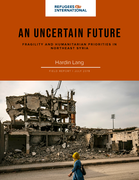
After almost eight bloody years, the war in Syria finally appears to be reaching the endgame. The Assad regime controls some two-thirds of the country. In the northwest, the regime of Syrian President Bashar al-Assad has launched an offensive against opposition-controlled Idlib governorate under the
...
cover of a brutal Russian bombing campaign. Upwards of 3 million Syrians in Idlib are under threat. Meanwhile, in northeast Syria, the Syrian Democratic Forces—the Syrian Kurdish dominated militia backed by the United States—have dislodged the Islamic State and now control one-third of the country. However, the humanitarian situation in the northeast remains extremely fragile and could deteriorate quickly. Indeed, over a third of the 4 million people in this area need humanitarian assistance and some 600,000 are displaced.
more

Research Paper.
As the fighting in Syria winds down, international humanitarian organisations (IHOs) operating from Damascus are hopeful that the Syrian government’s interference in their work will decrease. However, the government is attempting to formalise its influence over humanitarian operat
...
ions.
Throughout the Syrian conflict, the government has imposed multiple administrative processes on humanitarian organisations to limit their ability to operate independently. This includes restricting the operational environment; undermining organisational independence; imposing local partners; influencing procurement procedures; and preventing direct monitoring and evaluation.
While some level of coordination with the government might be a pragmatic necessity to ensure the safety of operations in regime-controlled areas, this cooperation should not enable the government to use aid for military or political purposes. Consequently, international humanitarian organisations have an ethical dilemma in how they provide aid in these areas without undermining their principles of humanity, independence, impartiality and neutrality.
more
Ce document a été élaboré par Peter Ventevogel, consultant, sous la supervision de Marian Schilperoord. Les versions préliminaires de cette publication ont grandement bénéficié de la contribution de plusieurs personnes au sein de l’UNHCR et d’organisations partenaires. Nous voudrions tou
...
t particulièrement remercier les collègues suivants pour leur relecture du document : A l’UNHCR: Gregory Garras, Sarah Harrison, Alexandra Kaun, Stefanie Krause, Preeta Law, Allen Gidraf Kahindo Maina, MaryBeth Morand, Audrey Nirrengarten, Martina Nicole Pomeroy, Monika Sandvik-Nylund, Ita Sheehy, Paul Spiegel, Margriet Veenma and Constanze Quosh. Dans les autres organisations: Carolina Echeverri (consultante SMSPS) Sabine Rakotomalala (UNICEF), Emmanuel Streel (consultant SMSPS), Wietse Tol (Université Johns Hopkins) Mark van Ommeren (OMS) et Inka Weissbecker (International Medical Corps).
more
Analysis of survey data looking at 25 years of progress in and the future challenges for tropical medicine and global health
he refugee flow to Ethiopia continued during 2018, with 36,1351 persons seeking safety and protection within the country’s borders. At the start of 2019, the nation hosted 905,8312 thousand refugees who were forced to flee their homes as a result of insecurity, political instability, military cons
...
cription, conflict, famine and other problems in their countries of origin. Ethiopia is one of the largest refugee asylum countries world-wide, and the second largest in Africa, reflecting the ongoing fragility and conflict in the region. Ethiopia provides protection to refugees from some 26 countries. Among the principal factors leading to this situation are predominantly the conflict in South Sudan, the prevailing political environment in Eritrea, together with conflict and draught in Somalia.
more
Biobehavioural Survey Guidelines - For Populations at risk for HIV
A. Abdul-Quader; M. Berry; T. Bingham; J. Burnett; et al.
Centers for Diseases Control and Prevention; UNAIDS; World Health Organization; et al.
(2017)
C_WHO
The guidelines fill a gap in providing tools for surveying HIV prevalence in key populations, and the included questionnaires may also inform general population surveys. These guidelines standardize the conduct of biobehavioural surveys to permit comparisons between as well as within countries over
...
time.
You can download supplementary material from this website
more
Overcoming HIV-related stigma and discrimination in health- care settings and beyond
UNAIDS 2017 | REFERENCE

Relevance and effectiveness of World Bank support for public sector capacity building in Sub-Saharan Africa from 1995 to 2004. Benin is part of a six country case study.

Studies show that peer support can improve AYPLHIV linkage, adherence, viral suppression, retention and psychosocial wellbeing. Peer support models can also provide young peer supporters with opportunities for leadership development, capacity building and youth-led advocacy, helping to combat the ne
...
gative effects of self-stigma and peer pressure.
more
Zero Discrimination Day
#ZERO DISCRIMINATION
1 March 2019
Accessed: 19.10.2019
A Global Research Agenda for Pediatric HIV
M. Penazzato; C. Irvine; M. Vicari; et al
Journal of Acquired Immune Deficiency Syndromes (JAIDS); Ovid
(2018)
CC
Supplement Article
www.jaids.com J Acquir Immune Defic Syndr Volume 78, Supplement 1, August 15, 2018
For children orphaned or made vulnerable by HIV (OVC)
Case Study on Improving HIV Testing and Services for Children Orphaned or made Vulnerable by HIV (OVC)
A preventable crisis - El Niño and La Niña events need earlier responses and a renewed focus on prevention
Oxfam
(2016)
C2
The devastating impacts of the 2015–16 El Niño will be felt well into 2017. This crisis was predicted, yet overall, the response has been too little too late. The looming La Niña event may further hit communities that are already deeply vulnerable. To end this cycle of failure, there is an urgen
...
t need for humanitarian action where the situation is already dire, to prepare for La Niña later this year, to commit to comprehensive new measures to build communities’ resilience, and to mobilize global action to address climate change which is creating a ‘new normal’ of higher temperatures, drought and unpredictable growing seasons.
more
نظام مغشوش
سياسات الحكومة السورية لاستغلال المساعدات الإنسانية وتمويل إعادة الإعمار

A “catastrophic” combination of drought and communities’ declining resilience has left an estimated 2.3 million people facing severe acute food insecurity – up from an estimate of 1.7 million people a month ago.
Communities across southern Africa have been affected by drought since late 2
...
018.
This year, large parts of southern and western Zambia received their lowest seasonal rainfall totals since at least 1981, the base year from which normal rainfall is benchmarked. At the same time, northern and eastern parts of the country were affected by flash floods and waterlogging, resulting in poor harvests.
more
