Filter
601
Text search:
babies
Featured
Recommendations
61
New Publications
195
Language
Document type
No document type
399
Studies & Reports
63
Guidelines
56
Manuals
27
Training Material
20
Fact sheets
13
Strategic & Response Plan
10
Infographics
6
Situation Updates
3
Brochures
1
App
1
Resource Platforms
1
Videos
1
Countries / Regions
India
50
Kenya
23
Global
19
Sierra Leone
18
Nigeria
18
Nepal
18
Uganda
16
Malawi
15
Ethiopia
13
Liberia
10
Tanzania
10
South Africa
10
Bangladesh
9
Syria
8
Namibia
8
Ghana
7
Rwanda
7
Myanmar / Burma
7
Philippines
6
Zambia
6
Western and Central Europe
6
Latin America and the Carribbean
5
Afghanistan
4
Brazil
4
Ukraine
4
Lesotho
4
Venezuela
4
Congo, Democratic Republic of
3
Cambodia
3
Africa
3
Guinea
2
Burkina Faso
2
Senegal
2
Zimbabwe
2
Somalia
2
South Sudan
2
Lebanon
2
Indonesia
2
Papua New Guinea
2
Sudan
2
Botswana
2
Asia
2
Eastern Europe
2
Mali
1
USA
1
Cameroon
1
Haiti
1
Pakistan
1
Iraq
1
Jordan
1
Germany
1
Turkey
1
Mozambique
1
Benin
1
Central African Republic
1
Eswatini/ Swaziland
1
North Macedonia
1
Colombia
1
Bolivia
1
Libya
1
Mexico
1
Yemen
1
West and Central Africa
1
Middle East and North Africa
1
South–East Asia Region
1
Other region
1
Bhutan
1
Palestine
1
Armenia
1
Laos
1
Tajikistan
1
Iran
1
Georgia
1
Authors & Publishers
Publication Years
Category
Countries
250
Women & Child Health
91
Clinical Guidelines
54
Key Resources
38
Capacity Building
27
Public Health
20
Toolboxes
Caregiver
39
HIV
38
Disability
27
Conflict
23
Mental Health
23
Refugee
20
COVID-19
18
Zika
16
TB
14
Planetary Health
13
Ebola & Marburg
10
Global Health Education
8
AMR
8
NTDs
8
NCDs
8
Cholera
4
Health Financing Toolbox
4
Rapid Response
3
Pharmacy
3
2.0 Rapid Response
3
Natural Hazards
2
Polio
1
Specific Hazards
1
Malaria
1
arrow country studies
Political developments in Myanmar/Burma prompted the Asian-Pacific Resource and Research Centre for Women (ARROW) in 2013 to undertake a small-scale scoping study to re-evaluate and refine its advocacy strategies for sexual and reproductive health and rights (SRHR), and to s ...
It is Zika virus (ZIKV) that most often causes these neurological effects it appears to be the only arbovirus than can cause congenital malformations such as microcephaly. In any case, more scientific tests are needed to establish the causal relationship between the virus and this malformation (7-10
...
This publication includes quotes from various respondents interviewed in Tripoli, Akkar and Beirut. We focused on three main questions: How are the relations between refugees and Lebanese? How are refugees faring in the job market? Which concrete initiatives have already demonstrated positive impact
...
Facts For Life
recommended
Handbook on pregnancy, childbirth, childhood illnesses, child development and the care of children. The handbook, Facts for Life, provides vital messages and information for mothers, fathers, other family members and caregivers and communities to use in changing behaviours and practices that can sav
...
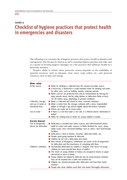
This guidance is intended to be one stop shop to improve the quality and effectiveness of health interventions in emergency, to respond to the most frequent scenarios and conditions.
The main document contains the most common elements to be found in emergencies. As much as possible they are one pag
...
Further analysis of the 1996, 2001, and 2006 Demographic and Health Surveys Data
Towards the Peoples Health Assembly Book - 5
The new Global Strategy aims to achieve the highest attainable standard of health for all women, children and adolescents, transform the future and ensure that every newborn, mother and child not only survives, but thrives.
you can find branded materials including immunization backgrounders, posters, social media posts and more to amplify your existing activities and facilitate any communications for the week. Please feel free to tailor and adapt materials to meet specific country
WHO recommendations on child health: Guidelines approved by the WHO Guidelines Review Committee
recommended
Updated May 2017
This document is meant to respond to the questions:
■ What health interventions should the child receive and when should s/he receive it?
■ What health behaviours should a mother/caregiver practise (or not practise)?
This document is meant to respond to the questions:
■ What health interventions should the child receive and when should s/he receive it?
■ What health behaviours should a mother/caregiver practise (or not practise)?
2nd edition. The 2018 Roadmap incorporates an additional critical population: adolescents. Despite making up 1 in 6 of the world’s people, adolescents have been largely overlooked as global momentum to address TB has grown. Spanning the ages of 10–19 years, adolescents are both at risk of TB and
...
The Essential Nutrition Actions and Essential Hygiene Actions Training Guide: Community Workers strengthens the capacity of community workers to deliver and promote the essential nutrition and hygiene actions. It introduces technical content within hands-on sessions to practice counseling and negoti
...
VADEMECUM | This Vademecum is intended to provide a benchmark for aid workers—whether working in the field or at a strategic level—in particular concerning the formulation and implementation of programmes of prevention or response to humanitarian crises. It is not solely a theoretical document b
...
Diarrhoea Treatment Guidelines
recommended
The WHO page addresses diarrhoeal diseases, one of the leading causes of death among children under five, which can be prevented through clean water, improved hygiene, and vaccinations. It emphasizes the importance of oral rehydration solutions (ORS) and zinc supplementation for treatment, as well a
...