
Filter
502
Text search:
afro
Featured
50
119
Language
Document type
219
103
61
46
33
15
12
7
4
1
1
Countries
50
26
24
22
22
19
14
14
12
11
11
11
10
9
9
8
7
7
7
7
6
6
6
6
6
5
5
5
5
4
4
4
4
3
3
3
3
2
2
2
2
2
2
2
2
2
1
1
1
1
1
1
1
1
1
1
1
1
1
1
1
1
1
1
1
1
1
1
Authors & Publishers
Publication Years
Category
224
41
35
25
13
12
1
Toolboxes
72
39
33
27
26
17
16
13
13
12
12
10
9
8
7
6
6
5
4
4
3
2
2
2
1
1

Serie: Documentos Técnico Normativiso 495

The brief concludes that sustaining the continuity of EHS requires policies that ensure a whole-society and systems strengthening approach. This involves increased health care investment, community engagement, disease control regulations, and multisector approaches to improve resilience, EHS quality
...

The World Health Organization (WHO) convened a meeting of the Technical Advisory Group on Buruli ulcer at its headquarters in Geneva, Switzerland on 25 to 27 March 2019
Cotonou declaration on buruli ulcer
recommended
Cotonou Declaration oBuruli Ulcer
Cotonou, Benin, 30 March 2009
Neglected tropical diseases kill, weaken or incapacitate millions of people every year, causing permanent physical suffering, social stigmatization and reduced productive capacity. Buruli ulcer, one such disease, causes immense suffer
...
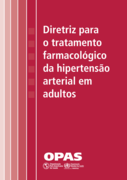
Mais pessoas morrem a cada ano de doenças cardiovasculares do que de qualquer outra causa. Mais de três quartos das mortes por doenças cardíacas e acidentes vasculares cerebrais ocorrem em países de baixa e média renda. A hipertensão - ou pressão alta - é uma condição médica grave que au
...

January 2020 to December 2021

Promoting health and preventing disease is a critical component of the effort required to achieve Universal Health Coverage (UHC). to date, efforts to achieve UHC have focused mostly on strengthening health systems and their capacities to provide curative care. However, experience from the COVID-19
...

Driving progress towards rabies elimination: Results of Gavi’s Learning Agenda on rabies and new WHO position on rabies immunization
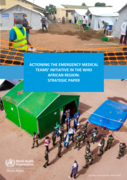
Emergency medical teams (EMT) are first response health care providers – doctors, nurses, paramedics, and others – during outbreaks and emergencies or disasters, working with governments, charities such as nongovernmental organizations (NGOs), armies, and international organizations such as the
...

WHO Ghana 2022 annual report
recommended
“2022 was an eventful year for the WHO Country Office in Ghana,” says Dr Francis Kasolo, WHO Representative to Ghana.
In 2022, WHO Ghana collaborated with partners to deliver interventions in support of the Government of Ghana's health sector agenda to ensure healthy lives for all towards ach
...
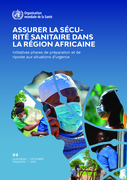
Conformément aux recommandations de divers comités de l’Organisation mondiale de la Santé (OMS), le Bureau régional de l’OMS pour l’Afrique a mis en place trois initiatives phares afin de permettre aux États Membres de la Région africaine de se préparer aux urgences de santé publique,
...

The Ministry of Health and Social Services has the mandate to fulfil one of the aspirations in Namibia’s Vision 2030 to “transform Namibia into a healthy and food-secure nation”. Namibia strives to provide quality health and social welfare services efficiently and effectively to the population
...

The target audience of this document (and the associated online companion tool) includes WHO country offices in Member States of the African Region; Member States’ ministries of health and their public health emergency operation centres; relevant external assessment teams; and partners looking to
...

The presentation titled "Malaria Capacity Building Initiative" outlines efforts led by the WHO and partner organizations to strengthen the skills and systems needed to fight malaria globally. It highlights the need for a coordinated, long-term strategy to build human resource capacity in malaria-end
...

The document Integrated Disease Surveillance and Response Technical Guidelines, Booklet Four: Sections 8 and 9 (Third Edition, 2019) provides guidance for strengthening public health surveillance and response systems in the WHO African Region. It focuses on monitoring, supervision, evaluation, and f
...
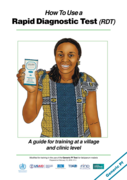
A guide for training at a village and clinic level
To provide a foundation for the strategic policy and programme development needed to ensure the sustainable implementation of effective interventions for reducing the global burden of PPH
CIPH Curriculum for Best Practices. Putting Principles to Work

Assessing Mental Health and Psychosocial Needs and Resources Toolkit For Humanitarian Settings
recommended
Available in different languages: English, French, Arabic, Russian
