
Filter
467
Text search:
World
Health
Organization
(WHO),
Kenya
Country
Office
Featured
Recommendations
38
New Publications
106
Language
Document type
No document type
230
Studies & Reports
109
Guidelines
57
Manuals
26
Strategic & Response Plan
26
Situation Updates
10
Training Material
5
Fact sheets
3
Resource Platforms
1
Countries / Regions
Kenya
50
Global
29
Africa
18
Uganda
17
Malawi
11
Ethiopia
10
Tanzania
10
Nigeria
8
India
7
South Sudan
6
Liberia
5
Zimbabwe
5
Zambia
5
Rwanda
5
South Africa
5
East and Southern Africa
5
Sierra Leone
4
Syria
4
Western and Central Europe
4
Guinea
3
Senegal
3
Congo, Democratic Republic of
3
Cameroon
3
Somalia
3
Nepal
3
Thailand
3
Bangladesh
3
Sudan
3
Ukraine
3
Botswana
3
Yemen
3
West and Central Africa
3
Ghana
2
Togo
2
Philippines
2
Chad
2
Indonesia
2
Mozambique
2
Eswatini/ Swaziland
2
Brazil
2
North Macedonia
2
Madagascar
2
Côte d’Ivoire / Ivory Coast
1
Morocco
1
Niger
1
Haiti
1
Pakistan
1
Jordan
1
Lebanon
1
Cambodia
1
Benin
1
Central African Republic
1
Argentina
1
Hungary
1
Colombia
1
Angola
1
Lesotho
1
Mexico
1
Myanmar / Burma
1
Sri Lanka
1
Middle East and North Africa
1
South–East Asia Region
1
Latin America and the Carribbean
1
Asia
1
Venezuela
1
Laos
1
Russia
1
Estonia
1
Iran
1
Kyrgyzstan
1
Georgia
1
Jamaica
1
Norway
1
Portugal
1
Authors & Publishers
Publication Years
Category
Countries
137
Clinical Guidelines
40
Public Health
36
Women & Child Health
36
Key Resources
30
Capacity Building
7
Pharmacy & Technologies
6
Toolboxes
HIV
72
COVID-19
30
Mental Health
26
Planetary Health
24
Disability
23
TB
19
AMR
19
Caregiver
17
NTDs
14
Global Health Education
12
Refugee
10
Ebola & Marburg
9
Rapid Response
9
Health Financing Toolbox
9
Conflict
8
NCDs
7
Pharmacy
6
2.0 Rapid Response
5
Natural Hazards
4
Polio
3
Malaria
3
Cholera
2
Social Ethics
2
Typhoon
1
Zika
1

In 2015, to advance the global and national response to antimicrobial resistance (AMR), the World Health Assembly issued resolution WHA68.7 calling for all Member States to develop AMR national acti
...
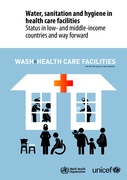
This report presents, for the first time, a global assessment of the extent to which health care facilities provide essential water, sanitation and hygiene (WASH) services. Drawing on data from 54 low- and middle-income countries, the report conclud
...
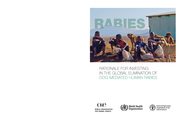
Rabies is a global public health problem with important socioeconomic impacts. Human rabies is preventable; almost all cases are transmitted through the bite of a rabid dog. Elimination of human rabies is possible. Technical support and tools are av
...

The aim of these Guidelines is to provide a framework for the conservation and sustainable use of plants in medicine. To do this, the Guidelines describe the various tasks that should be carried out to ensure that where medicinal plants are taken from the wild, they are taken on a basis that is sust
...


Just about everyone has experienced the joy that a healthy newborn child brings to parents, families and communities. But the arrival of a newborn who is small or sick often results in immediate worry and sadness. When the infant is at high risk of
...

This report reviews the current situation in relation to national capacity to address NCDs and the progress made at country level over the past decade. It highlights that, while progress is being made, there is still much work to be done to create t
...

The WHO Global Antimicrobial Resistance and Use Surveillance System (GLASS) was launched in 2015 to foster AMR surveillance and inform strategies to contain AMR. The system started with surveillance of AMR in bacteria causing common human infections
...

Networking for Policy Change: TB/HIV Participant’s Guide
WHO/HTM/TB/2007.384b
“TB is too often a death sentence for people with AIDS. It does not have to be this
way.”
-Nelson Mandela, International conference on HIV and AIDS, Bangkok, T
...

Cholera is an acute gastrointestinal infection caused by the bacterium Vibrio Cholerae serogroup O1 or O139, and is often linked to unsafe drinking water, lack of proper sanitation and personal hygiene. It adversely affects mostly the poor and vulnerable populations in countries, which are already d
...

Updated to Reflect the 2009 Medical Eligibility Criteria of the World Health Organization

The World Heart Federation (WHF) Roadmap series covers a large range of cardiovascular conditions. These Roadmaps identify potential roadblocks and their solutions to improve the prevention, detection and management of cardiovascular diseases and pr
...
The World Health Organization (WHO)6, the Civil Society Action Committee and the Lancet Migratio
...
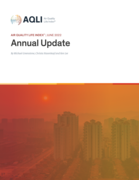
During the first year of the Covid-19 pandemic, the world’s economy slowed. Yet, the global annual average particulate pollution (PM2.5) was largely unchanged from 2019 levels. At the same time, growing evidence shows air pollution—even when exp
...
Transforming Health Systems: Achieving Universal Health Coverage by 2022. The development of the Kenya
...

The WHO standard: Universal access to rapid tuberculosis diagnostics sets benchmarks to achieve universal access to WHO-recommended rapid diagnostics (WRDs), increase bacteriologically confirmed tub
...

Access to health workers who are fit for purpose, motivated and protected is a fundamental force of health service delivery and the achievement of
...

The 2018 global health financing report presents health spending data for all WHO Member States between 2000 and 2016 based on the SHA 2011 methodo
...
