
Filter
1574
Text search:
bacteria
Featured
205
370
Language
Document type
614
298
285
119
82
53
49
17
14
13
11
9
9
1
Countries / Regions
80
47
46
34
25
25
25
23
19
19
19
18
17
16
15
15
13
12
12
12
12
11
11
11
9
9
9
8
8
8
7
6
6
5
4
4
4
4
4
4
3
3
3
3
3
3
3
3
2
2
2
2
2
2
2
2
2
2
2
2
2
2
2
2
2
2
2
2
1
1
1
1
1
1
1
1
1
1
1
1
1
1
1
1
1
1
1
1
1
1
1
1
1
1
1
1
1
1
1
1
1
1
1
1
1
Authors & Publishers
Publication Years
Category
466
179
133
82
52
38
33
Toolboxes
322
184
98
92
66
58
49
47
42
27
25
22
22
20
18
17
14
14
13
12
11
9
5
1
1
Leptospirosis is a bacterial zoonotic disease of worldwide importance, though relatively neglected in many African countries including sub Saharan Africa that is among areas with high burden of this disease. The disease is often mistaken for other febrile illnesses such as dengue, malaria, rickettsi
...
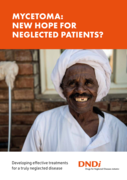
Mycetoma is a slow-growing bacterial or fungal infection, most often of the foot, that may spread to other parts of the body and can cause severe deformity. It is a debilitating disease that most often affects poor people in rural areas with limited access to health care.

Mycetoma is a chronic, progressively destructive morbid inflammatory disease usually of the foot but any part of the body can be affected. Infection is most probably acquired by traumatic inoculation of certain fungi or bacteria into the subcutaneous tissue. Mycetoma was described in the modern l
...

El pian es una treponematosis endémica, un grupo de infecciones bacterianas crónicas causadas por espiroquetas del género Treponema, entre las que se encuentran también la sífilis endémica (bejel) y el mal de pinto. El pian es la más frecuente de las tres.

Le pian fait partie d’un groupe d’infections bactériennes chroniques que l’on désigne couramment par le terme « tréponématoses endémiques ». Ces maladies sont dues à des bactéries spiralées appartenant au genre Treponema, qui comprend aussi la syphilis endémique (béjel) et la pinta
...

Фрамбезия относится к группе хронических бактериальных инфекций, в совокупности называемых эндемическими трепонематозами. Возбудителями этих заболеваний, к котÐ
...

حقائق رئيسية
الداء العليقي هو مرض مزمن مشِّوه وموهِّن من أمراض الأطفال المعدية.
يصيب هذا المرض الجلد والعظام والغضاريف. ويُعتقد في الوقت الحالي أن الإنسان هو المست
...

Yaws is a non-venereal endemic treponemal infection caused by Treponema pallidum sub-species pertenue, a bacterium closely related to Treponema pallidum ssp. pallidum, the agent of venereal syphilis. Yaws predominantly affects children living in tropical regions of the world. It causes lesions of th
...

Leptospirosis is a zoonotic disease with epidemic potential, especially after a heavy rainfall,
caused by a bacterium called Leptospira. Leptospira interrogans is pathogenic to humans and
animals, with more than 200 serologic variants or serovars. Humans usually acquire
leptospirosis through dire
...
Trachoma disease
Trachoma is a sequela following infection by the bacterium Chlamydia trachomatis (C. trachomatis). The disease is preventable, but still the cause of blindness in 1.9 million people world wide.
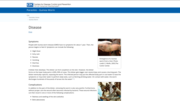
People with Guinea worm disease (GWD) have no symptoms for about 1 year. Then, the person begins to feel ill. Symptoms can include the following:
Slight fever
Itchy rash
Nausea
Vomiting
Diarrhea
Dizziness
A blister then develops. This blister can form anywhere on the skin. However, the blis
...

Yaws, a neglected tropical disease (NTD) of the skin caused by the bacterium Treponema pallidum subspecies pertenue, is targeted in the latest WHO NTD Roadmap for eradication by 2030. In January, 2022, WHO published a manual that outlines the key activities that Ministries of Health in endemic count
...

J Glob Health Sci. 2020 Jun;2(1):e3. A group of enzootic and zoonotic protozoan infections, the leishmaniases constitute among the most severely neglected tropical diseases (NTDs) and are found in all continents except Oceania. Representing the most common infectious diseases, NTDs comprise an open-
...
