
Filter
3914
Text search:
companies
Featured
Recommendations
430
New Publications
869
Language
Document type
No document type
1716
Studies & Reports
822
Guidelines
637
Manuals
339
Strategic & Response Plan
187
Training Material
85
Fact sheets
64
Situation Updates
27
Resource Platforms
17
Infographics
9
Brochures
8
App
1
Online Courses
1
Videos
1
Countries / Regions
Global
274
Western and Central Europe
95
India
89
Latin America and the Carribbean
64
Sierra Leone
58
Africa
50
Liberia
49
South Africa
48
Ukraine
46
South–East Asia Region
45
Kenya
44
Nigeria
43
Eastern Europe
36
Ghana
35
Nepal
34
Myanmar / Burma
34
Ethiopia
33
Syria
31
Asia
30
Philippines
28
Rwanda
28
Uganda
27
Tanzania
27
Zambia
26
Namibia
26
Malawi
25
Bangladesh
24
Guinea
23
Congo, Democratic Republic of
22
East and Southern Africa
22
West and Central Africa
21
Mozambique
20
Eastern Europe and Central Asia
20
Yemen
19
South Sudan
18
Middle East and North Africa
18
Indonesia
16
Zimbabwe
15
Senegal
14
Germany
14
Cambodia
14
Botswana
14
Western Pacific Region
13
Afghanistan
11
Pakistan
10
Venezuela
10
Russia
10
Somalia
9
Brazil
9
Thailand
8
China
8
Sudan
8
Colombia
8
Lesotho
8
Moldova
8
Mali
7
Central African Republic
7
Eswatini/ Swaziland
7
Vietnam
7
USA
6
Cameroon
6
Haiti
6
Madagascar
6
Iran
6
North America
6
Jordan
5
Peru
5
North Macedonia
5
Paraguay
5
Tajikistan
5
Kyrgyzstan
5
Côte d’Ivoire / Ivory Coast
4
Iraq
4
Lebanon
4
Benin
4
Ecuador
4
Sri Lanka
4
Kazakhstan
4
Burkina Faso
3
Egypt
3
Chile
3
Albania
3
Laos
3
Georgia
3
United Kingdom
3
Saudi Arabia
2
Turkey
2
Papua New Guinea
2
Argentina
2
Serbia
2
Libya
2
Angola
2
Palestine
2
Djibouti
2
Armenia
2
Mongolia
2
Timor Leste/ East Timor
2
Qatar
2
Estonia
2
Romania
2
Turkmenistan
2
Jamaica
2
Belarus
2
Bosnia and Herzegovina
2
Guinea-Bissau
1
Morocco
1
Togo
1
Chad
1
Gambia
1
Mauritania
1
Ireland
1
Dominican Republic
1
Switzerland
1
Hungary
1
Croatia
1
Burundi
1
Honduras
1
El Salvador
1
Bolivia
1
Greece
1
Other region
1
Bhutan
1
Poland
1
North Korea
1
Southern Africa
1
Congo-Brazzaville
1
Bulgaria
1
Lithuania
1
Uzbekistan
1
Japan
1
Denmark
1
Mauritius
1
Tunisia
1
Portugal
1
Spain
1
Azerbaijan
1
Israel
1
Authors & Publishers
Publication Years
Category
Countries
834
Clinical Guidelines
452
Public Health
322
Key Resources
293
Women & Child Health
288
Capacity Building
97
Pharmacy & Technologies
86
Toolboxes
HIV
297
COVID-19
284
Mental Health
272
TB
228
Planetary Health
214
NTDs
169
AMR
163
Caregiver
133
Disability
128
Global Health Education
117
Pharmacy
110
Ebola & Marburg
107
Rapid Response
106
Conflict
85
NCDs
79
2.0 Rapid Response
79
Malaria
77
Health Financing Toolbox
76
Refugee
64
Natural Hazards
50
Zika
42
Specific Hazards
31
Polio
26
Cholera
21
Social Ethics
9
Typhoon
1
Diets are changing everywhere, and the burden of disease associated with unhealthy diets is a worldwide concern. Measurement and monitoring of diets across countries and population groups is critical. However, there are no harmonized metrics for tracking how the healthfulness of diets around the wor
...

This document presents the World Health Organization Operational framework for building climate resilient and low carbon health systems*. ***The framework's goal is to increase the climate resilience of health systems to protect and improve the health of communities in an unstable and changing clima
...

The "WHO Package of Essential Noncommunicable (PEN) Disease Interventions for Primary Health Care" provides a set of cost-effective, evidence-based interventions to address noncommunicable diseases (NCDs) such as cardiovascular diseases, diabetes, chronic respiratory diseases, and cancers. Designed
...

The rapid assessment tool (RAT) is meant to assess health facilities within mpox-affected areas that have at least one inpatient bed. Depending on time and resources available, certain facilities may be prioritized during an mpox outbreak. The RAT evaluates 16 infection prevention and control (IPC)
...
The present Consolidated guidelines include a comprehensive set of WHO recommendations for the treatment and care of DR-TB, derived from these WHO guidelines documents. The consolidated guidelines include policy recommendations on treatment regimens for isoniazid-resistant TB (Hr-TB) and MDR/RR-TB,
...
This report aims to outline the current available knowledge on the health and wellbeing of older persons in the Region of the Americas during the United Nations Decade of Healthy Ageing (2021-2030). It also seeks to guide political actions towards ensuring the human rights of older persons, and desc
...
Jointly developed by WHO’s Regulatory System Strengthening, Regulation and Safety Unit and the Health Ethics & Governance Unit, it is intended to assist countries in evaluating their capacity to provide appropriate ethical oversight of health-related research. In addition to assisting in capacity-
...

La violencia contra las mujeres y las niñas es generalizada en la Región de las Américas, y tiene enormes consecuencias para su salud y bienestar, así como el de sus familias y sus comunidades. Se trata de un costo inaceptable que puede ser prevenido mediante acciones basadas en la evidencia, pr
...

Evidence-based psychological interventions are an important part of health, social, protection and education services and can help increase access to effective mental health treatments and progression towards universal health coverage.
This manual provides managers and others responsible for plan
...

The 2023 meeting of the WHO Clinical Consortium on Healthy Ageing (CCHA) was the group’s ninth gathering and took place in Geneva 5–7 December 2023. The meeting was structured around seven panels, with a series of technical presentations, plenary discussions and group work, and a final session o
...
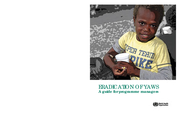
This document provides guidance for countries on how to implement activities to achieve the interruption of yaws transmission. It is intended for use by national yaws eradication programmes, partners involved in the implementation of yaws eradication activities and WHO technical staff who provide te
...

The World Health Organization (WHO) is releasing the second edition of its Global Accelerated Action for the Health of Adolescents (AA-HA!) guidance. The document aims to equip governments to respond to the health and well-being challenges, opportunities and needs of adolescents.
The guidance pro
...
This handbook is for health care providers involved in the care of girls and women who have been subjected to any form of female genital mutilation (FGM). This includes obstetricians and gynaecologists, surgeons, general medical practitioners, midwives, nurses and other country-specific health profe
...
The 2020 Report analyzes global health spending for 190 countries from 2000 to 2018 and provides insights as to the health spending trajectory from the MDG era to the SDG era prior to the crisis of 2020. The report shows that global spending on health continually rose between 2000 and 2018 and reach
...
WHO’s Ambition and Action in Nutrition 2016-2025 is anchored in the six global targets for improving maternal, infant and young child nutrition and the global diet-related NCD targets.
In support of the 2030 Agenda for Sustainable Development, particularly SDG2 and SDG3, and in concert w ...
In support of the 2030 Agenda for Sustainable Development, particularly SDG2 and SDG3, and in concert w ...
The global tripartite self-assessment survey of country progress in addressing antimicrobial resistance (AMR) is a component of a broader approach for monitoring and evaluation of the global action plan on AMR. This report analyses the results of the second tripartite self-assessment survey. It has
...
WHO recommendations on newborn health: Guidelines approved by the WHO Guidelines Review Committee
recommended
Updated May 2017
This document is meant to respond to the questions:
■ What health interventions should be the newborn and young infants < 2 months of age receive and when should s/he receive it?
■ What health behaviours should a mother/caregiver practise (or not practise)? ...
This document is meant to respond to the questions:
■ What health interventions should be the newborn and young infants < 2 months of age receive and when should s/he receive it?
■ What health behaviours should a mother/caregiver practise (or not practise)? ...
Antimicrobial resistance (AMR) is described as a situation when bacteria, viruses, fungi and parasites
change over time and no longer respond to medicines, making infections harder or impossible to treat,
and increasing the risk of disease spread, severe illness and death.1 AMR in recent years has
...
