
Filter
3120
Text search:
Center
for
Disease
control
and
prevention
Featured
320
784
Language
2820
154
102
63
56
33
16
13
10
8
6
5
4
3
3
3
2
2
2
2
2
2
1
1
1
1
1
1
1
1
1
1
1
1
1
1
1
1
1
1
1
Document type
1524
586
502
182
122
79
60
34
12
9
4
3
2
1
Countries
156
133
98
89
69
68
63
59
56
52
49
49
47
46
39
36
34
33
30
30
28
28
26
26
24
24
23
22
22
21
21
21
20
20
16
15
15
15
15
14
14
13
13
13
13
13
12
11
11
11
9
9
8
7
7
7
6
6
6
6
5
5
5
5
5
5
4
4
4
4
4
3
3
3
3
3
3
3
3
3
3
3
3
3
3
2
2
2
2
2
2
2
2
2
2
2
2
2
2
2
1
1
1
1
1
1
1
1
1
1
1
1
1
1
1
1
1
1
1
1
1
1
1
1
1
1
1
Authors & Publishers
416
110
109
71
53
52
48
35
33
31
31
30
30
29
29
27
19
19
18
18
18
15
15
15
15
14
13
13
13
13
11
11
10
10
10
10
10
10
9
9
9
9
9
9
9
8
8
8
8
8
8
7
7
7
7
7
7
7
6
6
6
6
6
6
6
6
6
6
5
5
5
5
5
5
5
5
5
5
5
5
5
5
5
5
5
5
5
5
5
5
5
4
4
4
4
4
4
4
4
4
4
4
4
4
4
4
4
4
4
4
4
4
4
4
4
4
4
4
4
4
4
4
4
4
4
4
4
4
4
4
4
3
3
3
3
3
3
3
3
3
3
3
3
3
3
3
3
3
3
3
3
3
3
3
3
3
3
3
3
3
3
3
3
3
3
3
3
3
3
3
3
3
3
3
3
3
3
3
3
3
3
3
3
3
3
3
3
3
3
3
2
2
2
2
2
2
2
2
2
2
2
2
2
2
2
2
2
2
2
2
2
2
2
2
2
2
2
2
2
2
2
2
2
2
2
2
2
2
2
2
2
2
2
2
2
2
2
2
2
2
2
2
2
2
2
2
2
2
2
2
2
2
2
2
2
2
2
2
2
2
2
2
2
2
2
2
2
2
2
2
2
2
2
2
2
2
2
2
2
2
2
2
2
2
2
2
2
2
2
2
2
2
2
2
2
2
2
2
2
2
2
2
2
2
2
2
2
2
2
2
2
2
2
2
2
2
2
2
2
2
2
2
2
2
2
2
2
2
2
2
2
2
2
2
2
2
2
2
2
2
2
2
2
2
2
2
2
2
2
2
2
2
2
2
2
2
2
2
2
2
2
2
2
2
2
2
2
2
2
2
2
2
1
1
1
1
1
1
1
1
1
1
1
1
1
1
1
1
1
1
1
1
1
1
1
1
1
1
1
1
1
1
1
1
1
1
1
1
1
1
1
1
1
1
1
1
1
1
1
1
1
1
1
1
1
1
1
1
1
1
1
1
1
1
1
1
1
1
1
1
1
1
1
1
1
1
1
1
1
1
1
1
1
1
1
1
1
1
1
1
1
1
1
1
1
1
1
1
1
1
1
1
1
1
1
1
1
1
1
1
1
1
1
1
1
1
1
1
1
1
1
1
1
1
1
1
1
1
1
1
1
1
1
1
1
1
1
1
1
1
1
1
1
1
1
1
1
1
1
1
1
1
1
1
1
1
1
1
1
1
1
1
1
1
1
1
1
1
1
1
1
1
1
1
1
1
1
1
1
1
1
1
1
1
1
1
1
1
1
1
1
1
1
1
1
1
1
1
1
1
1
1
1
1
1
1
1
1
1
1
1
1
1
1
1
1
1
1
1
1
1
1
1
1
1
1
1
1
1
1
1
1
1
1
1
1
1
1
1
1
1
1
1
1
1
1
1
1
1
1
1
1
1
1
1
1
1
1
1
1
1
1
1
1
1
1
1
1
1
1
1
1
1
1
1
1
1
1
1
1
1
1
1
1
1
1
1
1
1
1
1
1
1
1
1
1
1
1
1
1
1
1
1
1
1
1
1
1
1
1
1
1
1
1
1
1
1
1
1
1
1
1
1
1
1
1
1
1
1
1
1
1
1
1
1
1
1
1
1
1
1
1
1
1
1
1
1
1
1
1
1
1
1
1
1
1
1
1
1
1
1
1
1
1
1
1
1
1
1
1
1
1
1
1
1
1
1
1
1
1
1
1
1
1
1
1
1
1
1
1
1
1
1
1
1
1
1
1
1
1
1
1
1
1
1
1
1
1
1
1
1
1
1
1
1
1
1
1
1
1
1
1
1
1
1
1
1
1
1
1
1
1
1
1
1
1
1
1
1
1
1
1
1
1
1
1
1
1
1
1
1
1
1
1
1
1
1
1
1
1
1
1
1
1
1
1
1
1
1
1
1
1
1
1
1
1
1
1
1
1
1
1
1
1
1
1
1
1
1
1
1
1
1
1
1
1
1
1
1
1
1
1
1
1
1
1
1
1
1
1
1
1
1
1
1
1
1
1
1
1
1
1
1
1
1
1
1
1
1
1
1
1
1
1
1
1
1
1
1
1
1
1
1
1
1
1
1
1
1
1
1
1
1
1
1
1
1
1
1
1
1
1
1
1
1
1
1
1
1
1
1
1
1
1
1
1
1
1
1
1
1
1
1
1
1
1
1
1
1
1
1
1
1
1
1
1
1
1
1
1
1
1
1
1
1
1
1
1
1
1
1
1
1
1
1
1
1
1
1
1
1
1
1
1
1
1
1
1
1
1
1
1
1
1
1
1
1
1
1
1
1
1
1
1
1
1
1
1
1
1
1
1
1
1
1
1
1
1
1
1
1
1
1
1
1
1
1
1
1
1
1
1
1
1
1
1
1
1
1
1
1
1
1
1
1
1
1
1
1
1
1
1
1
1
1
1
1
1
1
1
1
1
1
1
1
1
1
1
1
1
1
1
1
1
1
1
1
1
1
1
1
1
1
1
1
1
1
1
1
1
1
1
1
1
1
1
1
1
1
1
1
1
1
1
1
1
1
1
1
1
1
1
1
1
1
1
1
1
1
1
1
1
1
1
1
1
1
1
1
1
1
1
1
1
1
1
1
1
1
1
1
1
1
1
1
1
1
1
1
1
1
1
1
1
1
1
1
1
1
1
1
1
1
1
1
1
1
1
1
1
1
1
1
1
1
1
1
1
1
1
1
1
1
1
1
1
1
1
1
1
1
1
1
1
1
1
1
1
1
1
1
1
1
1
1
1
1
1
1
1
1
1
1
1
1
1
1
1
1
1
1
1
1
1
1
1
1
1
1
1
1
1
1
1
1
1
1
1
1
1
1
1
1
1
1
1
1
1
1
1
1
1
1
1
1
1
1
1
1
1
1
1
1
1
1
1
1
1
1
1
1
1
1
1
1
1
1
1
1
1
1
1
1
1
1
1
1
1
1
1
1
1
1
1
1
1
1
1
1
1
1
1
1
1
1
1
1
1
1
1
1
1
1
1
1
1
1
1
1
1
1
1
1
1
1
1
1
1
1
1
1
1
1
1
1
1
1
1
1
1
1
1
1
1
1
1
1
1
1
1
1
1
1
1
1
1
1
1
1
1
1
1
1
1
1
1
1
1
1
1
1
1
1
1
1
1
1
1
1
1
1
1
1
1
1
1
1
1
1
1
1
1
1
1
1
1
1
1
1
1
1
1
1
1
1
1
1
1
1
1
1
1
1
1
1
1
1
1
1
1
1
1
1
1
1
1
1
1
1
1
1
1
1
1
1
1
1
1
1
1
1
1
1
1
1
1
1
1
1
1
1
1
1
1
1
1
1
1
1
1
1
1
1
1
1
1
1
1
1
1
1
1
1
1
1
1
1
1
1
1
1
1
1
1
1
1
1
1
1
1
1
1
1
1
1
1
1
1
1
1
1
1
1
1
1
1
1
1
1
1
1
1
1
1
1
1
1
1
1
1
1
1
1
1
1
1
1
1
1
1
1
1
1
1
1
1
1
1
1
1
1
1
1
1
1
1
1
1
1
1
1
1
1
1
1
1
1
1
1
1
1
1
1
1
1
1
1
1
1
1
1
1
1
1
1
1
1
1
1
1
1
1
1
1
1
1
1
1
1
1
1
1
1
1
1
1
1
1
1
1
1
1
1
1
1
1
1
1
1
1
1
1
1
1
1
1
1
1
1
1
1
1
1
1
1
1
1
1
1
1
1
1
1
1
1
1
1
1
1
1
1
1
1
1
1
1
1
1
1
1
1
1
1
1
1
1
1
1
1
1
1
1
1
1
1
1
1
1
1
1
1
1
1
1
1
1
1
1
1
1
1
1
1
1
1
1
1
1
1
1
1
1
1
1
1
1
1
1
1
1
1
1
1
1
1
1
1
1
1
1
1
1
1
1
1
1
1
1
1
1
1
1
1
1
1
1
1
1
1
1
1
1
1
1
1
1
1
1
1
1
1
1
1
1
1
1
1
1
1
1
1
1
1
1
1
1
1
1
1
1
1
1
1
1
1
1
1
1
1
1
1
1
1
1
1
1
1
1
1
1
1
1
1
1
1
1
1
1
1
1
1
1
1
1
1
1
1
1
1
1
1
1
1
1
1
1
1
1
1
1
1
1
1
1
1
1
1
1
1
1
1
1
1
1
1
1
1
1
1
1
1
1
1
1
1
1
1
1
1
1
1
1
1
1
1
1
1
1
1
1
1
1
1
1
1
1
1
1
1
1
1
1
1
1
1
1
1
1
1
1
1
1
1
1
1
1
1
1
1
1
1
1
1
1
1
1
1
1
1
1
1
1
1
1
1
1
1
1
1
1
1
1
1
1
1
1
1
1
1
1
1
1
1
1
1
1
1
1
1
1
1
1
1
1
1
1
1
1
1
1
1
1
1
1
1
1
1
1
1
1
1
1
1
1
1
1
1
1
1
1
1
1
1
1
1
1
1
1
1
1
1
1
1
1
1
1
1
1
1
1
1
1
1
1
1
1
1
1
1
1
1
1
1
1
1
1
1
1
1
1
1
1
1
1
1
1
1
1
1
1
1
1
1
1
1
1
1
1
1
1
1
1
1
1
1
1
1
1
1
1
1
1
1
1
1
1
1
1
1
1
1
1
1
1
1
1
1
1
1
1
1
1
1
1
1
1
1
1
1
1
1
1
1
1
1
1
1
1
1
1
1
1
1
1
1
1
1
1
1
1
1
1
1
1
1
1
1
1
1
1
1
1
1
1
1
1
1
1
1
1
1
1
1
1
1
1
1
1
1
1
1
1
1
1
1
1
1
1
1
1
1
1
1
1
1
1
1
1
1
1
1
1
1
1
1
1
1
1
1
1
1
1
1
1
1
1
1
1
1
1
1
1
1
1
1
1
1
1
1
1
1
1
1
1
1
1
1
1
1
1
1
1
1
1
1
1
1
1
1
1
1
1
1
1
1
1
1
1
1
1
1
1
1
1
1
1
1
1
1
1
1
1
1
1
1
1
1
1
1
1
1
1
1
1
1
1
1
1
1
1
1
1
1
1
1
1
1
1
1
1
1
1
1
1
1
1
1
1
1
1
1
1
1
1
1
1
1
1
1
1
1
1
1
1
1
1
1
1
1
1
1
1
1
1
1
1
1
1
1
1
1
1
1
1
1
1
1
1
1
1
1
1
1
1
1
1
1
1
1
1
1
1
1
1
1
1
1
1
1
1
1
1
1
1
1
1
1
1
1
1
1
1
1
1
1
1
1
1
1
1
1
1
1
1
1
1
1
1
1
1
1
1
1
1
1
1
1
1
1
1
1
1
1
1
1
1
1
1
1
1
1
1
1
1
1
1
1
1
1
1
1
1
1
1
1
1
1
1
1
1
1
1
1
1
1
1
1
1
1
1
1
1
1
1
1
1
1
1
1
1
1
1
1
1
1
1
1
1
1
1
1
1
1
1
1
1
1
1
1
1
1
1
1
1
1
1
1
1
1
1
1
1
1
1
1
1
1
1
1
1
1
1
1
1
1
1
1
1
1
1
1
1
1
1
1
1
1
1
1
1
1
1
1
1
1
1
1
1
1
1
1
1
1
1
1
1
1
1
1
1
1
1
1
1
1
1
1
1
1
1
1
1
1
1
1
1
1
1
1
1
1
1
1
1
1
1
1
1
1
1
1
1
1
1
1
1
1
1
1
1
1
1
1
1
1
1
1
1
1
1
1
1
1
1
1
1
1
1
1
1
1
1
1
1
1
1
1
1
1
1
1
1
1
1
1
1
1
1
1
1
1
1
1
1
1
1
1
1
1
1
1
1
1
1
1
1
1
1
1
1
1
1
1
1
1
1
1
1
1
1
1
1
1
1
1
1
1
1
1
1
1
1
1
1
1
1
1
1
1
1
1
1
1
1
1
1
1
1
1
1
1
1
1
1
1
Publication Years
1047
1806
249
18
Category
1164
256
187
159
130
61
41
Toolboxes
341
224
189
148
142
137
96
93
82
77
76
64
57
52
50
46
45
43
42
42
37
36
22
14
5
2
1

Growing Up in Conflict: The Impact on Children's Mental Health and Psychosocial Well-being
Maria Bray, Sabine Rakotomalala, Leslie Snider, Saji Thomas
UNICEF, Wendy Ager, Pierette James
(2015)
Report on the symposium 26–28 May 2015, New Babylon Meeting Center, The Hague

The long-term goal of AIDSFree is to improve the quality and effectiveness of high-impact, evidence-informed HIV and AIDS interventions. This semiannual performance report (SAPR) summarizes AIDSFree
...
's achievements for the period October 1, 2015–March 31, 2016
more

In 2015 around 15 million people living with HIV were receiving antiretroviral treatment (ART) in sub–Saharan Africa. Sustained provision of ART, though both prudent and necessary, creates substantial long–term fiscal obligations
...
for countries affected by HIV/ AIDS. As donor assistance for health remains constrained, novel financing mechanisms are needed to augment funding domestic sources. We explore how Innovative Financing has been used to co–finance domestic HIV/AIDS responses. Based on analysis of non–health sectors, we identify innovative financing instruments that could be used in the HIV response.
more

Nature Reviews Microbiology Vol. 17 (2019)pp.51-62
Antimicrobial susceptibility testing (AST) technologies help to accelerate the
initiation of targeted antimicrobial therapy for patients with infections
...
and could potentially
extend the lifespan of current narrow- spectrum antimicrobials. Although conceptually new and
rapid AST technologies have been described, including new phenotyping methods, digital
imaging and genomic approaches, there is no single major, or broadly accepted, technological
breakthrough that leads the field of rapid AST platform development
more
Ghana's attempt to regulate health care waste management started in 2002 with the development of guidelines on health care waste manage-ment by the Environmental Protection Agency (EPA). In 2006, the Ministry of Health developed the health care waste policy
...
and guidelines. This guidance document improved health care waste management in the country.
With support from the UNDP-GEF medical waste management project, the Ministry of He lth has revised the existing National Health Care Waste Management (HCWM), policy and guideline, 2006 and has produced two separate documents- A National Health Care Waste Management Policy and a National Guideline for Health Care Waste Management
countrywide. This policy is replacing the 2006 policy and introduces new technical and administrative policy issues to enhance waste management in health care facilities.
more

The majority of developing countries will fail to achieve their targets for Universal Health Coverage (UHC)1 and the health- and poverty-related Su
...
stainable Development Goals (SDGs) unless they take urgent steps to strengthen their health financing. Just over a decade out from the SDG deadline of 2030, 3.6 billion people do not receive the most essential health services they need, and 100 million are pushed into poverty from paying out-of-pocket for health services. The evidence is strong that progress towards UHC, core to SDG 3, will spur inclusive and sustainable economic growth, yet this will not happen unless countries achieve high-performance health financing, defined here as funding levels that are adequate and sustainable; pooling that is sufficient to spread the financial risks of ill-health; and spending that is efficient and equitable to assure desired levels of health service coverage, quality, and financial protection for all people— with resilience and sustainability.
more
Background: Little is known about post-traumatic stress (PTSD) prevalence rates in community samples. This is especially true for the African continent where child-soldiers, HIV/AIDS affected and or
...
phans have been the target for PTSD prevalence studies. Objectives: The aim of this study is to investigate the indirect and direct exposure to 20 potentially traumatic events and its relation with PTSD in a Ugandan sample of senior 3rd year students and to perform cross-cultural comparisons with previous studies examining this age group. Socio-economic status, coping styles, negative affect, and somatization are further examined.
more

Human rights-based approaches to the creation of knowledge involve application of human rights principles to both the content and process of knowledge creation. Human rights-based approaches have special significance
...
for the sexual and reproductive health and rights (SRHR) of all people, in particular for women and girls, people living with disability, lesbian, gay, bisexual, trans, queer or Intersex (LGBTQI) populations, refugees, migrants and other marginalised populations.
more

he WHO Guidelines on Integrated Care for Older People (ICOPE) propose evidence-based recommendations for health care professionals to prevent, slow or reverse declines in the physical
...
and mental capacities of older people. These recommendations require countries to place the needs and preferences of older adults at the centre and to coordinate care. The ICOPE Guidelines will allow countries to improve the health and well-being of their older populations, and to move closer to the achievement of universal health coverage for all at all ages
Brochure available in Russian, Arabic, Chinese, French; Japanese; Spanisch
more
A Joint Position Statement of the Indian Society of Critical Care Medicine (ISCCM) and the Indian
Association of Palliative Care (IAPC)
Indian Journal of Critical Care Medicine September 2014 Vol 18 Issue 9

Universal health coverage ensures everyone has access to the health services they need without suffering financial hardship as a result. In December 2012, a UN resolution was passed encouraging governments to move towards providing universal access to affordable
...
and quality health care services. As countries move towards it, common challenges are emerging -- challenges to which research can help provide answers.
more
The primary audience of these recommendations includes healthcare providers who are responsible for developing national and local health protocols (particularly those related to hypertensive disorde
...
rs of pregnancy), and those directly providing care to pregnant women and their newborns, including midwives, nurses, general medical practitioners, obstetricians, obstetric physicians, managers of maternal and child health programmes, and relevant staff in ministries of health, in all settings.
more
In 2014, GHS/NACP, with support from UNICEF and other partners, conducted a situation analysis on paediatric HIV care and treatment in Ghana. The purpose of this analysis was to identify the gaps wi
...
thin the current delivery of paediatric HIV care and support system and develop a road map for effective implementation of Early Infant Diagnosis (EID) and to increase paediatric antiretroviral therapy (ART) coverage. The analysis identified gaps such as lack of task shifting on ART services, low paediatric ART coverage, and poor linkage of ART, EID, and PMTCT services with other RCH - immunization and nutrition services.
In view of the findings of the analysis, it was recommended that an Acceleration Plan for Paediatric HIV Services be developed to address the barriers and bottlenecks identified during the assessment. At the current pace of paediatric HIV Services, it can be extrapolated that paediatric ART coverage will increase from 26% to only about 40% by 2020; Ghana will, therefore, fall short of the global target of 90-90-90 (UNAIDS concept). more
In view of the findings of the analysis, it was recommended that an Acceleration Plan for Paediatric HIV Services be developed to address the barriers and bottlenecks identified during the assessment. At the current pace of paediatric HIV Services, it can be extrapolated that paediatric ART coverage will increase from 26% to only about 40% by 2020; Ghana will, therefore, fall short of the global target of 90-90-90 (UNAIDS concept). more

The Government recognizes the critical role of the built environment in addressing climate change and environmental degradation. To this end, it has identified and empowered the Kenya Building Resea
...
rch Centre to champion and coordinate the government’s green building agenda in relation to climate change mitigation and adaptation as stipulated in the Centre’s Strategic Plan (2017/2018 – 2021/2022)
more

This resulting toolkit is a practical guide intended to assist users to become advocates for palliative care in a practical and effective
way. It is not necessarily a resource to read from cove
...
r to cover; rather, it can also be used selectively to each reader’s needs to engage audiences and ensure that there is a real understanding of the need for palliative care. It should also be read in conjunction with the supplementary resources listed at the end of each of the toolkit’s sections.
more

The Guidelines for the Use of the APCA African Palliative Outcome Scale (POS) has been developed by the APCA, in collaboration with
stakeholders, to help appropriately trained health practitioners and
...
researchers across the region to utilise the APCA African POS in their work place (Powell et al, 2007; Warria et al, 2007). Not only do the guidelines provide a clear rationale for measuring palliative care outcomes, but they also outline practical information on how to use the tool to collect data and analyse its results. So why is there a need for these guidelines?
Palliative care as a concept and discipline is not well understood across Africa, and its development is still embryonic in many countries. While there are many obstacles that hinder palliative care development on the continent, a key challenge is the lack of accurate information about the palliative care being provided and its outcomes. The APCA African POS is a useful tool to help us measure these outcomes and, given that
measuring palliative care outcomes remains a relatively new concept, it is important to guide people on how to use the tool. Of course, these guidelines are not intended to address everything related to the measurement of palliative care outcomes; they contain only essential information for providers. More detailed information on the use of outcome tools, and in particular within the research setting, can be gained from contacting relevantly trained professionals.
more
mBio, Vol. 6 Issue 2, March/April 2015
Available evidence demonstrates that direct patient contact and contact with infectious body fluids are the primary modes for Ebola virus transmission, but th
...
is is based on a limited number of studies. In this review, the authors address what we know and what we do not know about Ebola virus transmission. They also hypothesize that Ebola viruses have the potential to be respiratory pathogens with primary respiratory spread.
more
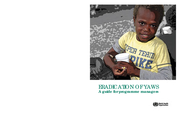
This document provides guidance for countries on how to implement activities to achieve the interruption of yaws transmission. It is intended for use by national yaws eradication programmes, partner
...
s involved in the implementation of yaws eradication activities and WHO technical staff who provide technical support to countries in the eradication of yaws.
more
How the Greek reception system is failing to protect the most vulnerable people seeking asylum.
Greece and its EU partners are failing pregnant women, unaccompanied children, victims of torture or sexual violence
...
and other vulnerable people who seek protection in Europe. These people are being put at risk by flawed processes and chronic understaffing in EU ‘hotspot’ camps on the Greek islands. They do not receive adequate support from the authorities that are legally responsible for protecting them and are being abandoned in overcrowded camps in squalid conditions. Many people live in unheated tents and do not have sufficient access to washing facilities and toilets, and winter is only making their situation worse
more
2021 UNAIDS Global AIDS Update. UNAIDS report shows that people living with HIV face a double jeopardy, HIV and COVID-19, while key populations and children continue to be left behind in access to H
...
IV services
more
