
Filter
2980
Text search:
Ministry
of
Health
and
Population,
Health
service
Department.
Featured
235
1044
Language
2894
68
28
21
13
12
10
7
4
3
2
2
1
1
1
1
1
1
1
1
1
1
1
Document type
1821
444
312
174
130
47
23
22
4
1
1
1
Countries
175
140
131
111
100
89
88
74
73
71
67
63
61
61
58
56
38
38
35
34
32
28
27
26
25
25
25
24
22
22
21
21
19
19
17
16
15
13
13
12
12
11
11
10
10
10
10
10
10
9
9
9
8
8
8
8
8
8
8
7
7
7
7
6
5
5
5
4
4
4
4
4
3
3
3
3
3
3
3
2
2
2
2
2
2
2
2
2
2
2
2
2
2
2
2
2
2
2
1
1
1
1
1
1
1
1
1
1
1
1
1
1
1
1
1
1
1
1
1
1
1
1
1
1
1
1
1
1
1
1
1
1
1
Authors & Publishers
378
104
95
84
78
57
46
42
30
26
24
22
19
17
17
16
15
15
15
14
14
14
13
13
13
13
12
12
11
11
11
10
10
10
10
10
9
9
9
9
9
9
8
8
8
8
8
8
8
8
7
7
7
7
7
7
7
7
7
6
6
6
6
6
6
6
6
6
6
6
5
5
5
5
5
5
5
5
5
5
5
5
5
5
5
4
4
4
4
4
4
4
4
4
4
4
4
4
4
4
4
4
4
4
4
4
4
4
4
4
4
4
4
4
4
4
4
4
4
4
4
4
4
4
4
4
4
4
4
4
3
3
3
3
3
3
3
3
3
3
3
3
3
3
3
3
3
3
3
3
3
3
3
3
3
3
3
3
3
3
3
3
3
3
3
3
3
3
3
3
3
3
3
3
3
3
3
3
3
3
3
3
3
3
3
3
3
3
2
2
2
2
2
2
2
2
2
2
2
2
2
2
2
2
2
2
2
2
2
2
2
2
2
2
2
2
2
2
2
2
2
2
2
2
2
2
2
2
2
2
2
2
2
2
2
2
2
2
2
2
2
2
2
2
2
2
2
2
2
2
2
2
2
2
2
2
2
2
2
2
2
2
2
2
2
2
2
2
2
2
2
2
2
2
2
2
2
2
2
2
2
2
2
2
2
2
2
2
2
2
2
2
2
2
2
2
2
2
2
2
2
2
2
2
2
2
2
2
2
2
2
2
2
2
2
2
2
2
2
2
2
2
2
2
2
2
2
2
2
2
2
2
2
2
2
2
2
2
2
2
2
2
2
2
2
2
2
2
2
2
2
2
2
2
2
2
2
2
1
1
1
1
1
1
1
1
1
1
1
1
1
1
1
1
1
1
1
1
1
1
1
1
1
1
1
1
1
1
1
1
1
1
1
1
1
1
1
1
1
1
1
1
1
1
1
1
1
1
1
1
1
1
1
1
1
1
1
1
1
1
1
1
1
1
1
1
1
1
1
1
1
1
1
1
1
1
1
1
1
1
1
1
1
1
1
1
1
1
1
1
1
1
1
1
1
1
1
1
1
1
1
1
1
1
1
1
1
1
1
1
1
1
1
1
1
1
1
1
1
1
1
1
1
1
1
1
1
1
1
1
1
1
1
1
1
1
1
1
1
1
1
1
1
1
1
1
1
1
1
1
1
1
1
1
1
1
1
1
1
1
1
1
1
1
1
1
1
1
1
1
1
1
1
1
1
1
1
1
1
1
1
1
1
1
1
1
1
1
1
1
1
1
1
1
1
1
1
1
1
1
1
1
1
1
1
1
1
1
1
1
1
1
1
1
1
1
1
1
1
1
1
1
1
1
1
1
1
1
1
1
1
1
1
1
1
1
1
1
1
1
1
1
1
1
1
1
1
1
1
1
1
1
1
1
1
1
1
1
1
1
1
1
1
1
1
1
1
1
1
1
1
1
1
1
1
1
1
1
1
1
1
1
1
1
1
1
1
1
1
1
1
1
1
1
1
1
1
1
1
1
1
1
1
1
1
1
1
1
1
1
1
1
1
1
1
1
1
1
1
1
1
1
1
1
1
1
1
1
1
1
1
1
1
1
1
1
1
1
1
1
1
1
1
1
1
1
1
1
1
1
1
1
1
1
1
1
1
1
1
1
1
1
1
1
1
1
1
1
1
1
1
1
1
1
1
1
1
1
1
1
1
1
1
1
1
1
1
1
1
1
1
1
1
1
1
1
1
1
1
1
1
1
1
1
1
1
1
1
1
1
1
1
1
1
1
1
1
1
1
1
1
1
1
1
1
1
1
1
1
1
1
1
1
1
1
1
1
1
1
1
1
1
1
1
1
1
1
1
1
1
1
1
1
1
1
1
1
1
1
1
1
1
1
1
1
1
1
1
1
1
1
1
1
1
1
1
1
1
1
1
1
1
1
1
1
1
1
1
1
1
1
1
1
1
1
1
1
1
1
1
1
1
1
1
1
1
1
1
1
1
1
1
1
1
1
1
1
1
1
1
1
1
1
1
1
1
1
1
1
1
1
1
1
1
1
1
1
1
1
1
1
1
1
1
1
1
1
1
1
1
1
1
1
1
1
1
1
1
1
1
1
1
1
1
1
1
1
1
1
1
1
1
1
1
1
1
1
1
1
1
1
1
1
1
1
1
1
1
1
1
1
1
1
1
1
1
1
1
1
1
1
1
1
1
1
1
1
1
1
1
1
1
1
1
1
1
1
1
1
1
1
1
1
1
1
1
1
1
1
1
1
1
1
1
1
1
1
1
1
1
1
1
1
1
1
1
1
1
1
1
1
1
1
1
1
1
1
1
1
1
1
1
1
1
1
1
1
1
1
1
1
1
1
1
1
1
1
1
1
1
1
1
1
1
1
1
1
1
1
1
1
1
1
1
1
1
1
1
1
1
1
1
1
1
1
1
1
1
1
1
1
1
1
1
1
1
1
1
1
1
1
1
1
1
1
1
1
1
1
1
1
1
1
1
1
1
1
1
1
1
1
1
1
1
1
1
1
1
1
1
1
1
1
1
1
1
1
1
1
1
1
1
1
1
1
1
1
1
1
1
1
1
1
1
1
1
1
1
1
1
1
1
1
1
1
1
1
1
1
1
1
1
1
1
1
1
1
1
1
1
1
1
1
1
1
1
1
1
1
1
1
1
1
1
1
1
1
1
1
1
1
1
1
1
1
1
1
1
1
1
1
1
1
1
1
1
1
1
1
1
1
1
1
1
1
1
1
1
1
1
1
1
1
1
1
1
1
1
1
1
1
1
1
1
1
1
1
1
1
1
1
1
1
1
1
1
1
1
1
1
1
1
1
1
1
1
1
1
1
1
1
1
1
1
1
1
1
1
1
1
1
1
1
1
1
1
1
1
1
1
1
1
1
1
1
1
1
1
1
1
1
1
1
1
1
1
1
1
1
1
1
1
1
1
1
1
1
1
1
1
1
1
1
1
1
1
1
1
1
1
1
1
1
1
1
1
1
1
1
1
1
1
1
1
1
1
1
1
1
1
1
1
1
1
1
1
1
1
1
1
1
1
1
1
1
1
1
1
1
1
1
1
1
1
1
1
1
1
1
1
1
1
1
1
1
1
1
1
1
1
1
1
1
1
1
1
1
1
1
1
1
1
1
1
1
1
1
1
1
1
1
1
1
1
1
1
1
1
1
1
1
1
1
1
1
1
1
1
1
1
1
1
1
1
1
1
1
1
1
1
1
1
1
1
1
1
1
1
1
1
1
1
1
1
1
1
1
1
1
1
1
1
1
1
1
1
1
1
1
1
1
1
1
1
1
1
1
1
1
1
1
1
1
1
1
1
1
1
1
1
1
1
1
1
1
1
1
1
1
1
1
1
1
1
1
1
1
1
1
1
1
1
1
1
1
1
1
1
1
1
1
1
1
1
1
1
1
1
1
1
1
1
1
1
1
1
1
1
1
1
1
1
1
1
1
1
1
1
1
1
1
1
1
1
1
1
1
1
1
1
1
1
1
1
1
1
1
1
1
1
1
1
1
1
1
1
1
1
1
1
1
1
1
1
1
1
1
1
1
1
1
1
1
1
1
1
1
1
1
1
1
1
1
1
1
1
1
1
1
1
1
1
1
1
1
1
1
1
1
1
1
1
1
1
1
1
1
1
1
1
1
1
1
1
1
1
1
1
1
1
1
1
1
1
1
1
1
1
1
1
1
1
1
1
1
1
1
1
1
1
1
1
1
1
1
1
1
1
1
1
1
1
1
1
1
1
1
1
1
1
1
1
1
1
1
1
1
1
1
1
1
1
1
1
1
1
1
1
1
1
1
1
1
1
1
1
1
1
1
1
1
1
1
1
1
1
1
1
1
1
1
1
1
1
1
1
1
1
1
1
1
1
1
1
1
1
1
1
1
1
1
1
1
1
1
1
1
1
1
1
1
1
1
1
1
1
1
1
1
1
1
1
1
1
1
1
1
1
1
1
1
1
1
1
1
1
1
1
1
1
1
1
1
1
1
1
1
1
1
1
1
1
1
1
1
1
1
1
1
1
1
1
1
1
1
1
1
1
1
1
1
1
1
1
1
1
1
1
1
1
1
1
1
1
1
1
1
1
1
1
1
1
1
1
1
1
1
1
1
1
1
1
1
1
1
1
1
1
1
1
1
1
1
1
1
1
1
1
1
1
1
1
1
1
1
1
1
1
1
1
1
1
1
1
1
1
1
1
1
1
1
1
1
1
1
1
1
1
1
1
1
1
1
1
1
1
1
1
1
1
1
1
1
1
1
1
1
1
1
1
1
1
1
1
1
1
1
1
1
1
1
1
1
1
1
1
1
1
1
1
1
1
1
1
1
1
1
1
1
1
1
1
1
1
1
1
1
1
1
1
1
1
1
1
1
1
1
1
1
1
1
1
1
1
1
1
1
1
1
1
1
1
1
1
1
1
1
1
1
1
1
1
1
1
1
1
1
1
1
1
1
1
1
1
1
1
1
1
1
1
1
1
1
1
1
1
1
1
1
1
1
1
1
1
1
1
1
1
1
1
1
1
1
1
1
1
1
1
1
1
1
1
1
1
1
1
1
1
1
1
1
1
1
1
1
1
1
1
1
1
1
1
1
1
1
1
1
1
1
1
1
1
1
1
1
1
1
1
1
1
1
1
1
1
1
1
1
1
1
1
1
1
1
1
1
1
1
1
1
1
1
1
1
1
1
1
1
1
1
1
1
1
1
1
1
1
1
1
1
1
1
1
1
1
1
1
1
1
1
1
1
1
1
1
1
1
1
1
1
1
1
1
1
1
1
1
1
1
1
1
1
1
1
1
1
1
1
1
1
1
1
1
1
1
1
1
1
1
1
1
1
1
1
1
1
1
1
1
1
1
1
1
1
1
1
1
1
1
1
1
1
1
1
1
1
1
1
1
1
1
1
1
1
1
1
1
1
1
1
1
1
1
1
1
1
1
1
1
1
1
1
1
1
1
1
1
1
1
1
1
1
1
1
1
1
1
1
1
1
1
1
1
1
1
1
1
1
1
1
1
1
1
1
1
1
1
1
1
1
1
1
1
1
1
1
1
1
1
1
1
1
1
1
1
1
1
1
1
1
1
1
1
1
1
1
1
1
1
1
1
1
1
1
1
1
1
1
1
1
1
1
1
1
1
1
1
1
1
1
1
1
1
1
1
1
1
1
1
1
1
1
1
1
1
1
1
1
1
1
1
1
1
1
1
1
1
1
1
1
1
1
1
1
1
1
1
1
1
1
1
1
1
1
1
1
1
1
1
1
1
1
1
1
1
1
1
1
1
1
1
1
1
1
1
1
1
1
1
1
1
1
1
1
1
1
1
1
1
1
1
1
1
1
1
1
1
1
1
1
1
1
1
1
1
1
1
1
1
1
1
1
1
1
1
1
1
1
1
1
1
1
1
1
1
1
1
1
1
1
1
1
1
1
1
1
1
1
1
1
1
1
1
1
1
1
1
1
1
1
1
1
1
1
1
1
1
1
1
1
1
1
1
1
1
1
1
Publication Years
722
1962
286
9
1
Category
1545
178
167
157
140
47
15
Toolboxes
207
142
141
136
84
77
74
71
70
62
62
54
53
52
42
40
39
37
34
32
12
10
9
8
7
4
3 February 2021
Vaccine- and vaccination-related crises require a communication response that is different from the communication strategies used to promote the benefits and importance
...
of vaccines in general. This document presents the technical guidance needed to develop a communication plan that is appropriate for managing crises related to vaccine safety. This guidance will be useful for managers in the areas of immunization and vaccine and vaccination safety. They will also help preparedness and response teams working in safety crises to optimize their communication plans in order to regain, maintain, or strengthen trust in vaccines, vaccination, and immunization programs in general.
more

This annual report highlights the work of the WHO from January to June 2021 ( December 2021). The activities featured herein are by no means exhausted but implemented with technical and financial su
...
pport through WHO in Nigeria; facilitated by its presence at all levels of governance (national, state, local government, and wards).
more

Antimicrobial resistance (AMR) is an important public health concern shared by developed and developing countries. In developing countries the burden of
...
infectious diseases is greater and exacerbated by limited access to, and availability and affordability of, antimicrobials required to treat infections caused by AMR organisms. With drugs not listed on the essential drugs list (EDL), problems of increased morbidity, costs of extended hospitalisation and mortality are extremely serious. The problem of susceptibility to and spread of infections caused by multidrug-resistant (MDR) infectious agents is fuelled by factors such as limited access to clean water and sanitation to ensure personal hygiene, malnutrition, and the HIV/TB epidemic.
more
Emergency response framework, 2nd ed.
recommended
The purpose of this Emergency Response Framework (ERF) is to clarify WHO’s roles and responsibilities in this regard and to provide a common appr
...
oach for its work in emergencies. Ultimately, the ERF requires WHO to act with urgency and predictability to best serve and be accountable to populations affected by emergencies.
more

One of the first steps in developing a multisectoral action plan (MSAP) is to use a situation analysis to provide a comprehensive assessment of the healt
...
h needs, prevailing risks and the context of the area to which the plan will apply. This will help countries, regions, provinces or cities intending to create a multisectoral action plan to align with the global commitments on targeting the four major NCDs: cardiovascular disease, diabetes, cancer and chronic respiratory diseases.
more
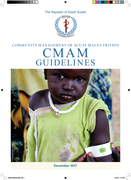
Maternal and child malnutrition is a significant public health problem in South Sudan. Among children aged 6-59 months, 31% are stunted, 28% are underweight,
...
and nearly 23% are acutely malnourished of which 13% are estimated to suffer from moderate acute malnutrition and 10% from severe acute malnutrition.
Overall, South Sudan’s nutrition situation is worrisome, with GAM persistently above the emergency threshold in the Greater Upper Nile, Northern Bahr el Ghazal and Warrap states. Though data on micronutrient deficiencies is scanty, Vitamin A Supplementation (VAS) among children 6-59 months stood at only 2.6% in 2010, showing low uptake (SHHS, 2010). This is against a backdrop of high morbidity levels and a negligible proportion of children 6 to 23 months receiving at least the recommended minimum acceptable diet. In order to ensure optimal child growth, it is essential to ensure good nutrition and basic health care from pregnancy through two years of age (the first 1000 days). more
Overall, South Sudan’s nutrition situation is worrisome, with GAM persistently above the emergency threshold in the Greater Upper Nile, Northern Bahr el Ghazal and Warrap states. Though data on micronutrient deficiencies is scanty, Vitamin A Supplementation (VAS) among children 6-59 months stood at only 2.6% in 2010, showing low uptake (SHHS, 2010). This is against a backdrop of high morbidity levels and a negligible proportion of children 6 to 23 months receiving at least the recommended minimum acceptable diet. In order to ensure optimal child growth, it is essential to ensure good nutrition and basic health care from pregnancy through two years of age (the first 1000 days). more
Fact Book on WHO Level I and Level II monitoring indicators - To monitor the progress of efforts to improve the global medicines situation, WHO has developed a system
...
of indicators that measure important aspects of a country’s pharmaceutical situation. Level 1 indicators measure the existence and performance of key national pharmaceutical structures and processes. Level II indicators measure key outcomes of these structures and processes in the areas of access, product quality and rational use. These indicators can be used to assess progress over time; to compare situations between countries; and to reassess and prioritize efforts based on the results.
This Fact Book gives the results of the assessment of Level I indicators conducted in 2003 and of Level II indicator surveys conducted between 2002 and 2004
more
This document seeks to help health communication professionals working on the topic of immunization more effectively communicate about Events Supposedly Attributed to Vaccination
...
and Immunization (ESAVI) by building trust in National Immunization Programs, understanding risk perceptions related to vaccination, and responding to false information related to vaccination. It includes practical dos and don’ts regarding risk communication and community engagement processes and principles, messaging, risk perceptions, handling false information, collaborating with partners, and pharmacovigilance, as well as real-world examples.
more

DHS Working Papers No. 69
This paper uses data from the three Indian National Family Health Surveys (1992-93, 1998-99, 2005-06) to examine how the relationship between household wealth and chil ... d mortality evolved during a time of significant economic change in India. The main predictor is a new measure of household wealth that captures changes in wealth over time. Outcomes include neonatal mortality, postneonatal mortality, child mortality, and under-five mortality. Multivariate analysis is conducted at the national, urban, rural, and regional levels.
Results indicate that the overall relationship between household wealth and mortality weakened over time, as evidenced by the coefficients for under-five mortality at the national level. more
This paper uses data from the three Indian National Family Health Surveys (1992-93, 1998-99, 2005-06) to examine how the relationship between household wealth and chil ... d mortality evolved during a time of significant economic change in India. The main predictor is a new measure of household wealth that captures changes in wealth over time. Outcomes include neonatal mortality, postneonatal mortality, child mortality, and under-five mortality. Multivariate analysis is conducted at the national, urban, rural, and regional levels.
Results indicate that the overall relationship between household wealth and mortality weakened over time, as evidenced by the coefficients for under-five mortality at the national level. more
The availability of controlled medicines is crucial for patients requiring palliative care, pain relief and symptom management. Many individuals worldwide, especially in low-
...
and middle-income countries, continue to experience limited access to these essential medicines. Enhancing access to controlled medicines is paramount in promoting universal health coverage. This report offers a detailed situational analysis of policies and programmes aimed at improving access to affordable, high-quality controlled medicines for pain management in the WHO South-East Asia Region. The report identifies the existing barriers, challenges and possible solutions to facilitate access to such medicines across all Member States.
more

As the Americas undergo profound demographic change and there are more persons aged 65 years or older than children younger than 5 years, it is crucial to recognize that national immunization programs must be redesigned to ensure comprehensive prote
...
ction for individuals across the lifespan. By adopting a life course approach (LCA) to immunization, vaccination programs can be tailored to close immunity gaps at different stages of life. The life course approach foresees the establishment of multiple strategies to reduce missed opportunities for vaccination according to age group. This technical document explains the key concepts of the LCA with a focus on immunization by vaccination, as well as the underlying biological mechanisms that require the application different vaccines at different life stages according to changes to the immune system and in the epidemiological situation of a community.
more

This year marked the beginning of the WHO biennium 2016-2017 action plan; this annual report highlights WHO’s key achievements in 2016
It also documents the extraordinary efforts by a broad coalition o
...
f government ministries, municipalities, international agencies, community groups, women’s organizations, religious and traditional leaders, media, private sector and donors towards restoration and improving health indicators.
more

Lessons and best practices in empowering pastoralist communities to prevent HIV infection and reduce the impact of AIDS in Ethiopia. Briefing Paper
...
more
The aim of the framework is to provide guidance to Member States and partners on region-specific priority actions towards the goals, targets and mi
...
lestones of the GTS. The central pillar of the framework is the adoption of programme phasing and transitioning, aimed at facilitating a tailored approach to malaria control/elimination. This is in response to the increasing heterogeneity of malaria epidemiology among and within countries of the region.
more
Prevention, early diagnosis, and effective treatment are essential for the control and elimination of Neisseria gonorrhoeae as a public
...
health problem. Currently, in Latin America and the Caribbean, treatment for gonorrhea infection is largely empiric and based on clinical diagnosis. In the Americas, the high burden of new N. gonorrhoeae infections (estimated at 11 million new cases a year), the complexity of the disease epidemiology, and in many countries the limited resources, make it difficult to fully understand the burden of disease and the burden of antimicrobial resistance (AMR) in N. gonorrhoeae.
PAHO has developed this document to facilitate the navigation of available guidance and recommendations for N. gonorrhoeae AMR surveillance by public health and health care professionals, at the national and subnational levels, involved in designing, implementing, and/or strengthening AMR surveillance of N. gonorrhoeae and overall surveillance of sexually transmitted infections.
more
The WHO laboratory biosecurity guidance follows and complements the revision of the Laboratory biosafety manual, fourth edition and provides princi
...
ples and measures to prevent lapses and incidents throughout the whole value chain of handling high-consequence biological material, technology and information. The document shares global best practice and covers the biosecurity part of the biological risk management lifecycle, starting from collection, transportation, storage and experiment, and in specific context such as every type of biomedical laboratory, research activities, repository and biobank. It also provides key considerations and best practices for institutional, national and international levels, including regulatory oversight.
more

Three classess of tests are now recommended in the latest consolidated guideles on tests for tuberculosis infection. It includes for the first-time a new class of Mycobacterium tuberculosis antigen-
...
based skin tests (TBSTs), and the two existing classes of tests: the tuberculin skin test (TST) and the interferon-gamma release assays (IGRAs).
IGRAs and TBSTs use Mycobacterium tuberculosis complex specific antigens and represent a significant advancement to TST which has been used for over half a century.
more
This toolkit is a "how to" guide for developing, implementing and evaluating a multisectoral action plan for prevention and control of NCDs. It is
...
targeted at policy-makers, planners and programme managers, and is intended to help countries, provinces and cities meet the requirements for achieving global and national NCD targets and the Sustainable Development Goals. The toolkit takes the user through a series of actions related to the development of a multisectoral action plan ("MSAP development actions"), and provides forms and a template framework for users to complete as they undertake these actions. Developing a multisectoral action plan involves establishing health needs and engaging relevant stakeholders before determining the actions to take, identifying and prioritizing interventions, deciding on ways to address NCDs while establishing support and resources for prevention and control, and evaluating progress in implementing the plan.
more
This toolkit is a "how to" guide for developing, implementing and evaluating a multisectoral action plan for prevention and control of NCDs. It is
...
targeted at policy-makers, planners and programme managers, and is intended to help countries, provinces and cities meet the requirements for achieving global and national NCD targets and the Sustainable Development Goals. The toolkit takes the user through a series of actions related to the development of a multisectoral action plan ("MSAP development actions"), and provides forms and a template framework for users to complete as they undertake these actions. Developing a multisectoral action plan involves establishing health needs and engaging relevant stakeholders before determining the actions to take, identifying and prioritizing interventions, deciding on ways to address NCDs while establishing support and resources for prevention and control, and evaluating progress in implementing the plan.
more

The 2023 meeting of the WHO Clinical Consortium on Healthy Ageing (CCHA) was the group’s ninth gathering and took place in Geneva 5–7 December 2023. The meeting was structured around seven panel
...
s, with a series of technical presentations, plenary discussions and group work, and a final session outlining the work programme for 2024.
more
