
Filter
3118
Text search:
national
recovery
Featured
320
814
Language
2998
95
70
46
43
27
20
10
7
7
7
5
4
4
4
4
4
4
3
3
3
3
3
3
3
3
3
2
2
2
2
2
2
2
2
2
2
2
2
2
1
1
1
1
1
1
1
1
1
1
1
1
1
1
1
1
Document type
1580
582
396
220
174
68
42
38
9
4
3
2
Countries
169
121
114
100
78
67
56
49
48
46
45
45
44
43
43
42
37
37
36
35
31
31
30
27
26
26
23
23
22
22
20
20
19
19
16
14
14
13
13
13
12
12
11
11
10
10
10
9
9
9
9
9
8
8
7
7
7
7
7
6
6
6
5
5
5
5
4
4
4
4
4
4
4
4
4
4
3
3
3
3
3
3
3
3
3
3
3
3
3
3
3
2
2
2
2
2
2
2
2
2
2
2
2
2
2
2
1
1
1
1
1
1
1
1
1
1
1
1
1
1
1
1
1
1
1
1
1
1
1
1
1
Authors & Publishers
407
105
105
69
69
60
57
48
37
34
21
19
19
18
18
18
17
17
16
15
15
14
13
13
13
13
12
12
12
11
11
10
10
10
10
10
10
10
9
9
9
9
9
8
8
8
8
8
8
8
8
7
7
7
7
7
7
7
7
7
7
7
6
6
6
6
6
6
6
6
6
6
6
5
5
5
5
5
5
5
5
5
5
5
5
5
5
5
5
5
5
5
4
4
4
4
4
4
4
4
4
4
4
4
4
4
4
4
4
4
4
4
4
4
4
4
4
4
4
4
4
4
4
4
4
4
4
4
4
4
4
4
4
4
4
3
3
3
3
3
3
3
3
3
3
3
3
3
3
3
3
3
3
3
3
3
3
3
3
3
3
3
3
3
3
3
3
3
3
3
3
3
3
3
3
3
3
3
3
3
3
3
3
3
3
3
3
2
2
2
2
2
2
2
2
2
2
2
2
2
2
2
2
2
2
2
2
2
2
2
2
2
2
2
2
2
2
2
2
2
2
2
2
2
2
2
2
2
2
2
2
2
2
2
2
2
2
2
2
2
2
2
2
2
2
2
2
2
2
2
2
2
2
2
2
2
2
2
2
2
2
2
2
2
2
2
2
2
2
2
2
2
2
2
2
2
2
2
2
2
2
2
2
2
2
2
2
2
2
2
2
2
2
2
2
2
2
2
2
2
2
2
2
2
2
2
2
2
2
2
2
2
2
2
2
2
2
2
2
2
2
2
2
2
2
2
2
2
2
2
2
2
2
2
2
2
2
2
2
2
2
2
2
2
2
2
2
2
2
2
2
2
2
2
2
2
2
2
2
2
2
2
1
1
1
1
1
1
1
1
1
1
1
1
1
1
1
1
1
1
1
1
1
1
1
1
1
1
1
1
1
1
1
1
1
1
1
1
1
1
1
1
1
1
1
1
1
1
1
1
1
1
1
1
1
1
1
1
1
1
1
1
1
1
1
1
1
1
1
1
1
1
1
1
1
1
1
1
1
1
1
1
1
1
1
1
1
1
1
1
1
1
1
1
1
1
1
1
1
1
1
1
1
1
1
1
1
1
1
1
1
1
1
1
1
1
1
1
1
1
1
1
1
1
1
1
1
1
1
1
1
1
1
1
1
1
1
1
1
1
1
1
1
1
1
1
1
1
1
1
1
1
1
1
1
1
1
1
1
1
1
1
1
1
1
1
1
1
1
1
1
1
1
1
1
1
1
1
1
1
1
1
1
1
1
1
1
1
1
1
1
1
1
1
1
1
1
1
1
1
1
1
1
1
1
1
1
1
1
1
1
1
1
1
1
1
1
1
1
1
1
1
1
1
1
1
1
1
1
1
1
1
1
1
1
1
1
1
1
1
1
1
1
1
1
1
1
1
1
1
1
1
1
1
1
1
1
1
1
1
1
1
1
1
1
1
1
1
1
1
1
1
1
1
1
1
1
1
1
1
1
1
1
1
1
1
1
1
1
1
1
1
1
1
1
1
1
1
1
1
1
1
1
1
1
1
1
1
1
1
1
1
1
1
1
1
1
1
1
1
1
1
1
1
1
1
1
1
1
1
1
1
1
1
1
1
1
1
1
1
1
1
1
1
1
1
1
1
1
1
1
1
1
1
1
1
1
1
1
1
1
1
1
1
1
1
1
1
1
1
1
1
1
1
1
1
1
1
1
1
1
1
1
1
1
1
1
1
1
1
1
1
1
1
1
1
1
1
1
1
1
1
1
1
1
1
1
1
1
1
1
1
1
1
1
1
1
1
1
1
1
1
1
1
1
1
1
1
1
1
1
1
1
1
1
1
1
1
1
1
1
1
1
1
1
1
1
1
1
1
1
1
1
1
1
1
1
1
1
1
1
1
1
1
1
1
1
1
1
1
1
1
1
1
1
1
1
1
1
1
1
1
1
1
1
1
1
1
1
1
1
1
1
1
1
1
1
1
1
1
1
1
1
1
1
1
1
1
1
1
1
1
1
1
1
1
1
1
1
1
1
1
1
1
1
1
1
1
1
1
1
1
1
1
1
1
1
1
1
1
1
1
1
1
1
1
1
1
1
1
1
1
1
1
1
1
1
1
1
1
1
1
1
1
1
1
1
1
1
1
1
1
1
1
1
1
1
1
1
1
1
1
1
1
1
1
1
1
1
1
1
1
1
1
1
1
1
1
1
1
1
1
1
1
1
1
1
1
1
1
1
1
1
1
1
1
1
1
1
1
1
1
1
1
1
1
1
1
1
1
1
1
1
1
1
1
1
1
1
1
1
1
1
1
1
1
1
1
1
1
1
1
1
1
1
1
1
1
1
1
1
1
1
1
1
1
1
1
1
1
1
1
1
1
1
1
1
1
1
1
1
1
1
1
1
1
1
1
1
1
1
1
1
1
1
1
1
1
1
1
1
1
1
1
1
1
1
1
1
1
1
1
1
1
1
1
1
1
1
1
1
1
1
1
1
1
1
1
1
1
1
1
1
1
1
1
1
1
1
1
1
1
1
1
1
1
1
1
1
1
1
1
1
1
1
1
1
1
1
1
1
1
1
1
1
1
1
1
1
1
1
1
1
1
1
1
1
1
1
1
1
1
1
1
1
1
1
1
1
1
1
1
1
1
1
1
1
1
1
1
1
1
1
1
1
1
1
1
1
1
1
1
1
1
1
1
1
1
1
1
1
1
1
1
1
1
1
1
1
1
1
1
1
1
1
1
1
1
1
1
1
1
1
1
1
1
1
1
1
1
1
1
1
1
1
1
1
1
1
1
1
1
1
1
1
1
1
1
1
1
1
1
1
1
1
1
1
1
1
1
1
1
1
1
1
1
1
1
1
1
1
1
1
1
1
1
1
1
1
1
1
1
1
1
1
1
1
1
1
1
1
1
1
1
1
1
1
1
1
1
1
1
1
1
1
1
1
1
1
1
1
1
1
1
1
1
1
1
1
1
1
1
1
1
1
1
1
1
1
1
1
1
1
1
1
1
1
1
1
1
1
1
1
1
1
1
1
1
1
1
1
1
1
1
1
1
1
1
1
1
1
1
1
1
1
1
1
1
1
1
1
1
1
1
1
1
1
1
1
1
1
1
1
1
1
1
1
1
1
1
1
1
1
1
1
1
1
1
1
1
1
1
1
1
1
1
1
1
1
1
1
1
1
1
1
1
1
1
1
1
1
1
1
1
1
1
1
1
1
1
1
1
1
1
1
1
1
1
1
1
1
1
1
1
1
1
1
1
1
1
1
1
1
1
1
1
1
1
1
1
1
1
1
1
1
1
1
1
1
1
1
1
1
1
1
1
1
1
1
1
1
1
1
1
1
1
1
1
1
1
1
1
1
1
1
1
1
1
1
1
1
1
1
1
1
1
1
1
1
1
1
1
1
1
1
1
1
1
1
1
1
1
1
1
1
1
1
1
1
1
1
1
1
1
1
1
1
1
1
1
1
1
1
1
1
1
1
1
1
1
1
1
1
1
1
1
1
1
1
1
1
1
1
1
1
1
1
1
1
1
1
1
1
1
1
1
1
1
1
1
1
1
1
1
1
1
1
1
1
1
1
1
1
1
1
1
1
1
1
1
1
1
1
1
1
1
1
1
1
1
1
1
1
1
1
1
1
1
1
1
1
1
1
1
1
1
1
1
1
1
1
1
1
1
1
1
1
1
1
1
1
1
1
1
1
1
1
1
1
1
1
1
1
1
1
1
1
1
1
1
1
1
1
1
1
1
1
1
1
1
1
1
1
1
1
1
1
1
1
1
1
1
1
1
1
1
1
1
1
1
1
1
1
1
1
1
1
1
1
1
1
1
1
1
1
1
1
1
1
1
1
1
1
1
1
1
1
1
1
1
1
1
1
1
1
1
1
1
1
1
1
1
1
1
1
1
1
1
1
1
1
1
1
1
1
1
1
1
1
1
1
1
1
1
1
1
1
1
1
1
1
1
1
1
1
1
1
1
1
1
1
1
1
1
1
1
1
1
1
1
1
1
1
1
1
1
1
1
1
1
1
1
1
1
1
1
1
1
1
1
1
1
1
1
1
1
1
1
1
1
1
1
1
1
1
1
1
1
1
1
1
1
1
1
1
1
1
1
1
1
1
1
1
1
1
1
1
1
1
1
1
1
1
1
1
1
1
1
1
1
1
1
1
1
1
1
1
1
1
1
1
1
1
1
1
1
1
1
1
1
1
1
1
1
1
1
1
1
1
1
1
1
1
1
1
1
1
1
1
1
1
1
1
1
1
1
1
1
1
1
1
1
1
1
1
1
1
1
1
1
1
1
1
1
1
1
1
1
1
1
1
1
1
1
1
1
1
1
1
1
1
1
1
1
1
1
1
1
1
1
1
1
1
1
1
1
1
1
1
1
1
1
1
1
1
1
1
1
1
1
1
1
1
1
1
1
1
1
1
1
1
1
1
1
1
1
1
1
1
1
1
1
1
1
1
1
1
1
1
1
1
1
1
1
1
1
1
1
1
1
1
1
1
1
1
1
1
1
1
1
1
1
1
1
1
1
1
1
1
1
1
1
1
1
1
1
1
1
1
1
1
1
1
1
1
1
1
1
1
1
1
1
1
1
1
1
1
1
1
1
1
1
1
1
1
1
1
1
1
1
1
1
1
1
1
1
1
1
1
1
1
1
1
1
1
1
1
1
1
1
1
1
1
1
1
1
1
1
1
1
1
1
1
1
1
1
1
1
1
1
1
1
1
1
1
1
1
1
1
1
1
1
1
1
1
1
1
1
1
1
1
1
1
1
1
1
1
1
1
1
1
1
1
1
1
1
1
1
1
1
1
1
1
1
1
1
1
1
1
1
1
1
1
1
1
1
1
1
1
1
1
1
1
1
1
1
1
1
1
1
1
1
1
1
1
1
1
1
1
1
1
1
1
1
1
1
1
1
1
1
1
1
1
1
1
1
1
1
1
1
1
1
1
1
1
1
1
1
1
1
1
1
1
1
1
1
1
1
1
1
1
1
1
1
1
1
1
1
1
1
1
1
1
1
1
1
1
1
1
1
1
1
1
1
1
1
1
1
1
1
1
1
1
1
1
1
1
1
1
1
1
1
1
1
1
1
1
1
1
1
1
1
1
1
1
1
1
1
1
1
1
1
1
1
1
1
1
1
1
1
1
1
1
1
1
1
1
1
1
1
1
1
1
1
1
1
1
1
1
1
1
1
1
1
1
1
1
1
1
1
1
1
1
1
1
1
1
1
1
1
1
1
1
1
1
1
1
1
1
1
1
1
1
1
1
1
1
1
1
1
1
1
1
1
1
1
1
1
1
1
1
1
1
1
1
1
1
1
1
1
1
1
1
1
1
1
1
1
1
1
1
1
1
1
1
1
1
1
1
1
1
1
1
1
1
1
1
1
1
1
1
1
1
1
1
1
1
1
1
1
1
1
1
1
1
1
1
1
1
1
1
1
1
1
1
1
1
1
1
1
1
1
1
1
1
1
1
1
1
1
1
1
1
1
1
1
1
1
1
1
1
1
1
1
1
1
1
1
1
1
1
1
1
1
1
1
1
1
1
1
1
1
1
1
1
1
1
1
1
1
1
1
Publication Years
1094
1741
263
18
2
Category
1063
329
163
140
135
59
19
Toolboxes
404
370
174
166
153
121
96
90
89
60
57
56
52
51
50
44
42
39
26
24
20
20
17
9
8
8
1
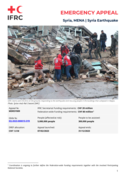
On 6 February at 4:17 am, a 7.8 degrees magnitude earthquake struck southern Turkey near Syria’s
northern border. The US Geological Survey said the earthquake was centered about 33 km (20 miles)
from Gaziantep, a major city and provincial capital. Tremors were felt as far away as Lebanon, Greece
...
,
Palestine, and the island of Cyprus. Another big earthquake was felt on the same day at around 1:24
pm local time, largely in the same affected areas. Aftershocks will continue to shake the area as fault
lines adjust to such a huge initial tremor. There’s even a risk—albeit a small one—of an aftershock
bigger than the original quake.
more

In one of his final essays, statesman and former United Nations secretary general Kofi Annan said, ‘Snakebite is the most important tropical disease you’ve never heard of’. Mr. Annan firmly believed that victims of snakebite envenoming should be recognised and afforded greater efforts at impro
...
ved prevention, treatment, and rehabilitation. During the last years of his life, he advocated strongly for the World Health Organisation (WHO) and the global community to give greater priority to this disease of poverty and its victims.
more
Presentation on WASH in Malawi

This bulletin focuses on the situation in Ukraine and several key refugee-receiving countries (Bulgaria, Czechia, Hungary, Poland, Republic of Moldova, Romania, and Slovakia), with the understanding that other countries in the European Region are also receiving Ukrainian refugees and WHO is pr
...
oviding technical support to them.
more

Rebuilding Liberia’s health system is crucial for improving the country’s overall health outcomes. This annual report highlights key achievements, challenges,and lessons learned in implementing programmes of technical cooperation with the Government of Liberia from January to December 2022. T
...
he key achievements are summarized under the thematic areas of Universal Health Coverage, Health Emergencies and Corporate and Enabling Support.
more
As a global community of +750 representatives of the world’s civil society, the C20 official Engagement Group of the G20 is submitting a list of policy priorities for the upcoming G20 Finance Ministers & Central Bank Governors meeting on July 18th and the G20 Extraordinary Sherpa Meeting on July 2
...
4th. The proposed recommendations take into account complimentary policy areas at the intersection of health and finance policymaking; including funding gaps, systemic, fiscal and financial priorities to put global finances at the service of global health.
more
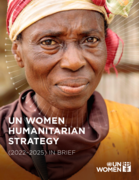
This publication provides an overview of UN Women’s commitments to the humanitarian community guided by the “UN Women strategic plan 2022–2025”. It highlights areas where UN Women has a unique advantage in advancing gender equality and the empowerment of women and girls across the humanitari
...
an–development–peace nexus, and in contributing to the Inter-Agency Standing Committee priorities, including localization and accountability to affected people.
The strategy adopts a two-pronged approach:
strengthening accountability towards gender commitments in coordination and implementation of UN-led humanitarian and refugee responses, and
strengthening comprehensive protection and livelihoods support to crisis-affected women and girls.
While taking these approaches, UN Women prioritizes amplifying women’s voices, leadership, and agency as a critical and enabling cross-cutting area.
more

In 2015 around 15 million people living with HIV were receiving antiretroviral treatment (ART) in sub–Saharan Africa. Sustained provision of ART, though both prudent and necessary, creates substantial long–term fiscal obligations for countries affected by HIV/ AIDS. As donor assistance for healt
...
h remains constrained, novel financing mechanisms are needed to augment funding domestic sources. We explore how Innovative Financing has been used to co–finance domestic HIV/AIDS responses. Based on analysis of non–health sectors, we identify innovative financing instruments that could be used in the HIV response.
more
To assess the impact of the COVID-19 pandemic on health and HIV expenditure, UNAIDS carried out a modelling study on fiscal space for health and HIV. From a sample of 28 countries, three countries—the Democratic Republic of the Congo, Jamaica, and Lesotho—were selected to capture health and HIV
...
expenditure impacts across countries with especially marked differences in burdens of disease (including HIV prevalence), HIV donor dependency, level of economic development, and geographic location. While the three-country sample is too small to permit findings to be generalized to other countries, these analyses are useful for informing UNAIDS’ work to identify some policy positions to minimize the COVID-19 pandemic’s impact on the HIV response.
more

The response to a cholera outbreak must focus on limiting mortality and reducing the spread of the disease. It should be comprehensive and multisectoral, including epidemiology, case management, water, sanitation and hygiene, logistics, community engagement and risk communication. All efforts must b
...
e well coordinated to ensure a rapid and effective response across sectors.
This document provides a framework for detecting and monitoring cholera outbreaks and organizing the response. It also includes a short section linking outbreak response to both preparedness and long-term prevention activities.
more

This paper is motivated by the global spread of the coronavirus referred to as COVID-19 and its efect on Sub-Saharan African (SSA) economies. The International Monetary Fund (IMF) has alluded to the COVID-19 not only afecting the global health but also trade and tourism, commodity prices, and fnanci
...
al conditions that calls for an additional policy response to support demand and ensure an adequate supply of credit
more

The International Rescue Committee (IRC) is a leading humanitarian agency dedicated to helping people whose lives have been shattered by conflict and disaster to survive, recover, and gain control of their future. Health comprises nearly half of IRC’s program portfolio globally and encompasses thr
...
ee sectors: 1) Primary Health (including child health, sexual and reproductive health and rights, and mental health); 2) Nutrition; and 3) Environmental Health. IRC health programming across its portfolio, in terms of the size and breadth, responds to significant needs in crisis affected settings, improving health and wellbeing while reducing causes of ill-health.
This five-year Health Strategy sharpens our focus on where we can have the most impact. It guides our efforts in planning, technical assistance, business development, advocacy, and internal and external collaboration. Through this strategy, we will invest and grow in areas that will help us achieve high impact at scale for our clients. For the next five years these priorities will include: Nutrition; Immunization: Infectious Disease Prevention and Control; Last Mile Delivery of Primary Health Care: Clean Water.
Our strategy aligns with Strategy 100 (S100) and Strategy Action Plans (SAPs). It lays out how IRC, through health, nutrition, and Environmental Health (EH) programming, will advance the IRC’s S100 ambitions, respond to global trends, and capitalize on our value add. The strategy will be complemented by delivery plans that detail investments, actions, and roles and responsibilities to advance our priorities. At the end of FY24, we will take stock of the implementation of the strategy, measure progress towards achieving our goals, and review if it continues to be fit for purpose.
more
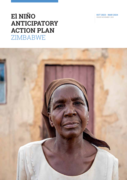
Zimbabwe has, over the years, grappled with the repercussions of the climate crisis, which have led to erratic rainfall patterns characterized by either severe floods or prolonged periods of drought. The nation has experienced a concerning trend of numerous regions reporting rainfall levels below th
...
e usual during what should be "normal" years. The upcoming El Niño event forecasted for 2023-2024, which is associated with drier-than-average rainfall, is poised to exacerbate this predicament. It is expected to intensify aridity, significantly impacting food and animal production across many areas, including those typically classified as "dry regions."
more
This article analyzes the impact of the COVID-19 pandemic on foreign aid. Using examples from Canadian foreign aid, it argues that, despite the terrible toll it is exacting, the crisis has accelerated some significant positive pre-existing trends, both by destabilizing the perception of aid as flowi
...
ng essentially from the Global North to Global South and by reinforcing awareness of the importance of joint efforts for global public goods and humanitarian assistance, as well as debt relief. However, it has also reinforced potentially harmful self-interested justifications for aid, which could align assistance more with donors’ priorities than the needs of the poor
more
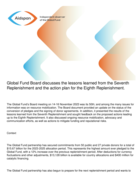
The Global Fund’s Board meeting on 14-16 November 2023 was its 50th; and among the many issues for
information was on resource mobilization. The Board document provided an update on the status of the
conversion of pledges and the signing of donor agreements. In addition, it presented the results
...
of the
lessons learned from the Seventh Replenishment and sought feedback on the proposed actions leading up to the Eighth Replenishment. It also discussed ongoing resource mobilization, advocacy and communication efforts, as well as actions to mitigate funding and reputational risks.
more

Since the discovery of insulin nearly 100 years ago, advances in diabetes treatments and therapies have transformed the lives of people
with diabetes (PwD), notably reducing the daily burden of its management.
Newer technologies, including those driven by artificial intelligence, have the potentia
...
l to further improve the quality of life of PwD and help
identify and diagnose people at risk of developing Type 2 diabetes and diabetes-related complications early. However, medical and technological advances alone are not enough to fix the diabetes challenge. It is also critical to acknowledge the complexity and the seriousness of diabetes, its impact on the quality of life and well-being of over 32 million PwD in the EU and the financial burden it represents for health systems and society at large.
more

The availability, prices and affordability of essential medicines in Malawi: A cross-sectional study
The Malawian government recently introduced cost-covering consultation fees for self-referral patients in tertiary public hospitals. Previously, patients received medicines free of charge in government-owned health facilities, but must pay elsewhere. Before the government implements a payment policy
...
in other areas of health care, it is important to investigate the prices, affordability and availability of essential medicines in Malawi.
more

This fourth annual report monitors global progress towards the 2023 target for global elimination of industrially produced trans-fatty acids (TFA), highlighting achievements during the past year (October 2021 – September 2022). Countries are responding to the World Health Organization (WHO) call t
...
o action by putting into place best-practice TFA policies. Mandatory TFA policies are currently in effect for 3.4 billion people in 60 countries (43% of the world population); of these, 43 countries have best-practice policies in effect, covering 2.8 billion people (36% of the world population).
Over the past year, several additional countries took action to eliminate industrially produced TFA: best-practice policies came into effect in India in January 2022, Uruguay in May 2022 and Oman in July 2022. Best-practice policies were passed in Bangladesh in November 2021 (to come into effect in December 2022) and in Ukraine in September 2020 (to come into effect in October 2023), best-practice TFA policies are projected to pass soon in Mexico, Nigeria and Sri Lanka.
more

Several challenges face asthma management in Egypt, including the high percentage of uncontrolled patients, inadequate compliance, and overuse of short-acting beta-agonists (SABAs) leading to increased asthma-related morbidity and mortality. In this regard, the recent Global Initiative for Asthma (G
...
INA) recommendations included inhaled corticosteroids containing therapy for mild asthma. Local healthcare systems and healthcare professionals (HCPs) often experience practical challenges when implementing global guidelines.
more

The active participation and engagement of health and care workers (HCWs) in health emergency preparedness, readiness and response is crucial to support risk communication, community engagement and infodemic management (RCCE-IM) interventions during emergencies. HCWs hold unique position
...
s in society – repeatedly being identified among the main influencers of people’s behaviours: they are one of the most trusted sources of health information and advice in communities and role models for the acceptance and uptake of protective measures during health emergencies. On the frontline, HCWs have valuable insights and knowledge that can be harnessed to support health emergencies across the entire emergency cycle. Between October and December 2023, the WHO Regional Office for Europe interviewed key informants on strategies and experiences to meaningfully engage HCWs during emergencies
more
