
Filter
2521
Text search:
basic
statistics
Featured
132
888
Language
2460
31
23
23
12
7
7
5
4
2
2
1
1
1
1
1
1
1
1
1
Document type
1687
439
137
90
82
26
25
22
8
2
2
1
Countries
104
89
81
77
77
75
74
72
71
66
64
59
55
53
51
51
46
44
37
37
34
34
32
30
29
28
27
25
25
23
23
21
18
18
16
15
15
12
11
10
10
10
9
9
9
9
8
8
8
8
7
7
7
7
7
6
6
6
5
5
5
4
4
4
4
4
4
4
3
3
3
3
3
3
3
3
3
3
3
2
2
2
2
2
2
2
2
2
2
2
2
2
1
1
1
1
1
1
1
1
1
1
1
1
1
1
1
1
1
1
1
1
1
1
1
1
1
1
1
1
1
1
1
1
1
1
1
Authors & Publishers
186
84
80
68
63
48
47
30
28
20
18
17
16
14
12
12
12
12
11
11
11
10
10
10
10
10
10
10
10
9
9
9
9
9
8
8
8
8
8
7
7
7
7
7
7
7
7
6
6
6
6
6
6
6
6
6
6
6
6
6
6
5
5
5
5
5
5
5
5
5
5
5
4
4
4
4
4
4
4
4
4
4
4
4
4
4
4
4
4
4
4
4
4
4
4
4
4
4
4
3
3
3
3
3
3
3
3
3
3
3
3
3
3
3
3
3
3
3
3
3
3
3
3
3
3
3
3
3
3
3
3
3
3
3
3
3
3
3
3
3
3
3
3
3
3
3
3
3
3
3
3
3
3
3
3
3
3
3
3
3
3
3
3
2
2
2
2
2
2
2
2
2
2
2
2
2
2
2
2
2
2
2
2
2
2
2
2
2
2
2
2
2
2
2
2
2
2
2
2
2
2
2
2
2
2
2
2
2
2
2
2
2
2
2
2
2
2
2
2
2
2
2
2
2
2
2
2
2
2
2
2
2
2
2
2
2
2
2
2
2
2
2
2
2
2
2
2
2
2
2
2
2
2
2
2
2
2
2
2
2
2
2
2
2
2
2
2
2
2
2
2
2
2
2
2
2
2
2
2
2
2
2
2
2
2
2
2
2
2
2
2
2
2
2
2
2
2
2
2
2
2
2
2
2
2
2
2
2
2
2
2
2
2
2
2
2
2
2
2
2
2
2
2
2
2
2
1
1
1
1
1
1
1
1
1
1
1
1
1
1
1
1
1
1
1
1
1
1
1
1
1
1
1
1
1
1
1
1
1
1
1
1
1
1
1
1
1
1
1
1
1
1
1
1
1
1
1
1
1
1
1
1
1
1
1
1
1
1
1
1
1
1
1
1
1
1
1
1
1
1
1
1
1
1
1
1
1
1
1
1
1
1
1
1
1
1
1
1
1
1
1
1
1
1
1
1
1
1
1
1
1
1
1
1
1
1
1
1
1
1
1
1
1
1
1
1
1
1
1
1
1
1
1
1
1
1
1
1
1
1
1
1
1
1
1
1
1
1
1
1
1
1
1
1
1
1
1
1
1
1
1
1
1
1
1
1
1
1
1
1
1
1
1
1
1
1
1
1
1
1
1
1
1
1
1
1
1
1
1
1
1
1
1
1
1
1
1
1
1
1
1
1
1
1
1
1
1
1
1
1
1
1
1
1
1
1
1
1
1
1
1
1
1
1
1
1
1
1
1
1
1
1
1
1
1
1
1
1
1
1
1
1
1
1
1
1
1
1
1
1
1
1
1
1
1
1
1
1
1
1
1
1
1
1
1
1
1
1
1
1
1
1
1
1
1
1
1
1
1
1
1
1
1
1
1
1
1
1
1
1
1
1
1
1
1
1
1
1
1
1
1
1
1
1
1
1
1
1
1
1
1
1
1
1
1
1
1
1
1
1
1
1
1
1
1
1
1
1
1
1
1
1
1
1
1
1
1
1
1
1
1
1
1
1
1
1
1
1
1
1
1
1
1
1
1
1
1
1
1
1
1
1
1
1
1
1
1
1
1
1
1
1
1
1
1
1
1
1
1
1
1
1
1
1
1
1
1
1
1
1
1
1
1
1
1
1
1
1
1
1
1
1
1
1
1
1
1
1
1
1
1
1
1
1
1
1
1
1
1
1
1
1
1
1
1
1
1
1
1
1
1
1
1
1
1
1
1
1
1
1
1
1
1
1
1
1
1
1
1
1
1
1
1
1
1
1
1
1
1
1
1
1
1
1
1
1
1
1
1
1
1
1
1
1
1
1
1
1
1
1
1
1
1
1
1
1
1
1
1
1
1
1
1
1
1
1
1
1
1
1
1
1
1
1
1
1
1
1
1
1
1
1
1
1
1
1
1
1
1
1
1
1
1
1
1
1
1
1
1
1
1
1
1
1
1
1
1
1
1
1
1
1
1
1
1
1
1
1
1
1
1
1
1
1
1
1
1
1
1
1
1
1
1
1
1
1
1
1
1
1
1
1
1
1
1
1
1
1
1
1
1
1
1
1
1
1
1
1
1
1
1
1
1
1
1
1
1
1
1
1
1
1
1
1
1
1
1
1
1
1
1
1
1
1
1
1
1
1
1
1
1
1
1
1
1
1
1
1
1
1
1
1
1
1
1
1
1
1
1
1
1
1
1
1
1
1
1
1
1
1
1
1
1
1
1
1
1
1
1
1
1
1
1
1
1
1
1
1
1
1
1
1
1
1
1
1
1
1
1
1
1
1
1
1
1
1
1
1
1
1
1
1
1
1
1
1
1
1
1
1
1
1
1
1
1
1
1
1
1
1
1
1
1
1
1
1
1
1
1
1
1
1
1
1
1
1
1
1
1
1
1
1
1
1
1
1
1
1
1
1
1
1
1
1
1
1
1
1
1
1
1
1
1
1
1
1
1
1
1
1
1
1
1
1
1
1
1
1
1
1
1
1
1
1
1
1
1
1
1
1
1
1
1
1
1
1
1
1
1
1
1
1
1
1
1
1
1
1
1
1
1
1
1
1
1
1
1
1
1
1
1
1
1
1
1
1
1
1
1
1
1
1
1
1
1
1
1
1
1
1
1
1
1
1
1
1
1
1
1
1
1
1
1
1
1
1
1
1
1
1
1
1
1
1
1
1
1
1
1
1
1
1
1
1
1
1
1
1
1
1
1
1
1
1
1
1
1
1
1
1
1
1
1
1
1
1
1
1
1
1
1
1
1
1
1
1
1
1
1
1
1
1
1
1
1
1
1
1
1
1
1
1
1
1
1
1
1
1
1
1
1
1
1
1
1
1
1
1
1
1
1
1
1
1
1
1
1
1
1
1
1
1
1
1
1
1
1
1
1
1
1
1
1
1
1
1
1
1
1
1
1
1
1
1
1
1
1
1
1
1
1
1
1
1
1
1
1
1
1
1
1
1
1
1
1
1
1
1
1
1
1
1
1
1
1
1
1
1
1
1
1
1
1
1
1
1
1
1
1
1
1
1
1
1
1
1
1
1
1
1
1
1
1
1
1
1
1
1
1
1
1
1
1
1
1
1
1
1
1
1
1
1
1
1
1
1
1
1
1
1
1
1
1
1
1
1
1
1
1
1
1
1
1
1
1
1
1
1
1
1
1
1
1
1
1
1
1
1
1
1
1
1
1
1
1
1
1
1
1
1
1
1
1
1
1
1
1
1
1
1
1
1
1
1
1
1
1
1
1
1
1
1
1
1
1
1
1
1
1
1
1
1
1
1
1
1
1
1
1
1
1
1
1
1
1
1
1
1
1
1
1
1
1
1
1
1
1
1
1
1
1
1
1
1
1
1
1
1
1
1
1
1
1
1
1
1
1
1
1
1
1
1
1
1
1
1
1
1
1
1
1
1
1
1
1
1
1
1
1
1
1
1
1
1
1
1
1
1
1
1
1
1
1
1
1
1
1
1
1
1
1
1
1
1
1
1
1
1
1
1
1
1
1
1
1
1
1
1
1
1
1
1
1
1
1
1
1
1
1
1
1
1
1
1
1
1
1
1
1
1
1
1
1
1
1
1
1
1
1
1
1
1
1
1
1
1
1
1
1
1
1
1
1
1
1
1
1
1
1
1
1
1
1
1
1
1
1
1
1
1
1
1
1
1
1
1
1
1
1
1
1
1
1
1
1
1
1
1
1
1
1
1
1
1
1
1
1
1
1
1
1
1
1
1
1
1
1
1
1
1
1
1
1
1
1
1
1
1
1
1
1
1
1
1
1
1
1
1
1
1
1
1
1
1
1
1
1
1
1
1
1
1
1
1
1
1
1
1
1
1
1
1
1
1
1
1
1
1
1
1
1
1
1
1
1
1
1
1
1
1
1
1
1
1
1
1
1
1
1
1
1
1
1
1
1
1
1
1
1
1
1
1
1
1
1
1
1
1
1
1
1
1
1
1
1
1
1
1
1
1
1
1
1
1
1
1
1
1
1
1
1
1
1
1
1
1
1
1
1
1
1
1
1
1
1
1
1
1
1
1
1
1
1
1
1
1
1
1
1
1
1
1
1
1
1
1
1
1
1
1
1
1
1
1
1
1
1
1
1
1
1
1
1
1
1
1
1
1
1
1
1
1
1
1
1
1
1
1
1
1
1
1
1
1
1
1
1
1
1
1
1
1
1
1
1
1
1
1
1
1
1
1
1
1
1
1
1
1
1
1
1
1
1
1
1
1
1
1
1
1
1
1
1
1
1
1
1
1
1
1
1
1
1
1
1
1
1
1
1
1
1
1
1
1
1
1
1
1
1
1
1
1
1
1
1
1
1
1
1
1
1
1
1
1
1
1
1
1
1
1
1
1
1
1
1
1
1
1
1
1
1
1
1
1
1
1
1
1
1
1
1
1
1
1
1
1
1
1
1
1
1
1
1
1
1
1
1
1
1
1
1
1
1
1
1
1
1
1
1
1
1
1
1
1
1
1
1
1
1
1
1
1
1
1
1
1
1
1
1
1
1
1
1
1
1
1
1
1
1
1
1
1
1
1
1
1
1
1
1
1
1
1
1
1
1
1
1
1
1
1
1
1
1
1
1
1
1
1
1
1
1
1
1
1
1
1
1
1
1
1
1
1
1
1
1
1
1
1
1
1
1
1
1
1
1
1
1
1
1
1
1
1
1
1
1
1
1
1
1
1
1
1
1
1
1
1
1
1
1
1
1
1
1
1
1
1
1
1
1
1
1
1
1
1
1
1
1
1
1
1
1
1
1
1
1
1
1
1
1
1
1
1
1
1
1
1
1
1
1
1
1
1
1
1
1
1
1
1
1
1
1
1
1
1
1
1
1
1
1
1
1
1
1
1
1
1
1
1
1
1
1
1
1
1
1
1
1
1
1
1
1
1
1
1
1
1
1
1
1
1
1
1
1
1
1
1
1
1
1
1
1
1
1
1
1
1
1
1
1
1
1
1
1
1
1
1
1
1
1
1
1
1
1
1
1
1
1
1
1
1
1
1
1
1
1
1
1
1
1
1
1
1
1
1
1
1
1
1
1
1
1
1
1
1
1
1
1
1
1
1
1
1
1
1
1
1
1
1
1
1
1
1
1
1
1
1
1
1
1
1
1
1
1
1
1
1
1
1
1
1
1
1
1
1
1
1
1
1
1
1
1
1
1
1
1
1
1
1
1
1
1
1
1
1
1
1
1
1
1
1
1
1
1
1
1
Publication Years
1
490
1768
255
6
1
Category
1377
149
126
126
63
44
10
Toolboxes
194
156
114
79
77
72
61
60
44
43
40
38
30
30
29
28
27
24
22
17
8
8
7
7
4
1
1
This guidance document provides basic broad principles for a spokesperson
of any health authority on how to respond to vocal vaccine deniers.
The suggestions are based on psychological research on persuasion,
on research in public health, communi
...
cation studies and on WHO risk
communication guidelines.
more
WHEELCHAIR SERVICE TRAINING PACKAGE Reference Manual for Participants (Intermediate level)
Sarah Frost, Kylie Mines, Jamie Noon, Elsje Scheffler, and Rebecca Jackson Stoeckle
WHO; USAID
(2013)
C_WHO
Following the release of the Wheelchair Service Training Package – Basic level (WSTP-B), WHO in partnership with United States Agency for International Development (USAID) has developed the Wheelchair Service Training Package – Intermediate Lev
...
el (WSTP-I). WSTP-I is the second part of the WHO wheelchair service training package series and focusses more on addressing the needs of people who have severe difficulties in walking and moving around and also having poor postural control . While developing this training package, special attention was given on the provision of appropriate wheelchairs for children who have poor postural control and are unable to sit upright independently.
more
Education is UNESCO’s top priority because
it is a basic human right and the foundation
on which to build peace and drive sustainable
development. UNESCO is the United Nations’
specialized agency for education and the
Education Sector provi
...
des global and
regional leadership in education, strengthens
national education systems and responds
to contemporary global challenges through
education with a special focus on gender
equality and Africa.
more

It is the policy of the GoR to ensure that children’s rights are met through the provision of basic needs and services for all children in the country, and protect them from abuse and exploitation. Children are defined as persons below the age of
...
18 years and the ICRP covers children from the time before their birth until they complete the age of 18 years. The Integrated Child Rights Policy of Rwanda is based on seven key themes: Identity and Nationality; Family and Alternative Care; Survival, Health and Standards of Living; Education; Protection; Justice; and Child Participation.
more
The DHS report itself explains the purpose was, “to obtain and provide information on basic indicators of social progress including fertility, childhood mortality, reproductive and child health, nutritional status of children, and awareness of HIV
...
/AIDS and other health-related issues” in PNG. This is important because a DHS then provides the evidence base for PNG officials themselves to track progress in PNG over time, compare trends with other comparable countries, and then allocate financial and human resources to where they are needed most.
more

This document proposes surveillance objectives and describes global standards for a minimal basic respiratory disease surveillance system for the monitoring of influenza. The agreement on objectives allows for the prioritization of the many facets o
...
f influenza that might be measured and tracked. Use of international standards will enable Member States to understand how the epidemiology, transmission, and impact of influenza in their own countries differ from those of other Member States; in addition it will allow them to more easily interpret data gathered from other Member States
more
Lancet Glob Health 2019 Published Online January 24, 2019 http://dx.doi.org/10.1016/S2214-109X(18)30479-0
The health-care system collapse underway in Venezuela is a cause of utmost concern for its people and, increasingly, for the wider region. Declines in provision of
...
basic services, such as childhood immunisation, malaria control, water, sanitation, and nutritional support, have led to increasing morbidity and mortality rates from an array of preventable diseases, including malaria, measles, and diphtheria. Secondary and tertiary care have also been greatly affected, due to declining investment, out-migration of providers, and spiralling hyperinflation that has driven the country and its people into poverty.1 As is so often, and so tragically, the case, the most affected populations have been the most vulnerable: infants and children, their mothers, the poor (now the great majority of the populations), and indigenous people
more
Community Health Worker Training Curriculum - Facilitator's Guide
Baylor Tingathe Community Outreach Programme
Baylor College of Medicine Children’s Foundation Malawi
(2016)
CC
This curriculum was designed to train newly recruited health care workers (HCW) in the basic knowledge and skills needed to improve different HIV services within the health facility including identification, linkage, retention and support. In additi
...
on to HIV basics, the training has supplementary units focused on PMTCT, psychosocial support, opportunistic infections, tuberculosis and HIV, nutrition and family planning in order to give a more well-rounded and comprehensive training of related topics.
more
The primary objective of the 2015-16 MDHS project is to provide up-to-date estimates of basic demographic and health indicators. Specifically, the MDHS collected information on fertility levels, marriage, fertility preferences, awareness and use of
...
family planning methods, breastfeeding practices, nutrition, maternal and child health and mortality, awareness and behavior regarding HIV/AIDS and other sexually transmitted infections (STIs), and other health-related issues such as smoking and knowledge of tuberculosis. As the 2015-16 MDHS is the first DHS survey in the country, trend analysis is not carried out in this report.
more

The study analyses the current situation of children with disabilities in relation to realizing their rights and accessing basic services, as well as their life experiences in their communities. It also focuses on identifying the barriers created by
...
society that prevent children with disabilities from enjoying their human rights. This includes identifying negative attitudes; environmental and communication barriers; gaps in policies or their effective implementation.
The report reveals that children with disabilities in Myanmar are less likely to access services in health or education; rarely have their voices heard in society; and face daily discrimination as objects of pity. It also highlights how inadequate policies and legislation contribute to the challenges these children face.
The information available in this publication should be useful for policy makers, development partners and Disabled Persons Organisations to promote the realization of the rights of all children with disabilities. more
The report reveals that children with disabilities in Myanmar are less likely to access services in health or education; rarely have their voices heard in society; and face daily discrimination as objects of pity. It also highlights how inadequate policies and legislation contribute to the challenges these children face.
The information available in this publication should be useful for policy makers, development partners and Disabled Persons Organisations to promote the realization of the rights of all children with disabilities. more
The main goal of the National Health Plan (NHP) 2017-2021 is to extend access to a basic Essential Package of Health Services (EPHS) to the entire population while increasing financial protection. In order to extend service delivery to all communiti
...
es, the NHP calls for all health workers (whether community-based, outreach-based or facility-based) involved in the delivery of health promotion, prevention and treatment services to be fully recognised and institutionalized within the health system to ensure efficient use of resources, necessary oversight and quality service provision (regardless of whether the health workers are voluntary or salaried). The first year Annual Operational Plan (AOP) of the NHP 2017-2021 calls for a comprehensive literature review of the situation of all Village Based Health Workers (VBHWs) in the country to inform the development of a comprehensive, institutionalized approach to community health for the country.
more

Globally, over two million women live with obstetric fistula with the majority of the cases
being from Africa. In low-resource settings such as Zambia, obstetric fistula (OF) is a visible indicator of
gaps in maternal health care resulting in failure to provide adequate, accessible and quality m
...
aternal health
care, including family planning, skilled birth attendance, basic and emergency obstetric and neonatal care,
and affordable treatment of fistula. OF is preventable and treatable, and no woman in Zambia should continue to endure the condition. It is therefore necessary that Zambia intensifies national scale up of OF management centers including
community based interventions, train more surgeons and other health workers to provide quality and
affordable care closer to the women who are silently suffering from obstetric fistula.
more

The Government of Malawi is committed to improving health and livelihoods in Malawi through community health – the
provision of basic health services in rural and urban communities with the participation of people who live there.
Historically, C
...
ommunity Health has significantly contributed to improvements in Malawi’s health outcomes in particular
attainment of MDG4. However, the community health system faces resource constraints and inconsistencies around quality
of service – which negatively affect health outcomes.
more

The pandemic presents tough choices for governments, local communities, health and school systems, as well as families and businesses: How to re-open safely? How to safeguard people’s lives and protect their livelihoods? Where to allocate scarce resources? How to protect those unable to protect th
...
emselves? Answers to questions like these will affect our short-term success in battling the spread of the virus and could have impacts for generations to come.
More than ever, the world needs reliable and trustworthy data and statistics to inform these important decisions. The United Nations and all member organizations of the Committee for the Coordination of Statistical Activities (CCSA) collect and make available a wealth of information for assessing the multifaceted impacts of the pandemic. This report updates some of the global and regional trends presented in Volume I and offers a snapshot of how COVID-19 continues to affect the world today across multiple domains.
more
Since the release of the first volume in May 2020, the COVID-19 pandemic has continued to rage around the world. By mid-March, 2021, countries around the globe had reported over 123 million cases—a nearly five-fold increase since this report’s previous volume—and over 2.7 million deaths attrib
...
uted to the disease. And while new case loads are currently on the rise again, the global health community has already administered almost 400 million doses of vaccines, at last offering some signs of hope and progress.
Economic impacts threaten to undo decades of recent progress in poverty reduction, child nutrition and gender equality, and exacerbate efforts to support refugees, migrants, and other vulnerable communities. National and local governments—together with international and private-sector partners—must deploy vaccines as efficiently, safely and equitably as possible while still monitoring for new outbreaks and continuing policies to protect those who do not yet have immunity.
More than ever, the world needs reliable and trustworthy data and statistics to inform these important decisions. The United Nations and all member organizations of the Committee for the Coordination of Statistical Activities (CCSA) collect and make available a wealth of information for assessing the multifaceted impacts of the pandemic. This report updates some of the global and regional trends presented in Volume I and offers a snapshot of how COVID-19 continues to affect the world today across multiple domains.
more
Results from a High Frequency Cell Phone Survey November 19, 2014
Ebola has substantially impacted all sectors of employment in the Liberian economy, in both affected and non-affected counties, according to the most recent round of mobile phone surveys conducted by the World Bank Group in partnersh
...
ip with the Liberian Institute of Statistics and Geo-Information Services and the Gallup Organization. In all, nearly half of those working in Liberia when the Ebola outbreak began are no longer working as of early November 2014
more
The Government of Malawi’s Health Sector Strategic Plan II highlights the importance of service integration; however, in practice, this has not been fully realized. We conducted a mixed methods evaluation of efforts to systematically implement integrated family planning and immunization services i
...
n all health facilities and associated community sites in Ntchisi and Dowa districts during June 2016–September 2017. Methods included secondary analysis of service statistics (pre- and postintervention), focus group discussions with mothers and fathers of children under age one, and in-depth interviews with service providers, supervisors, and managers. Results indicate statistically significant increases in family planning users and shifts in use of family planning services from health facilities to community sites. The intervention had no effect on immunization doses administered or dropout rates. According to mothers and fathers, benefits of service integration included time savings, convenience, and improved understanding of services. Provision and use of integrated services were affected by availability of human resources and commodities, community linkages, data collection procedures and availability, sociocultural barriers, organization of services, and supervision and commitment of health surveillance assistants. The integration approach was perceived to be feasible and beneficial by clients and providers.
more

An evaluation of the prescribing patterns for under-five patients at a Tertiary Paediatric Hospital in Sierra Leone. J Basic Clin Pharma 2015;6:109-14.
This report is from the National study on living conditions among people
with disabilities carried out in Nepal in 2014-2015. The study was carried
out as a household survey with two-stage stratified sampling, including a screening/listing procedure using the Washington Group on Disability
...
Statistics 6 questions, one Household questionnaire administered to
households with (Case HHs) and without disabled members (Control
HHs), one Individual Case questionnaire administered to individuals who were found to qualify as being disabled in the screening (Case
individuals), and an Individual Control questionnaire administered to
matched non-disabled individuals in the Control HHs (Control individuals). The study covers a range of indicators on level of living, such as socioeconomic indicators, economic activity, income, ownership and infrastructure, health (including reproductive health), access to health information, access to services, education, access to information, social participation, and exposure to discrimination and abuse (see all
questionnaires in Appendix).
more
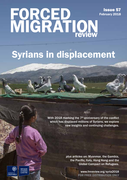
This important issue of Forced Migration Review draws our attention to the current challenges facing displaced Syrians and the continuing search for solutions. The statistics of Syrian displacement are staggering – and the numbers continue to rise
...
. Half of Syria’s population has been displaced: five and a half million are registered refugees and over six million are internally displaced.
more
