
Filter
273
Text search:
Post-disaster
Featured
26
120
Language
Document type
183
24
22
19
13
6
3
3
Countries
30
22
11
10
9
6
6
5
3
3
3
3
3
2
2
2
2
2
2
2
2
2
2
2
2
1
1
1
1
1
1
1
1
1
1
1
1
1
1
1
1
Authors & Publishers
Publication Years
Category
100
94
9
8
4
3
Toolboxes
60
24
19
18
13
10
9
7
4
4
4
3
2
2
2
2
1

In an effort to improve the capabilities and accountability of humanitarian and economic practitioners, the SEEP (Small Enterprise Education and Promotion) Network's Minimum Economic Recovery Standards focus on minimum industry standards for facilitating economic recovery in crisis situations.
Th
...

Guidelines for WHO Representatives and Country
Offices in the Western Pacific Region
Emergency Capacitiy Building Project agencies, led by CARE, have developed the Shelter Accountability Resources for project managers and decision-makers in humanitarian shelter programs.
As a guide it is also intended to be useful for Shelter Cluster coordinators, and other staff who would like t
...
A public health emergency operations centre (EOC) is a central location for coordinating operational information and resources for strategic management of pugencies and events. EOCs provide communication and information tools and services blic health emer-
and a management system during a response
...
Humanitarian crises can affect women, men, girls and boys in radically different ways. To address the different impacts of conflict and disasters on each group and promote the potential for positive transformation of gender norms, Oxfam calls for humanitarian agencies to analyse, plan, and respond t
...
Nutrition Cluster Handbook
recommended
The purpose of the handbook is to provide those involved in nutrition coordination with relevant tools, guidance, information and resources to support their roles in facilitating predictable, coordinated and effective preparation for, and responses to, nutrition needs in humanitarian emergencies. Ra
...
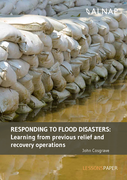
This paper presents lessons learned from previous flood responses in developing countries, based on a structured review of the literature. It is intended for people working in relief and recovery operations who have to decide if, when and how to intervene after a flood.
Learning from earthquake relief and recovery operations
Accessed 2014
IDS Rapid Response Briefing 8

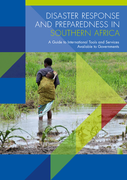
The Guide has been developed to enhance the knowledge capabilities of NDMAs and their local partners. This is accomplished by exposing them to the existing tools and services developed by the international community to facilitate effective disaster response to any scale of disaster (small, medium an
...

Full Report.
In response to a call by the United Nations Secretary-General and the Governments of Guinea, Liberia and Sierra Leone, an international team conducted an Ebola Recovery Assessment. The aim was to contribute towards laying the foundation for short-, medium- and long-term recovery while
...
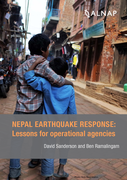
In the aftermath of the April 2015 earthquake in Nepal, this paper looks at lessons drawn from previous comparable disasters and seeks to provide invaluable information and assistance to the operational agencies responding to the crisis.
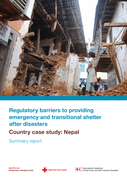

The report provides an overview of the disaster risk reduction and management in Nepal, a country under threat of multiple natural hazards: earthquakes, floods, landslides, fires, storms, the epidemics, and others. It presents background information on the country, its disaster profile, its legal an
...
The document outlines comprehensive guidelines for managing cholera outbreaks in South Africa, focusing on prevention, diagnosis, treatment, and public health measures. It emphasizes the importance of rehydration therapy, sanitation, clean water access, and community involvement to control the sprea
...
Reduce Risk, Protect Health Facilities, Save Lives
