
Filter
1786
Text search:
Cardiovascular
Disease
Featured
179
357
Language
Document type
718
461
307
88
71
68
31
12
8
7
6
5
2
1
1
Countries
155
101
47
47
41
39
32
29
27
27
23
20
20
19
17
17
16
16
16
15
15
15
14
14
14
13
13
13
12
11
11
11
10
10
9
9
9
8
8
7
7
7
7
7
7
6
5
5
5
5
5
4
4
4
4
3
3
3
3
3
3
3
3
3
3
3
3
2
2
2
2
2
2
2
2
2
2
2
2
2
2
2
2
2
2
1
1
1
1
1
1
1
1
1
1
1
1
1
1
1
1
1
1
1
1
1
1
1
1
1
Authors & Publishers
Publication Years
Category
701
272
188
59
45
40
7
1
Toolboxes
292
203
173
115
53
46
43
32
29
29
28
24
20
18
17
7
7
7
6
5
4
3
3
3
2
Diabetes mellitus (hereafter referred to as diabetes) is a chronic, progressive disease characterized by elevated blood glucose levels. Diabetes can lead to complications such as cardiovascular
...

The article examines the nutritional and lifestyle-related risk factors contributing to the prevalence of non-communicable diseases (NCDs) such as cardiovascular diseases, diabetes, and cancer in the Eastern Mediterranean Region (EMR). It highlights
...

People with underlying noncommunicable diseases (NCDs) such as hypertension, diabetes, cardiovascular disease, chronic respiratory disease and canc
...

Recognizing the extent to which the COVID-19 outbreaks affects women and men differently is hugely important. Some preliminary data suggested that more men than women are dying, potentially due to sex-based immunological differences, higher rates of cardio
...
Recognizing the extent to which the COVID-19 outbreaks affects women and men differently is hugely important. Some preliminary data suggested that more men than women are dying, potentially due to sex-based immunological differences, higher rates of cardio
...
Recognizing the extent to which the COVID-19 outbreaks affects women and men differently is hugely important. Some preliminary data suggested that more men than women are dying, potentially due to sex-based immunological differences, higher rates of cardio
...

The term NCDs refers to a group of conditions that are not mainly caused by an acute infection, result in long-term health consequences and often create a need for long-term treatment and care. These conditions include cancers, cardiovascular
...
Noncommunicable diseases (NCDs) or Chronic noncommunicable diseases (NCDs) are the 1st cause of death and disability worldwide.
The term NCDs refers to a group of conditions that are not mainly caused by an acute infection, result in long-term health consequences and often create a need for long-
...

Non-Communicable Diseases (NCDs) are a worldwide epidemic. Particularly, the most common diseases - Cardiovascular diseases, Chronic Obstructive Pulmonary Diseases (COPD), Chronic Kidney Diseases, Cancer, Diabetes
...

WHO has identified climate change as one of the greatest health threats of the 21st century and air pollution as the single largest environmental health risk. Noncommunicable diseases (NCDs), including cardiovascular diseases, diabetes, chronic resp
...
Psoriasis, which can involve the skin, nails and joints, is a chronic, painful, disfiguring and disabling noncommunicable disease (NCD) for which there is no cure. It negatively impacts on quality of life. Some of those who suffer from the
...

Mental disorders impose an enormous burden on society, accounting for almost one in three years lived with disability globally. •In addition to their health impact, mental disorders cause a significant economic burden due to lost economic output and the link between mental disorders and costly, po
...
With the advent and ongoing development of novel antiretroviral agents, people living with HIV (PLWHIV) are living longer and experiencing the effects of HIV infection on aging. The success of antiretroviral therapy (ART) has transformed HIV from a fatal d
...
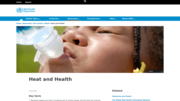
Global temperatures and the frequency and intensity of heatwaves will rise in the 21st century as a result of climate change. Extended periods of high day and nighttime temperatures create cumulative physiological stress on the human body which exacerbates the top causes of death globally, including
...

Almost all populations are consuming too much sodium. The global mean intake of adults is 4310 mg/day sodium (equivalent to 10.78 g/day salt). This is more than double the World Health Organization recommendation for adults of less than 2000 mg/day sodium (equivalent to < 5 g/day salt).
- The primary health effect associated with diets high in sodium is raised blood pressure, increasing the risk of
...
The OpenWHO course titled "Interventions for Noncommunicable Diseases in Primary Health Care" provides guidance on screening, detection, diagnosis, and management of major noncommunicable diseases (NCDs) such as cardiovascular diseases, type 2 diabe
...

In 2015, 26% of the deaths of 5.9 million children who died before reaching their fifth birthday could have been prevented
through addressing environmental risks – a shocking missed opportunity. The prenatal and early childhood period represents
a window of particular vulnerability, where enviro
...
The World Health Organization (WHO) has developed this report to monitor progress and identify areas for action in the implementation of sodium reduction policies and other measures within Member States and across WHO regions and World Bank income groups. For the first time, a Sodium Country Score f
...
The ICMR type 1 diabetes guidelines come at a time when the SARS-CoV-2 pandemic
has disproportionately affected people with diabetes population, exposing them to a
high risk for severe illness and mortality. Globally, diabetes was responsible for over fourmillion deaths in the year 2019. It was th
...
The document titled "Use of Non-Sugar Sweeteners: WHO Guideline" provides recommendations from the World Health Organization on the use of non-sugar sweeteners (NSS) to reduce sugar intake, manage weight, and prevent diet-related noncommunicable diseases (NCDs). It discusses the potential effects of
...
