
Filter
1575
Text search:
national
identity
Featured
131
405
Language
Document type
854
277
199
121
43
39
27
5
3
1
1
1
Countries
94
65
49
46
39
37
35
30
29
29
27
24
23
18
17
17
17
16
16
15
14
14
13
12
11
10
10
10
9
9
9
8
8
7
7
7
6
6
6
6
6
6
5
5
5
5
5
5
5
5
4
4
4
4
4
4
4
4
4
4
3
3
3
3
2
2
2
2
2
2
2
2
2
2
2
2
2
2
1
1
1
1
1
1
1
1
1
1
1
1
1
1
1
1
1
1
1
1
1
1
1
1
1
1
1
Authors & Publishers
Publication Years
Category
542
112
110
76
53
39
19
Toolboxes
191
125
101
97
82
67
56
46
39
38
35
28
24
22
21
19
14
11
10
9
7
6
5
4
2
2
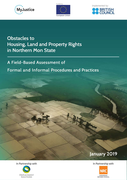
A Field-Based Assessment of Formal and Informal Procedures and Practices
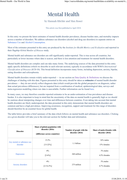
Mental health disorders remain widely under-reported — in our section on Data Quality & Definitions we discuss the challenges of dealing with this data. Figures presented in this entry should be taken as estimates of mental health disorder prevalence — they do not strictly reflect diagnosis data
...
Q12. SCOPING QUESTION: In people with psychotic disorders, including schizophrenia and bipolar disorder, are recovery-oriented strategies enhancing vocational and economic inclusion (such as supported employment) feasible and effective?
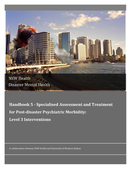
NSW Disaster Mental Health Handbook 5
The Disaster Mental Health Manual and associated handbooks are intended as a resource for mental health staff who are seeking background information and practical guidance and resources to assist in a disaster mental health response.
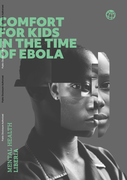
The 2014-2015 outbreak of Ebola virus disease (EVD) in Liberia resulted in over 10,000 cases and 5,000 deaths. Recognizing the importance of addressing children’s trauma, the Ebola recovery and restoration trust fund (EERTF) funded the implementation of a Comfort for kids (C4K) program which encou
...

This literature review summarizes the link between psychological well-being and entrepreneurial outcomes for small and medium-size enterprises in fragile, conflict, and violence–affected contexts. It identifies potentially promising, scalable psychosocial training interventions, based on cognitive
...
Q13: Are strategies aimed at improving community attitudes towards mental, neurological and substance use conditions (e.g. anti-stigma campaigns) feasible and effective?

For Strengthening Mental Health In Cultural-Linguistic Communities Projects

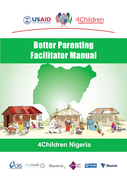
Better Parenting Nigeria is a parenting education program whose goal is to see that families have the knowledge and skills needed to raise healthy, safe and resilient children. The program aims to ensure that:
The caregiver-child relationship is strengthened;
Caregiver capacity to understa
...

Self-care interventions are among the most promising and exciting new approaches to improve health and well-being, both from a health systems perspective and for people who use these interventions. The World Health Organization (WHO) uses the following working definition of self-care: Self-care is t
...
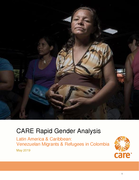
This Rapid Gender Analysis provides preliminary information and observations on the different needs, capacities and coping strategies of Venezuelan migrant and refugee women, men, boys, and girls in Colombia. It seeks to understand how gender roles and relations have changed as a result of the crisi
...
Zambia Report for 2017
The present report, which covers the period from January to December 2018, is submitted pursuant to Security Council resolution 2427 (2018). The preparation of the report involved broad consultations within the United Nations, in the field and at Headquarters, and with relevant Member States. It hig
...
Technical guidance.
This technical guidance aims to inform policy and practice development specifically related to improving the health of older refugees and migrants within the European Union and the larger WHO European Region. Both ageing and migration are in themselves complex multidimensional p
...

This paper was commissioned by the German Federal Ministry for Economic Cooperation and Development (BMZ) in 2015, and produced by the Deutsche Gesellschaft für Internationale Zusammenarbeit (GIZ) GmbH, in cooperation with German civil society actors and freelance psychologists working in the field
...
This report tells the stories of some of the world’s 7.1 million refugee children of school age under UNHCR’s mandate. In addition, it looks at the educational aspirations of refugee youth eager to continue learning after secondary education, and highlights the need for strong partnerships in o
...

The World Health Organization (WHO) and United NationsHuman Settlements Programme (UN-HABITAT) joint globalreport, Hidden cities: unmasking and overcoming healthinequities in urban settings, exposes the extent to whichcertain city dwellers suffer disproportionately from a wide range of diseases and
...

The ICOPE guidance for person-centred assessment and pathways in primary care (ICOPE Handbook) helps community health and care workers put the recommendations outlined in the ICOPE Guidelines into practice. The Handbook assists with setting person-centred goals, screening for loss in a range of doma
...
The guidelines fill a gap in providing tools for surveying HIV prevalence in key populations, and the included questionnaires may also inform general population surveys. These guidelines standardize the conduct of biobehavioural surveys to permit comparisons between as well as within countries over
...
