
Filter
1751
Text search:
epidemic
indicators
Featured
164
574
Language
Document type
956
327
221
105
92
19
16
12
1
1
Countries
106
75
68
59
55
55
53
50
47
41
41
39
39
37
34
30
26
25
25
24
24
23
21
21
19
18
16
15
14
13
13
12
11
11
10
10
10
9
8
8
8
8
7
6
6
6
5
5
5
5
5
5
4
3
3
3
3
3
3
3
3
3
3
3
3
3
2
2
2
2
2
2
2
2
2
1
1
1
1
1
1
1
1
1
1
1
1
1
1
1
1
1
1
1
1
1
1
1
1
1
1
1
1
1
1
1
1
1
1
1
1
Authors & Publishers
Publication Years
Category
825
126
112
99
40
20
11
Toolboxes
142
127
106
86
78
56
50
42
39
34
34
32
29
28
26
26
24
19
18
17
15
12
10
2
2
WHO guidance for contingency planning
recommended
In this contingency planning guidance, a set of actions to prepare for emergencies from all hazards and to help minimize their impact, is proposed. These actions include the development, implementation, simulation, monitoring and regular update of risks-based contingency plans.

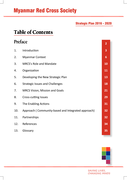
This Manual is primarily intended for community level volunteers trained in Community Based Disaster Risk Management (CBDRM) and CBDRM Practitioners and Professionals.
The year of publication is not specified in the document.
The year of publication is not specified in the document.
The need for a roadmap for risk assessment stemmed from the lack of standardised and systematic effort to national risk assessment effort to date. The road map details the process, activities necessary for each step and the availability and accessibility of technical and financial resources, and coo
...
Asia-Pacific Disaster Report 2017
The report looks at the extent and impact of natural disasters across the region and how these intersect with poverty, inequality and the effects of violent conflict. But it also shows how scientific and other advances have increased the potential for building di ...
The report looks at the extent and impact of natural disasters across the region and how these intersect with poverty, inequality and the effects of violent conflict. But it also shows how scientific and other advances have increased the potential for building di ...

The guidance aspires
• To emphasize the 'need' to mainstream disaster risk reduction (DRR) in the health sector initiatives.
• To identify key approaches for mainstreaming DRR in the health sector in Myanmar, particularly in rural areas, based on the good practices, innovative approach ...
• To emphasize the 'need' to mainstream disaster risk reduction (DRR) in the health sector initiatives.
• To identify key approaches for mainstreaming DRR in the health sector in Myanmar, particularly in rural areas, based on the good practices, innovative approach ...
The Strategic Framework for Emergency Preparedness is a unifying framework which identifies the principles and elements of effective country health emergency preparedness. It adopts the major lessons of previous initiatives and lays out the planning and implementation process by which countries can
...

The strategic priorities of the CCS 2014–2018 are:
(1) Strengthening the health system.
(2) Enhancing the achievement of communicable disease control targets.
(3) Controlling the growth of the noncommunicable disease burden.
(4) Promoting health throughout the life course.
...
(1) Strengthening the health system.
(2) Enhancing the achievement of communicable disease control targets.
(3) Controlling the growth of the noncommunicable disease burden.
(4) Promoting health throughout the life course.
...

The five hepatitis viruses have different epidemiological profiles, and their impact, duration, and transmission route also vary. The most common transmission routes contributing to the spread of hepatitis are exposure to infected blood via blood transfusion or unsafe injection practices, consumptio
...
The primary aim of this assessment is to evaluate current approaches to malaria surveillance in Myanmar and to provide a set of practical and feasible recommendations to further strengthen the surveillance system in the short to medium term. The assessment focuses on the surveillance of malaria case
...

The Philippine Government, International Non-government Organizations (INGOs) and local NGOs are all making attempts to address the impact of disasters and climate change at various levels. The Philippine Government has made significant strides in the implementation of disaster risk reduction (DRR)
...

Cambodia drafted and adopted the National Action Plan for Disaster Risk Reduction 2014-2018 in 2014. This plan finalized the required policies and legal processes to strengthen DRM in Cambodia. It also focused on capacity building at national and sub-national levels and provided dedicated resources
...

Lao People’s Democratic Republic (Lao PDR), also referred to as Laos, or Lao, is exposed to natural disasters such as flooding, typhoons, cyclones, drought, and earthquakes. The country is vulnerable to recurrent, sudden-onset and slow onset natural disasters with flooding, storms and typhoons hav
...

With the goal of ending viral hepatitis as a public health threat by 2030, the Regional Action Plan will provide an actionable framework for implementing evidence-based interventions at scale. It will be informed through strategic monitoring of the response, that must be equitable and sustainable an
...

Over the period 2015 to 2019, scaling up a package of selected nutrition-specific and nutrition sensitive interventions to cover 90 per cent of Sudan would:
- Reduce the under-five mortality rate to 49/1,000 live births
- Reduce the prevalence of stunting to 25 per cent
- Reduce the ...
- Reduce the under-five mortality rate to 49/1,000 live births
- Reduce the prevalence of stunting to 25 per cent
- Reduce the ...
The study collected data on the impact of HIV-related diseases on income, revenues, economic dependency, consumption, education, health, food security, stigma, discrimination, quality of life, and migration. The study also assessed people living with chronic diseases in order to compare the impact o
...


The health of the people and health services are in crisis, and together as partners this plan commits us to strategies aimed at achieving our goal of:
Strengthened primary health care for all, and improved service delivery for the rural majority and the urban disadvantaged.
Original fi ...
Strengthened primary health care for all, and improved service delivery for the rural majority and the urban disadvantaged.
Original fi ...
The main goal of the National Health Plan (NHP) 2017-2021 is to extend access to a basic Essential Package of Health Services (EPHS) to the entire population while increasing financial protection. In order to extend service delivery to all communities, the NHP calls for all health workers (whether c
...

Audit Report
