
Filter
1385
Text search:
neglected
tropical
diseases
Featured
127
246
Language
Document type
421
393
154
100
79
66
57
38
18
17
16
10
7
7
2
Countries
216
33
25
24
23
22
21
20
20
18
14
14
13
13
12
11
10
10
10
10
9
9
8
8
8
8
7
7
7
7
6
6
5
5
4
4
3
3
3
3
3
3
3
2
2
2
2
2
2
2
2
2
2
2
2
2
2
2
2
2
1
1
1
1
1
1
1
1
1
1
1
1
1
1
1
1
1
1
1
1
1
1
1
1
1
1
1
1
1
1
1
1
1
1
1
1
Authors & Publishers
Publication Years
Category
287
136
88
52
27
26
15
1
Toolboxes
693
60
45
33
27
27
24
23
22
21
16
15
15
12
12
12
10
8
7
6
4
4
3
2
Website last accessed on 09.04.2023
Human echinococcosis is a parasitic disease caused by tapeworms of the genus Echinococcus. More than one million people are affected by echinococcosis.
Website last accessed on 09.04.2023
La equinococosis humana es una enfermedad parasitaria causada por tenias del género Echinococcus. La equinococosis afecta a más de un millón de personas.
Website last accessed on 14.04.2023
Les trématodes d'origine alimentaire sont des zoonoses et leurs agents pathogènes ne peuvent être transmis à l'homme qu'après avoir accompli un cycle de vie complexe, dont certaines étapes se déroulent dans un hôte animal intermédiaire. Les premiers h
...

Website last accessed ob 14.04.2023
Los trematodos transmitidos por los alimentos son zoonosis y sus patógenos sólo pueden transmitirse al ser humano tras completar un complejo ciclo vital, algunas de cuyas etapas tienen lugar en un hospedador animal intermediario. El primer hospedador interme
...
Website last accessed on 14.04.2023
Трематодозы пищевого происхождения являются зоонозами, и их возбудители могут передаваться человеку только после завершения сложного жизне
...

Website last accessed in 23.04.2023
Le but de cette note de concept est donc de définir Ie rôle de I'APOC dans I'élimination de l'onchocercose, ainsi que sa contribution aux efforts visant à éliminer la filariose
Iymphatique et d'autres maladies tropicales négligées ciblées, et au renforcement des
systèmes de santé au nive
...

Website last accessed on 22.05.2023
Youtube Video:
Maureen Richards Immunology & Microbiology - Leishmania

Website last accessed on 22.05.2023
Youtube-Video
Leishmania- Ciclo de Vida

Website last accessed on 04.06.2023

Website last accessed on 04.06.2023
Bites of infected female sand flies causes the disease. The visceral form attacks internal organs; the cutaneous form causes facial ulcers, disfiguring scars and disability. #BeatNTDs

Website last accessed on 04.06.2023

Website last accessed on 04.06.2023
Las enfermedades transmitidas por vectores (ETV) son enfermedades infecciosas propagadas por organismos intermediarios como insectos hematófagos, garrapatas, ácaros, caracoles y roedores, que transmiten virus, parásitos y bacterias a los seres humanos. Estas enfermedades son la causa de una notab
...
Monitoramento efetivo, avaliação epidemiológica e análise subsequente são
necessários para atingir o objetivo de interromper a transmissão da FL. Este manual foi
elaborado para oferecer aos programas nacionais de eliminação da fi lariose informação de qualidade sobre metodologias e proc
...
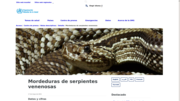
Website last accessed on 01.07.2023
Snakebite envenoming - WHO official website
Website last accessed ob 01.07.2023
Snakebite envenoming - WHO official website
Website last accessed ob 01.07.2023
Snakebite envenoming - WHO official website
Website last accessed on 01.07.2023
Snakebite envenoming - WHO official website
Website last accessed on 01.07.2023
Snakebite envenoming - WHO official website
