Filter
1904
Text search:
standard
treatment
guideline
Featured
311
587
Language
Document type
955
524
180
132
58
28
17
6
1
1
1
Countries
130
75
68
65
64
52
49
47
41
35
29
27
25
24
24
23
23
23
22
22
19
16
15
14
11
11
9
8
7
7
6
6
6
6
6
5
5
5
5
4
4
4
4
4
4
3
3
3
3
3
3
3
2
2
2
2
2
2
2
2
2
2
2
2
2
2
1
1
1
1
1
1
1
1
1
1
1
1
1
1
1
1
1
1
1
1
1
1
1
1
1
1
1
1
1
1
Authors & Publishers
Publication Years
Category
794
270
157
114
113
30
28
1
Toolboxes
132
128
117
88
87
83
74
56
52
49
39
31
27
26
22
21
17
15
14
13
10
10
8
4
3
Bangladesh Health Facility Survey 2014
recommended
Final Report
Namibia: Operation Theatre Manual
recommended
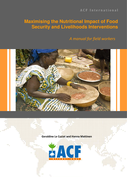
This manual aims to provide practical guidance to field workers in order to maximise the nutritional impact of food security & livelihoods (FSL) interventions. This requires the systematic use of a ‘nutrition lens’ at each step of the project cycle and a close collaboration between sectors.
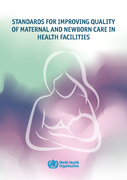
The standards of care cover the routine care and management of complications occurring for women and their babies during labour, childbirth and the early postnatal period, including those of small babies during the first week of life. They define priorities for improving the quality of maternal and
...
The Cost of Security Risk Management for NGOs explores the costs related to safety and security management for aid programmes. It aims to assist all aid practitioners to determine their risk management expenditure more accurately, and demonstrate an evidence-based approach when presenting this infor
...
The 5 years plan to scale up HIV Testing and Counselling Services in Malawi 2006-2010

Psoriasis, which can involve the skin, nails and joints, is a chronic, painful, disfiguring and disabling noncommunicable disease (NCD) for which there is no cure. It negatively impacts on quality of life. Some of those who suffer from the disease develop chronic, inflammatory arthritis (psoriatic a
...
Infection Control Assessment Tool
recommended
Strengthening Parmaceutical Systems. 2nd edition

Health care-associated infections (HAI) are one of the most common adverse events in care delivery and a major public health problem with an impact on morbidity, mortality and quality of life. At any one time, up to 7% of patients in developed and 10% in developing countries will acquire at least on
...
These WHO guidelines which were updated in 2018, are valid for any country and suitable to local adaptations, and take account of the strength of available scientific evidence, the cost and resource implications, and patient values and preferences.
The 2018 edition of the guidelines includes the re
...