
Filter
1860
Text search:
reactions
Featured
241
408
Language
1788
54
39
26
20
14
13
7
5
5
5
5
4
4
4
4
3
3
3
2
2
2
2
2
2
1
1
1
1
1
1
1
1
1
1
1
1
1
1
1
1
1
1
1
Document type
1000
314
193
150
78
63
24
17
9
9
2
1
Countries
112
51
42
36
36
36
35
32
31
29
29
26
24
22
19
19
18
18
17
16
14
14
14
12
12
12
12
11
9
8
8
8
7
7
7
7
7
6
6
5
5
4
4
4
4
4
4
4
4
4
3
3
3
3
3
3
3
3
3
2
2
2
2
2
2
2
2
2
2
2
2
2
2
1
1
1
1
1
1
1
1
1
1
1
1
1
1
1
1
1
1
1
1
1
1
1
1
1
1
1
1
1
1
1
1
1
1
Authors & Publishers
255
109
64
54
51
32
31
27
20
19
19
19
18
16
15
13
13
12
10
10
10
8
8
8
8
8
7
7
7
7
7
6
6
6
6
6
6
6
6
6
5
5
5
5
5
5
5
5
5
5
5
4
4
4
4
4
4
4
4
4
4
4
4
4
4
4
4
4
3
3
3
3
3
3
3
3
3
3
3
3
3
3
3
3
3
3
3
3
3
3
3
3
3
3
3
3
3
3
3
3
3
3
3
3
2
2
2
2
2
2
2
2
2
2
2
2
2
2
2
2
2
2
2
2
2
2
2
2
2
2
2
2
2
2
2
2
2
2
2
2
2
2
2
2
2
2
2
2
2
2
2
2
2
2
2
2
2
2
2
2
2
2
2
2
2
2
2
2
2
2
2
2
2
2
2
2
2
2
2
2
2
2
2
2
2
2
2
2
2
2
2
2
2
2
2
2
2
2
2
2
2
2
2
2
2
2
2
2
2
2
2
2
2
2
2
1
1
1
1
1
1
1
1
1
1
1
1
1
1
1
1
1
1
1
1
1
1
1
1
1
1
1
1
1
1
1
1
1
1
1
1
1
1
1
1
1
1
1
1
1
1
1
1
1
1
1
1
1
1
1
1
1
1
1
1
1
1
1
1
1
1
1
1
1
1
1
1
1
1
1
1
1
1
1
1
1
1
1
1
1
1
1
1
1
1
1
1
1
1
1
1
1
1
1
1
1
1
1
1
1
1
1
1
1
1
1
1
1
1
1
1
1
1
1
1
1
1
1
1
1
1
1
1
1
1
1
1
1
1
1
1
1
1
1
1
1
1
1
1
1
1
1
1
1
1
1
1
1
1
1
1
1
1
1
1
1
1
1
1
1
1
1
1
1
1
1
1
1
1
1
1
1
1
1
1
1
1
1
1
1
1
1
1
1
1
1
1
1
1
1
1
1
1
1
1
1
1
1
1
1
1
1
1
1
1
1
1
1
1
1
1
1
1
1
1
1
1
1
1
1
1
1
1
1
1
1
1
1
1
1
1
1
1
1
1
1
1
1
1
1
1
1
1
1
1
1
1
1
1
1
1
1
1
1
1
1
1
1
1
1
1
1
1
1
1
1
1
1
1
1
1
1
1
1
1
1
1
1
1
1
1
1
1
1
1
1
1
1
1
1
1
1
1
1
1
1
1
1
1
1
1
1
1
1
1
1
1
1
1
1
1
1
1
1
1
1
1
1
1
1
1
1
1
1
1
1
1
1
1
1
1
1
1
1
1
1
1
1
1
1
1
1
1
1
1
1
1
1
1
1
1
1
1
1
1
1
1
1
1
1
1
1
1
1
1
1
1
1
1
1
1
1
1
1
1
1
1
1
1
1
1
1
1
1
1
1
1
1
1
1
1
1
1
1
1
1
1
1
1
1
1
1
1
1
1
1
1
1
1
1
1
1
1
1
1
1
1
1
1
1
1
1
1
1
1
1
1
1
1
1
1
1
1
1
1
1
1
1
1
1
1
1
1
1
1
1
1
1
1
1
1
1
1
1
1
1
1
1
1
1
1
1
1
1
1
1
1
1
1
1
1
1
1
1
1
1
1
1
1
1
1
1
1
1
1
1
1
1
1
1
1
1
1
1
1
1
1
1
1
1
1
1
1
1
1
1
1
1
1
1
1
1
1
1
1
1
1
1
1
1
1
1
1
1
1
1
1
1
1
1
1
1
1
1
1
1
1
1
1
1
1
1
1
1
1
1
1
1
1
1
1
1
1
1
1
1
1
1
1
1
1
1
1
1
1
1
1
1
1
1
1
1
1
1
1
1
1
1
1
1
1
1
1
1
1
1
1
1
1
1
1
1
1
1
1
1
1
1
1
1
1
1
1
1
1
1
1
1
1
1
1
1
1
1
1
1
1
1
1
1
1
1
1
1
1
1
1
1
1
1
1
1
1
1
1
1
1
1
1
1
1
1
1
1
1
1
1
1
1
1
1
1
1
1
1
1
1
1
1
1
1
1
1
1
1
1
1
1
1
1
1
1
1
1
1
1
1
1
1
1
1
1
1
1
1
1
1
1
1
1
1
1
1
1
1
1
1
1
1
1
1
1
1
1
1
1
1
1
1
1
1
1
1
1
1
1
1
1
1
1
1
1
1
1
1
1
1
1
1
1
1
1
1
1
1
1
1
1
1
1
1
1
1
1
1
1
1
1
1
1
1
1
1
1
1
1
1
1
1
1
1
1
1
1
1
1
1
1
1
1
1
1
1
1
1
1
1
1
1
1
1
1
1
1
1
1
1
1
1
1
1
1
1
1
1
1
1
1
1
1
1
1
1
1
1
1
1
1
1
1
1
1
1
1
1
1
1
1
1
1
1
1
1
1
1
1
1
1
1
1
1
1
1
1
1
1
1
1
1
1
1
1
1
1
1
1
1
1
1
1
1
1
1
1
1
1
1
1
1
1
1
1
1
1
1
1
1
1
1
1
1
1
1
1
1
1
1
1
1
1
1
1
1
1
1
1
1
1
1
1
1
1
1
1
1
1
1
1
1
1
1
1
1
1
1
1
1
1
1
1
1
1
1
1
1
1
1
1
1
1
1
1
1
1
1
1
1
1
1
1
1
1
1
1
1
1
1
1
1
1
1
1
1
1
1
1
1
1
1
1
1
1
1
1
1
1
1
1
1
1
1
1
1
1
1
1
1
1
1
1
1
1
1
1
1
1
1
1
1
1
1
1
1
1
1
1
1
1
1
1
1
1
1
1
1
1
1
1
1
1
1
1
1
1
1
1
1
1
1
1
1
1
1
1
1
1
1
1
1
1
1
1
1
1
1
1
1
1
1
1
1
1
1
1
1
1
1
1
1
1
1
1
1
1
1
1
1
1
1
1
1
1
1
1
1
1
1
1
1
1
1
1
1
1
1
1
1
1
1
1
1
1
1
1
1
1
1
1
1
1
1
1
1
1
1
1
1
1
1
1
1
1
1
1
1
1
1
1
1
1
1
1
1
1
1
1
1
1
1
1
1
1
1
1
1
1
1
1
1
1
1
1
1
1
1
1
1
1
1
1
1
1
1
1
1
1
1
1
1
1
1
1
1
1
1
1
1
1
1
1
1
1
1
1
1
1
1
1
1
1
1
1
1
1
1
1
1
1
1
1
1
1
1
1
1
1
1
1
1
1
1
1
1
1
1
1
1
1
1
1
1
1
1
1
1
1
1
1
1
1
1
1
1
1
1
1
1
1
1
1
1
1
1
1
1
1
1
1
1
1
1
1
1
1
1
1
1
1
1
1
1
1
1
1
1
1
1
1
1
1
1
1
1
1
1
1
1
1
1
1
1
1
1
1
1
1
1
1
1
1
1
1
1
1
1
1
1
1
1
1
1
1
1
1
1
1
1
1
1
1
1
1
1
1
1
1
1
1
1
1
1
1
1
1
1
1
1
1
1
1
1
1
1
1
1
1
1
1
1
1
1
1
1
1
1
1
1
1
1
1
1
1
1
1
1
1
1
1
1
1
1
1
1
1
1
1
1
1
1
1
1
1
1
1
1
1
1
1
1
1
1
1
1
1
1
1
1
1
1
1
1
1
1
1
1
1
1
1
1
1
1
1
1
1
1
1
1
1
1
1
1
1
1
1
1
1
1
1
1
1
1
1
1
1
1
1
1
1
1
1
1
1
1
1
Publication Years
503
1081
253
21
2
Category
591
218
97
90
78
55
27
Toolboxes
277
167
142
117
76
54
52
50
48
45
45
40
30
28
23
21
21
20
17
16
15
12
9
7
4
1


Managing stress in the field
International Federation of Red Cross and Red Crescent Societies
International Federation of Red Cross and Red Crescent Societies
(2009)
C1
The nature of humanitarian work has also drastically changed over the last
decade. Humanitarian workers have paid dearly in the face of violence and
terrorism. Burn out and after-effects of traumatic experiences constitute a
major risk for humanitarian workers. After ten years of experience with
...
delegate
stress, the Psychological Support Programme (PSP) team emphasizes
the importance of efficient stress management.
more


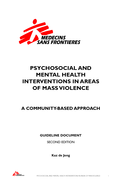
A community-based approach.
These guidelines focus on manmade rather than natural disasters, but our experiences in India, El Salvador and Pakistan (earthquake interventions), and following the 2004 tsunami, cyclone Nargis in 2008 and the Haiti earthquake in 2010, showed that the principles describ
...
ed also work well in contexts of natural disasters.
more

World Health Organization Country profiles 2017

WHO Regional Publications, Western Pacific Series No. 23
Reports the findings and recommendations of a working group convened to prepare guidelines for the use of herbal medicines in Western Pacific countries. Addressed to national health authorities, the report responds to the widespread use o ... f herbal medicine in this part of the world and the corresponding need for mechanisms to ensure that these products are safe and effective, yet remain broadly accessible. With this need in mind, the report sets out a comprehensive framework for developing national policies designed to control the safety, efficacy, and quality of herbal medicines, manufacturing practices, product registration, and labelling, marketing, and trade. more
Reports the findings and recommendations of a working group convened to prepare guidelines for the use of herbal medicines in Western Pacific countries. Addressed to national health authorities, the report responds to the widespread use o ... f herbal medicine in this part of the world and the corresponding need for mechanisms to ensure that these products are safe and effective, yet remain broadly accessible. With this need in mind, the report sets out a comprehensive framework for developing national policies designed to control the safety, efficacy, and quality of herbal medicines, manufacturing practices, product registration, and labelling, marketing, and trade. more

These guidelines for the National Pharmacovigilance and Medicine Information System in Rwanda have been developed to ensure that safe, efficacious and quality medicines are made available to all Rwandans.

This article reexamines a set of study findings that directly relate to the influence of gender on workplace violence, synthesizes these findings with other research from Rwanda, and examines the subsequent impact of the study on Rwanda’s policy environment.
No publication year indicated

IK Notes No. 10 July 1999 | IK Notes reports periodically on Indigenous Knowledge (IK) initiatives in Sub-Saharan Africa. It is published by the Africa Region's Knowledge and Learning Center as part of an evolving IK partnership between the World Bank, communities, NGOs, development institutions and
...
multilateral organizations. T
more
Information booklet on Post Traumatic Stress Disorder. What is Post-Traumatic Stress Disorder (PTSD)? Who develops PTSD? What are the symptoms of PTSD? Why do some people develop PTSD and other people do not? How is PTSD Treated? How can I hep a friend or relative who has PTSD? How can I help mysel
...
f? Where can I go for help? What if I know someone in crisis? Next Steps for PTSD Research.
more

This guide covers: Treatment That Works; Myths About Treatment; Success Stories; Resources | Do you or a loved one have PTSD? There is no need to suffer. Treatment works. If you have PTSD—posttraumatic stress disorder — you don’t have to suffer. There are good treatments that can help. This b
...
ooklet describes therapies and medications that are proven to help people with PTSD.
You’ll hear from experts about what treatment is like, and how it can help you. Don’t let PTSD get in the way of your enjoyment of life, hurt your relationships, or cause problems for you at
work or school. PTSD treatment works.
more
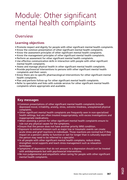
Overview
Learning objectives
• Promote respect and dignity for people with other significant mental health complaints.
• Know the common presentation of other significant mental health complaints.
• Know the assessment principles of other significant mental health complaints.
• Know the
...
management principles of other significant mental health complaints.
• Perform an assessment for other significant mental health complaints.
• Use effective communication skills in interaction with people with other significant
mental health complaints.
• Assess and manage physical health in other significant mental health complaints.
• Provide psychosocial interventions to persons with other significant mental health
complaints and their carers.
• Know there are no specific pharmacological interventions for other significant mental
health complaints.
• Plan and perform follow-up for other significant mental health complaints.
• Refer to specialists and links with outside services for other significant mental health
complaints where appropriate and available.
more

