
Filter
1606
Text search:
clean
air
Featured
212
399
Language
Document type
688
279
275
147
69
60
46
14
12
11
5
Countries
145
82
49
45
43
37
34
28
27
23
23
22
21
20
18
17
17
14
14
14
14
13
13
12
12
12
11
11
10
10
10
9
9
8
8
7
7
5
5
5
5
4
4
4
4
4
4
4
3
3
3
3
3
3
3
3
3
3
3
3
2
2
2
2
2
2
2
2
2
2
2
1
1
1
1
1
1
1
1
1
1
1
1
1
1
1
1
1
1
1
1
1
1
1
1
1
1
1
1
Authors & Publishers
Publication Years
Category
609
141
114
96
82
45
38
Toolboxes
202
184
77
71
55
52
52
45
44
37
34
34
31
30
29
29
29
24
22
18
15
11
9
4
3
1
1
At its 48th session of Codex Committee on Food Hygiene (CCFH), the Committee noted the importance of water quality and safety in food production and processing. CCFH requested the Food and Agriculture Organization of the United Nations
(FAO) and the World Health Organization (WHO) to provide guidan
...

On Global Handwashing Day, WHO and UNICEF have released the first-ever global Guidelines on Hand Hygiene in Community Settings to support governments and practitioners in promoting effective hand hygiene outside health care – across households, public spaces and institutions. Framing hand hygiene
...
The Ethiopian Hospital Services Transformation Guidelines (EHSTG) build on and expand the Ethiopian Hospital Reform Implementation Guidelines (EHRIG) and are consistent with the Health Sector Transformation Plan (HSTP). The EHSTG, which is consistent with the national focu
...
HCF Cleaning and disinfection procedures during EVD presentation is part of the EVD IPC training material for Health Centre IIs and Pharmacies. The holding area in pharmacies and HCF II such as chair or any equipment touched by a suspect EVD case will require cleaning and disinfection after the case
...
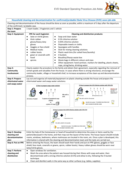
This document is a detailed step-by-step procedure for cleaning and decontaminating of the house where a confirmed/probable Ebola Virus Disease (EVD) case (s) have been treated. This should be done as soon as possible, within a maximum of 3 days after the departure of the confirmed / probable case.
Crisis Emergency Risk Communication. Manual
recommended
The CERC manual provides an evidence-based framework and recommended practices for anyone who communicates on behalf of an organization responding to major emergencies such as natural disasters.
Climate change is the single biggest health threat facing humanity, and health professionals worldwide are already responding to the health harms caused by this unfolding crisis.
The Intergovernmental Panel on Climate Change (IPCC) has concluded that to avert catastrophic health impacts and prevent
...

English Analysis on World about Climate Change and Environment, Recovery and Reconstruction and Epidemic; published on 26 Oct 2021 by UNEP
The Faster We Go, the Health We'll Be.
The report outlines five climate solutions that research shows will deliver immediate, often localized, health and equity benefits. Our focus is on the solutions that proactively advance both health and health equity, recognizing that some of us face greater h
...
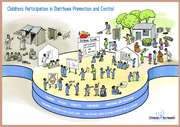
The document provides educational messages and practical guidance to prevent and manage diarrhoea, particularly in children. It emphasizes hygiene practices like proper handwashing, using latrines, and safe food handling. It also highlights the importance of breastfeeding, balanced nutrition, immuni
...

Climate change is resulting in poorer health outcomes, increasing mortality and is a driver of health inequities. However, health is well placed to be a significant part of the solution; the positive health impacts from stronger climate change action can motivate stronger global ambition; health sys
...

Disinfect Reusable Supplies and Equipment
Accessed 24 June 2014

Doc. No.: INS/GDL/001-(Annexes)
Draft version 2017

This booklet presents key messages for action, summarized from a set of chapters on different environmental health issues, available at www.who.int/ ceh/publications/healthyenvironmentsforhealthychildren. The work is a result of an on-going partnership between WHO, UNEP and UNICEF in the area of chi
...
Accessed 4 March 2019.
