
Filter
669
Text search:
behandlung
Featured
71
105
Language
Document type
218
122
121
64
33
26
23
21
15
11
7
5
3
Countries
251
77
21
12
7
6
5
5
4
3
3
3
3
3
2
2
2
2
2
2
2
2
2
2
1
1
1
1
1
1
1
1
1
1
1
1
1
1
1
1
1
1
1
Authors & Publishers
Publication Years
Category
94
81
23
20
10
6
3
Toolboxes
244
91
70
44
43
42
33
31
12
10
9
9
6
6
5
4
4
3
3
3
2
1
1
1
The CDC Yellow Book is the Centers for Disease Control and Prevention's comprehensive reference guide to health issues related to international travel. It provides evidence-based recommendations and practical guidance for healthcare professionals advising travellers, as well as for travellers themse
...
Antimalarial chemotherapy is crucial for reducing morbidity, mortality, and drug resistance, and is the cornerstone of malaria control. Existing antimalarial drugs act at different stages of the parasite’s life cycle. These drugs range from classic agents such as chloroquine and quinine to newer a
...

WHO guideline on balanced national controlled medicines policies to ensure medical access and safety
Access to medicines is essential for attainment of universal health coverage, which is central to achievement of the health-related Sustainable Development Goals. Controlled medicines include those such as opioids, benzodiazepines, barbiturates, amphetamines and others with identified or emergent cl
...

AIDS 2024, 38:1579–1588. Treatment interruptions are a barrier to successful antiretroviral therapy (ART). 'Fresh start messages', which leverage significant days on the calendar (e.g., new year, public holiday) in order to prompt action, have the potential to encourage people with HIV (PWH) to re
...

This brief report summarizes recent information on HIV drug resistance (HIVDR) in the era of integrase-strand transfer inhibitors (INSTI) for HIV prevention and treatment.
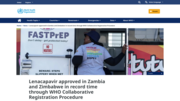
Informed reliance speeds national approvals, bringing innovative HIV prevention to people faster

Developed through broad and inclusive consultation, and aligned with the WHO Global Health Sector Strategies and the Sustainable Development Goals, the framework promotes a people-centred approach and antimicrobial stewardship across 5 key domains: prevention and response, surveillance, research and
...
Treatment adherence includes starting HIV treatment, keeping all medical appointments, and taking HIV medicines exactly as prescribed. For people with HIV, treatment adherence is key to staying healthy.

The information in the brief version is excerpted directly from the full-text guidelines. The brief version is a compilation of the tables and boxed recommendations.

Int. J. Environ. Res. Public Health 2021, 18(5), 2477; https://doi.org/10.3390/ijerph18052477

Panel Recommendations

Program Considerations

WHO updated recommendations on HIV clinical management: recommendations for a public health approach
recommended
This document provides an overview of the updated World Health Organization recommendations for HIV clinical management, which focus on optimizing antiretroviral therapy, preventing vertical transmission, and enhancing tuberculosis prevention among individuals with HIV. These updates are intended to
...
IAPAC provides guidance to clinicians and allied health professionals through normative guidance that encapsulates evidence-based approaches to optimizing the prevention, care, treatment, and support services delivered to people living with HIV

Continuum of HIV services refers to a comprehensive package of HIV prevention, diagnostic, treatment, care and support services provided for people at risk of infection or living with HIV and their families. This revised edition of the guidelines for use of ARV and opportunistic infection
(OI) dru
...
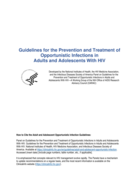
Guidelines for the Prevention and Treatment of Opportunistic Infections in Adults and Adolescents With HIV
recommended
The Guidelines for the Prevention and Treatment of Opportunistic Infections in Adults and
Adolescents With HIV document is published in an electronic format and updated as relevant changes
in prevention and treatment recommendations occur.
Questions and answers. A key priority is preventing the interruption of current HIV treatment and prevention medicines. This Q&A outlines advice when this is not possible. Available in Arabic, Chinese, English, French, Portuguese, Russian and Spanish
Slightly more than half of children under 15 years of age living with HIV are on antiretroviral medications
The information in the brief version is excerpted directly from the full-text guidelines. The brief version is a compilation of the tables and boxed recommendations. The guidelines were updated to comply with Executive Orders. You can download the full guidelines, charts and recommendations
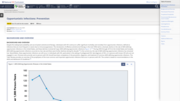
National HIV Curriculum
