Filter
1578
Text search:
statistiques
Featured
37
561
Language
Document type
924
199
146
94
59
45
41
36
16
11
6
Countries
83
72
64
63
49
48
47
44
42
41
39
39
38
38
37
33
32
32
31
30
29
27
27
25
22
21
20
19
18
18
16
16
16
16
15
14
14
14
13
13
13
13
13
13
12
12
10
9
7
7
7
6
4
4
4
4
4
4
4
4
3
3
3
3
3
3
3
3
3
2
2
2
2
2
2
2
2
2
2
2
2
2
1
1
1
1
1
1
1
1
1
1
1
1
1
1
1
Authors & Publishers
Publication Years
Category
1402
26
23
17
15
8
3
Toolboxes
90
53
27
24
23
23
18
18
13
11
11
7
6
6
6
6
5
5
5
4
2
2
2
1

Vous trouverez dans les pages suivantes de la documentation promotionnelle, y compris les documents d’informations, les affiches, les messages postés sur les réseaux sociaux et les autres ressources sur la vaccination, qui vous permettront de densifier les activités en cours et de faciliter les
...
Ce plan stratégique 2013- 2017 s’inscrit dans la continuité du précédent et a pour but de contribuer à la réduction de la charge de la tuberculose au Sénégal d’ici 2015 conformément aux Objectifs du Millénaire (OMD 6 Cible 8) et aux cibles du partenariat Halte à la tuberculose.
Les i
...
La troisième génération de la Stratégie de Coopération de l’OMS avec les Pays (SCP) concrétise le programme majeur de réforme adopté par l’Assemblée mondiale de la Santé pour renforcer la capacité de l’OMS et faire en sorte que ses prestations répondent mieux aux besoins du pays. E
...
L’enquête ENPS 2016 avait pour objectif de mesurer la situation des indicateurs d’accessibilité et d’utilisation des moyens préventifs et curatifs définis dans le cadre des directives du PNLP au Sénégal. Elle entre dans le cadre de l’évaluation périodique du niveau de réalisation de
...
L’enquête ENPS 2016 avait pour objectif de mesurer la situation des indicateurs d’accessibilité et d’utilisation des moyens préventifs et curatifs définis dans le cadre des directives du PNLP au Sénégal. Elle entre dans le cadre de l’évaluation périodique du niveau de réalisation de
...
Suivi de la Déclaration Politique sur le VIH/SIDA de 2011
Selon les estimations du recensement général de la population et de l’Habitat (RGPH, 2006), le nombre de personnes en situation de handicap au Burkina Faso en 2012 est estimé à environ 168 000, soit 1,2% de la population totale. La Fédération burkinabè des associations pour la promotion des
...
Le profil pharmaceutique du pays présente des données sur les conditions socioéconomiques existantes et celles de la santé, les ressources, les structures règlementaires, les processus et les résultats relatifs au secteur pharmaceutique au Burkina-Faso. Ce document a pour but de compiler toute
...
Ces dernières années, la Guinée a accordé une attention particulière à l’amélioration de la santé reproductive, maternelle, néonatale, infantile et des adolescents (SRMNIA) – Objectif Stratégique 2 de la politique nationale santé (PNS), Orientation Stratégique 2 du Plan National de D
...


L'OIT a uni ses forces à celles de Gallup pour mener une enquête mondiale inédite couvrant 50 pays et permettant de mieux comprendre les causes de la stigmatisation et de la discrimination persistantes liées au VIH dans le monde du travail.
Le document fournit des directives complètes pour la gestion des épidémies de choléra, y compris la prévention, le diagnostic et le traitement. Il met l'accent sur les mesures de réponse rapide, l'importance de la thérapie de réhydratation (orale et intraveineuse), ainsi que sur les interven
...
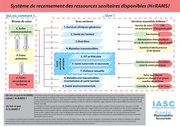

Introduction
Chapitre A.6
Edition en français Traduction : Cristina Constantin Sous la direction de : Priscille Gérardin Avec le soutien de la SFPEADA